
This week spring arrived.
I knew it was spring from the soft caress of the grass under my bare feet when I went to take the dogs out in the middle of the night, an hour past midnight with a crescent moon hung low overhead, when the week before the lawn had crunched in icy slivers against my skin.
I knew it was spring when the slips and shoots of daffodils and the cylindrical sprouts of crocus and tulips and grape hyacinth broke through the gray ground in shades of green, like moss and jade and pine.
I knew it was spring when the air warmed, the nights no longer lingering past dawn in bitter chill. I love the slow slide into spring—lately the soil has begun to soften as the days grow longer, every morning the sun rising earlier in the east. And although spring is early this year, arriving in the middle of March instead of the end of April or a more sedate May, it is a welcome change, this warmth—a long lost friend. A celebrated guest.
Spring is, I think, my favorite season.
Perhaps because of the symbolism, for spring is the very image of everything new. It is a renewal. A rebirth. A wakening.
An anticipation.
But most of all I love spring because of what comes next—the planting. Every spring becomes an elaborate game of chicken between my desire to begin my garden and the farmer’s almanac that repeatedly tells me I should not plant before the last frost, before mother’s day, before every chance of a chill that would kill tender shoots has passed.
So. Now it is spring, and I have sorted the packets of seeds and planned the plots and made patterns of the plants in the picture I have in my head of a bountiful garden full of climbing vines heavy with squash and beans and melons and peas, and orderly lines of carrots and radish and lettuce and corn, and bushes of berries and cabbage growing close to the ground, and every year I start the season off strong, pulling weeds and grass, which is not a weed but acts like one, and mulching and watering, but by midsummer when the sun has grown hot I no longer hover outside but instead mind my garden from the cool of my kitchen window, and worry about the heat and watch the weeds grow alongside the fruits and vegetables until I end up sorting scrupulously through the plants in order to harvest, but that is a little like life, really, isn’t it? There is good and there is bad, and you cannot have one without the other.
No matter how well you plan. No matter how hard you try.
So. Let’s take a moment now, in this wait between the warming of earth and the planting of seeds, to consider the garden.
There is such power in growing things. In creating. In opening little holes in the earth and dropping in dried bits that might be bark or might be rocks but hopefully are seeds, all shriveled and shrunken and sized like specks of stardust.
I find I am fascinated by the seeds. The tiny black brassicas that yield broccoli and cauliflower and mustard, the bright green and red and orange beans, the half-moon squash seeds, the kernels of corn and the slips of garlic and shallot and onion, each one a potential world in miniature, just waiting for the planting, the sowing, the seeding. There seems to be no order to them—purple seeds grow green plants, not purple, and there are small seeds that grow plants larger than you could ever imagine when you look at how they begin.
Gardening is a game of opposing forces. A practice of balance—of pitting hope against despair and crossing your fingers while watching at the gate or while walking the muddy paths.
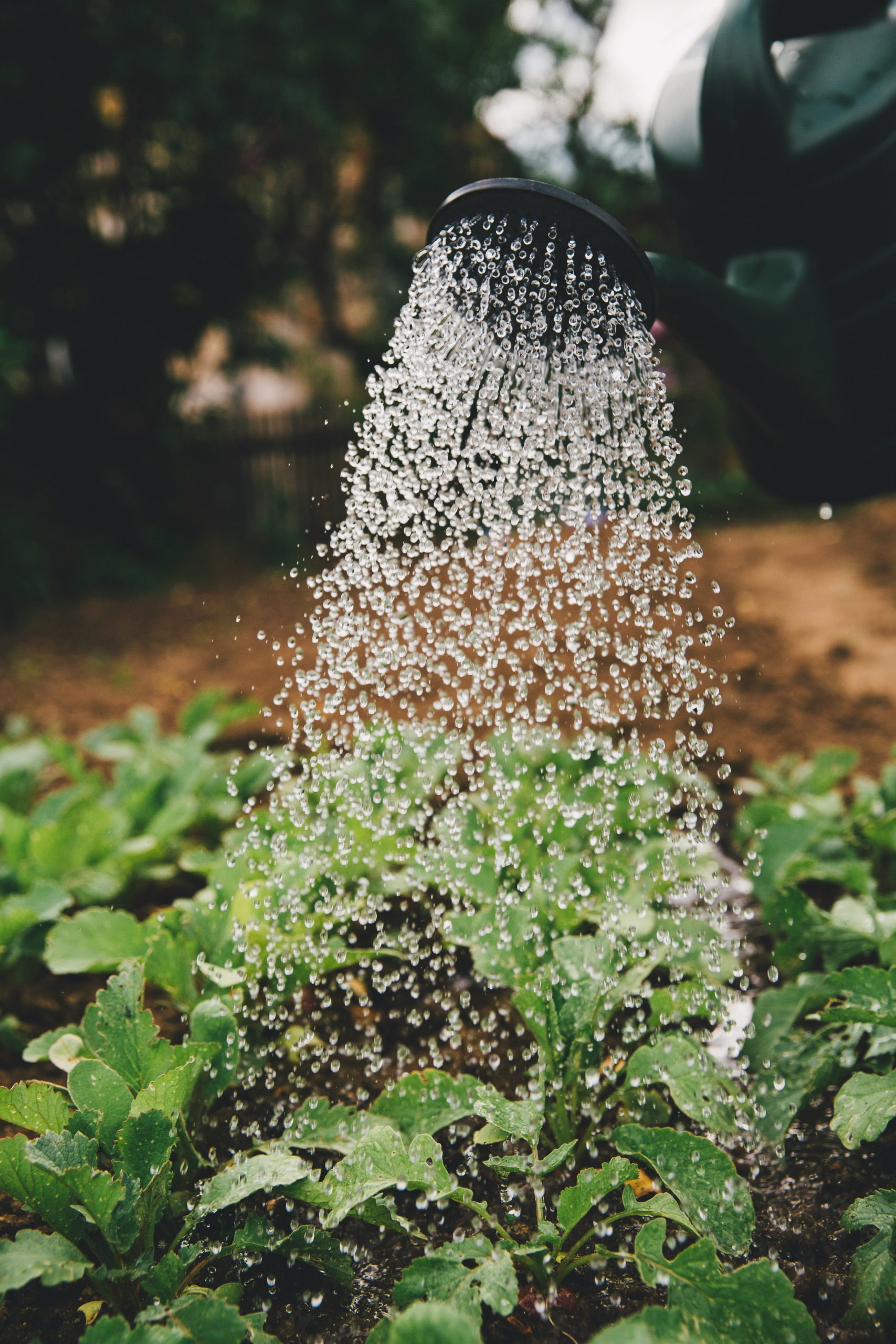
Gardening is feeling the soft fall of rain against your face and arms and setting up diversions and blockades against the erosion and flooding that can result from too much water. Gardening is being fascinated by the delicate green legs of a grasshopper and horrified by the destruction they leave behind in large, irregular holes chewed through tender leaves.
The garden is the place I go to practice grace.
Why?
Well, grace, it seems to me, is a complicated idea.
Nuanced.
Difficult, in the way that truly simple concepts usually are. Grace is strength and love and mercy. It is saving, sanctifying, sustaining, and serving, all concepts I find myself playacting in planting my garden beds and watering the delicate lettuces and keeping the snails off the spinach and the aphids off the broccoli and the beating sun off the tender herbs that wilt in the heat of midsummer.
It is growth.
It is the sight of small chicks hatching out of their smooth round eggs on cold spring days, damp and downy and cheeping at the hesitant sun, and it is seeds pushing up out of barely warm ground when the temperature still threatens a freeze. It is moss growing on the bark of a tree, sustaining itself by depending on another’s body, on another’s strength.
Gardening is a refuge—a place to dig your hands deep into loamy soil until the grit of it gets deep into the print of your skin and until sand sinks into the space under your nails. Gardening is waiting for things to seed and sprout and bloom.
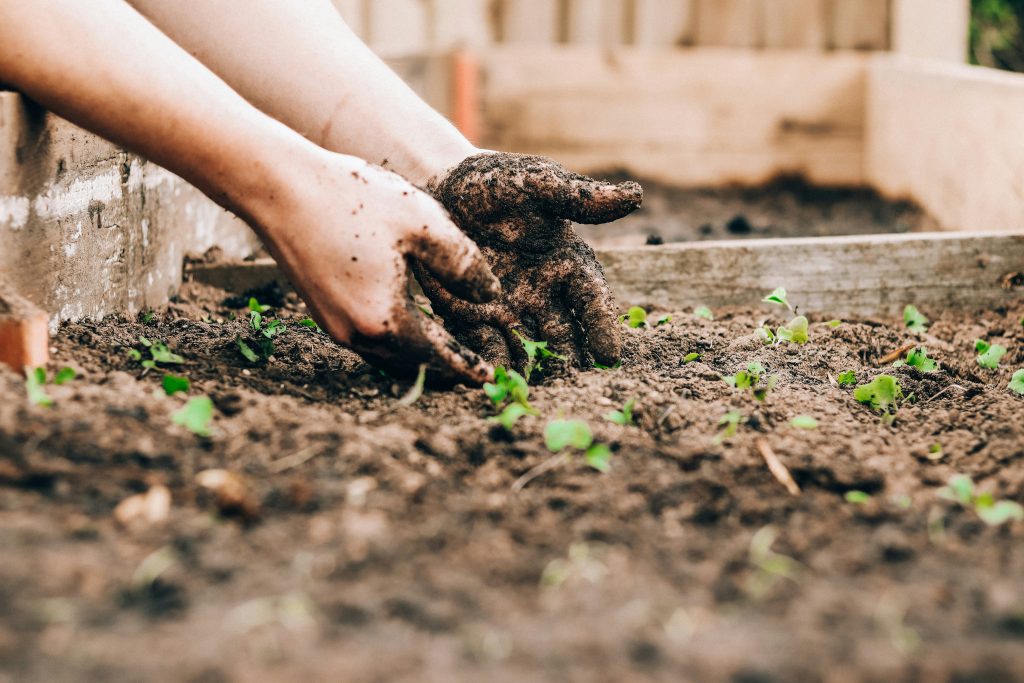 Photo credit: Sandie Clark via Unsplash
It is the stopping. The stillness.
The pause.
Grace comes while we wait through seasons, while we watch for plants to grow, while we worry over wild weather and wind and when to harvest. In a world of transactional relationships, the garden is a place for effort manifested in blisters and sunburns, effort that is not always rewarded—after all, sometimes there is hail, and sometimes there is drought and sometimes there is a great grinning dog that decides to dig right at the roots of the plant you have been trying to encourage to grow.
Sometimes there is success.
And sometimes there is heartbreak.
But this, too, is grace. The garden gives us an opportunity to give thanks and to celebrate and to make BLT sandwiches when the tomatoes have grown round and red and ripe and the lettuce has survived the rain and is ready to be carefully plucked and washed and laid carefully, crisp and cool, on a piece of well-toasted bread with a touch of mayonnaise and slices of thick bacon, for eating what you have grown with your own two hands is always celebration, and a chance to acknowledge that despite your fumbling efforts plants have, indeed, managed to grow and thrive and produce. This is success. And if the hail shreds the lettuce leaves until nothing is left but a thick center rib? If the birds peck at the juicy fruit of the tomatoes until it is full of holes? That is a different type of opportunity. A moment to mourn. To weep. To feel sadness and sorrow and loss—and to plan to plant again, this time with nets to keep away the birds and hastily constructed shelters for the lettuces, efforts to mitigate the wild world we are walking in.
Grace, to me, looks a lot like finding the Holy in the ways we exist with the wild—to find ourselves in quiet contemplation and stillness, but also in hard work with sweat under the collar of the worn-out tee shirts we have relegated to work.
Grace is a gratitude, a gloria, a hymn of adulation—Gloria in Excelsis Deo, for, as the Psalm says, the Lord is the sun and a shield, grace and glory, and I like the idea that the tiny black seeds I plant in the spring are, themselves, a gloria.
A celebration.
A season long song of praise for nature, for the planet, for the big things but also the small. Thanks for our children and our dogs running wild in the yard, gratitude for the birds scavenging seeds and discarded weeds to build their nests of wild grasses, thanks for the voracious green grasshoppers hopping across the muddy garden path hoping for a bite to eat.
And my garden does not even have to produce anything. It does not even have to be good, or practical, or useful. It can simply be.
And isn’t that important? The ability to simply be?
After all, are we useful? Do we need to be?
Is a rock useful? A flower? A frog hopping into the edge of a still green pond? Why do we buy into the propaganda that to live a good life we must commodify our days, bill our hours, produce instead of create?
Do we need to be always busy or can we just be? Can we exist in peace?
Even in the worst years. Even if no vegetable grows. Even if all I have to show for my efforts are snagged fingernails and blisters and heatstroke, my garden is worth the labor. Gardening is creativity, and creation, and the capacity to usher in new worlds out of dust and dirt and digging deep in the ground.
My garden is, to me, a reflection of the human spirit. The struggle. The hope. A miniature of the grander wild where green grass grows out of burnt forests. Where the dying of one plant gives rise to the growth of another as green foliage turns brown and then crumbles into the soil, until seeds nestle into the dust of what once was and draws from it nourishment for the season to come.
It seems to me our lives would be better spent with our feet in the mud, and our heads in the sky…and our eyes on all the small wonders that cross our paths. After all, watching things grow is like watching a miracle in slow motion, a green leaf unfurling, a ladybug marching across a pale yellow petal, a drop of dew rolling down the stem of a squash to collect in the large hollows at the base of the enormous leaves.
So go outside.
See the world—not through the lens of a small screen or a few words scattered across a page. No. Walk across untended earth and hear the leaves and pine needles and rocks crunch under your feet. Pick up a stick and feel the rough bark and the crumble of lichen and moss, the rough edges where it broke off the tree it once grew upon. Feel the warm summer sun and the chill of winter and the gradual thaw toward spring. When the soil gets soft enough, plant something just to watch it grow. Give thanks and find grace and learn hope.
For gardens—in fact, any type of wilderness—teach me that no matter what is happening in the world, hope is the right response.
A natural reaction to possibility. A way of creating the future, of learning to thrive, of finding a future we can embrace.
My garden? My garden is hope encapsulated. A tiny green ship in an elaborate glass bottle made to show us exactly what the world could be, if we rolled up our sleeves, got our hands dirty, and went to work.
Gloria.
Lead Photo Credit: Markus Spiske via Unsplash
En Español:
Traducido por Jessica Yanez Barker
Glorias, gracia, saltamontes verdes y senderos de jardín
Esta semana llegó la primavera.
Supe que era primavera por la suave caricia del pasto bajo mis pies descalzos cuando salí a sacar a los perros en plena noche, pasada la medianoche, con una luna creciente colgada baja en el cielo, cuando apenas una semana antes el césped crujía en astillas heladas contra mi piel.
Supe que era primavera cuando los brotes y tallos de narcisos, y los retoños cilíndricos de crocus, tulipanes y jacintos de uva rompieron la tierra gris en tonos de verde, como musgo, jade y pino.
Supe que era primavera cuando el aire se templó, cuando las noches dejaron de prolongarse más allá del amanecer con un frío amargo. Me encanta el lento deslizamiento hacia la primavera—últimamente la tierra ha empezado a ablandarse mientras los días se alargan, cada mañana el sol saliendo un poco antes por el este. Y aunque este año la primavera llegó temprano, a mediados de marzo en lugar de finales de abril o un mayo más pausado, es un cambio bienvenido, este calor—una amiga perdida hace mucho. Una invitada celebrada.
Creo que la primavera es mi estación favorita.
Quizá por su simbolismo, porque la primavera es la imagen misma de todo lo nuevo. Es una renovación. Un renacimiento. Un despertar.
Una anticipación.
Pero sobre todo amo la primavera por lo que viene después: la siembra. Cada primavera se convierte en un elaborado juego de resistencia entre mi deseo de comenzar el jardín y el almanaque del agricultor que me recuerda una y otra vez que no debo plantar antes de la última helada, antes del día de la madre, antes de que haya pasado cualquier posibilidad de un frío que mate los brotes tiernos.
Así que. Ahora es primavera, y he ordenado los paquetes de semillas y planeado los bancales y trazado patrones de plantas en la imagen que tengo en mi mente de un huerto abundante lleno de enredaderas cargadas de calabazas y frijoles y melones y guisantes, y hileras ordenadas de zanahorias y rábanos y lechugas y maíz, y arbustos de bayas y repollos creciendo cerca del suelo. Y cada año comienzo la temporada con fuerza, arrancando malezas y pasto—que no es maleza, pero actúa como tal—y acolchando y regando, pero a mediados del verano, cuando el sol se ha vuelto ardiente, ya no merodeo afuera sino que vigilo mi jardín desde la frescura de la ventana de mi cocina, y me preocupo por el calor y observo cómo las malezas crecen junto a las frutas y verduras hasta que termino clasificando minuciosamente entre las plantas para poder cosechar. Pero eso es un poco como la vida, ¿no es así? Hay bueno y hay malo, y no se puede tener uno sin el otro.
No importa cuán bien planees. No importa cuánto te esfuerces.
Así que. Tomemos un momento ahora, en esta espera entre el calentamiento de la tierra y la siembra de las semillas, para considerar el jardín.
Hay tanto poder en hacer crecer cosas. En crear. En abrir pequeños huecos en la tierra y dejar caer pedacitos secos que podrían ser corteza o podrían ser piedras, pero que con suerte son semillas, todas arrugadas y encogidas y del tamaño de motas de polvo estelar.
Me fascinan las semillas. Las diminutas semillas negras de las brassicas que producen brócoli y coliflor y mostaza; los frijoles brillantes verdes, rojos y naranjas; las semillas de calabaza en forma de media luna; los granos de maíz y los dientes de ajo, chalote y cebolla, cada uno un mundo potencial en miniatura, esperando la siembra, el sembrado, el plantar. No parece haber orden alguno en ellas: semillas moradas producen plantas verdes, no moradas, y hay semillas pequeñas que dan plantas más grandes de lo que uno podría imaginar al ver cómo comienzan.
La jardinería es un juego de fuerzas opuestas. Una práctica de equilibrio—de enfrentar la esperanza contra la desesperación y cruzar los dedos mientras se observa desde la entrada o se caminan los senderos embarrados.
La jardinería es sentir la suave caída de la lluvia sobre el rostro y los brazos, y al mismo tiempo levantar desvíos y barricadas contra la erosión y las inundaciones que pueden resultar de demasiada agua. La jardinería es quedar fascinado por las delicadas patas verdes de un saltamontes y horrorizado por la destrucción que dejan atrás en grandes agujeros irregulares mordidos en hojas tiernas.
El jardín es el lugar al que voy para practicar la gracia.
¿Por qué?
Pues la gracia, me parece, es una idea complicada.
Matizada.
Difícil, en la forma en que los conceptos verdaderamente simples suelen serlo. La gracia es fortaleza y amor y misericordia. Es salvar, santificar, sostener y servir, conceptos que me descubro representando mientras planto mis bancales, riego las delicadas lechugas, mantengo a los caracoles lejos de las espinacas y a los pulgones lejos del brócoli, y protejo a las tiernas hierbas del sol abrasador que las marchita en pleno verano.
Es crecimiento.
Es la visión de pequeños polluelos saliendo de sus huevos lisos y redondos en fríos días de primavera, húmedos y cubiertos de plumón, piando hacia un sol vacilante; y es también las semillas que empujan hacia arriba desde una tierra apenas tibia cuando la temperatura aún amenaza con helar. Es el musgo creciendo sobre la corteza de un árbol, sosteniéndose al depender del cuerpo y la fuerza de otro.
La jardinería es un refugio—un lugar donde hundir las manos en la tierra fértil hasta que su arenilla se meta en las huellas de la piel y la arena se aloje bajo las uñas. La jardinería es esperar a que las cosas se siembren y broten y florezcan.
Es detenerse. La quietud.
La pausa.
La gracia llega mientras esperamos a través de las estaciones, mientras observamos crecer las plantas, mientras nos preocupamos por el clima salvaje, el viento y el momento de la cosecha. En un mundo de relaciones transaccionales, el jardín es un lugar donde el esfuerzo se manifiesta en ampollas y quemaduras de sol, un esfuerzo que no siempre es recompensado—después de todo, a veces cae granizo, y a veces hay sequía, y a veces aparece un perro enorme y sonriente que decide cavar justo en las raíces de la planta que has estado tratando de animar a crecer.
A veces hay éxito.
Y a veces hay desconsuelo.
Pero esto también es gracia. El jardín nos da la oportunidad de dar gracias y celebrar y preparar sándwiches BLT cuando los tomates han crecido redondos, rojos y maduros, y la lechuga ha sobrevivido a la lluvia y está lista para ser cuidadosamente arrancada, lavada y colocada, fresca y crujiente, sobre una rebanada de pan bien tostado con un toque de mayonesa y gruesas tiras de tocino, porque comer lo que has cultivado con tus propias manos siempre es una celebración, y una oportunidad para reconocer que, a pesar de tus torpes esfuerzos, las plantas han logrado crecer, prosperar y producir. Eso es éxito.
¿Y si el granizo destroza las hojas de lechuga hasta que no queda más que una gruesa nervadura central? ¿Si los pájaros picotean la jugosa fruta de los tomates hasta llenarla de agujeros? Esa es otro tipo de oportunidad. Un momento para lamentar. Para llorar. Para sentir tristeza, pena y pérdida—y para planear sembrar de nuevo, esta vez con redes para mantener alejados a los pájaros y refugios improvisados para las lechugas, esfuerzos para mitigar el mundo salvaje en el que caminamos.
La gracia, para mí, se parece mucho a encontrar lo Sagrado en las formas en que coexistimos con lo salvaje—hallarnos en la contemplación silenciosa y la quietud, pero también en el trabajo arduo, con el sudor acumulándose bajo el cuello de las camisetas desgastadas que hemos destinado para las labores del día.
La gracia es gratitud, una gloria, un himno de adoración—Gloria in Excelsis Deo, porque, como dice el Salmo, el Señor es sol y escudo, gracia y gloria, y me gusta la idea de que las diminutas semillas negras que planto en primavera sean, en sí mismas, una gloria.
Una celebración.
Una canción de alabanza que dura toda la temporada, para la naturaleza, para el planeta, para las cosas grandes pero también las pequeñas. Gracias por nuestros hijos y nuestros perros corriendo libres por el patio, gratitud por los pájaros que buscan semillas y malezas desechadas para construir sus nidos de hierbas silvestres, gracias por los voraces saltamontes verdes que saltan por el sendero embarrado del jardín en busca de un bocado.
Y mi jardín ni siquiera tiene que producir nada. Ni siquiera tiene que ser bueno, práctico o útil. Puede simplemente ser.
¿Y no es eso importante? ¿La capacidad de simplemente ser?
Después de todo, ¿somos útiles nosotros? ¿Necesitamos serlo?
¿Es útil una roca? ¿Una flor? ¿Una rana que salta hacia el borde de un estanque verde y quieto? ¿Por qué aceptamos la propaganda de que, para vivir una buena vida, debemos convertir nuestros días en mercancía, cobrar por nuestras horas y producir en lugar de crear?
¿Necesitamos estar siempre ocupados o podemos simplemente existir? ¿Podemos vivir en paz?
Incluso en los peores años. Incluso si no crece ni una sola verdura. Incluso si todo lo que tengo para mostrar por mis esfuerzos son uñas rotas, ampollas y un golpe de calor, mi jardín vale el trabajo. La jardinería es creatividad y creación, y la capacidad de dar paso a nuevos mundos a partir del polvo, la tierra y el acto de cavar profundo en el suelo.
Mi jardín es, para mí, un reflejo del espíritu humano. La lucha. La esperanza. Una miniatura del vasto mundo salvaje donde la hierba verde brota de bosques quemados. Donde la muerte de una planta da lugar al crecimiento de otra, mientras el follaje verde se vuelve marrón y luego se desmorona en la tierra, hasta que las semillas se acurrucan en el polvo de lo que alguna vez fue y extraen de él el alimento para la temporada que viene.
Me parece que nuestras vidas estarían mejor vividas con los pies en el barro y la cabeza en el cielo… y los ojos puestos en todas las pequeñas maravillas que cruzan nuestro camino. Después de todo, ver crecer las cosas es como ver un milagro en cámara lenta: una hoja verde desenrollándose, una mariquita marchando sobre un pétalo amarillo pálido, una gota de rocío deslizándose por el tallo de una calabaza hasta reunirse en los huecos grandes en la base de sus enormes hojas.
Así que sal.
Mira el mundo—no a través del lente de una pequeña pantalla ni de unas cuantas palabras dispersas en una página. No. Camina sobre la tierra sin cultivar y escucha cómo crujen las hojas, las agujas de pino y las piedras bajo tus pies. Levanta una rama y siente la corteza áspera y el desmoronarse del liquen y el musgo, los bordes irregulares donde se desprendió del árbol en el que creció. Siente el cálido sol del verano y el frío del invierno y el deshielo gradual hacia la primavera. Cuando la tierra esté lo suficientemente blanda, planta algo solo para verlo crecer. Da gracias y encuentra gracia y aprende esperanza.
Porque los jardines—de hecho, cualquier tipo de naturaleza salvaje—me enseñan que, sin importar lo que esté pasando en el mundo, la esperanza es la respuesta correcta.
Una reacción natural ante la posibilidad. Una forma de crear el futuro, de aprender a prosperar, de encontrar un porvenir que podamos abrazar.
¿Mi jardín? Mi jardín es esperanza encapsulada.
Un diminuto barco verde dentro de una elaborada botella de cristal, hecho para mostrarnos exactamente lo que el mundo podría ser si nos arremangáramos, ensuciáramos las manos y nos pusiéramos a trabajar.
Gloria.

Shelli is an advocacy writer and creative writing teacher. She loves to spend time with her husband (usually in the garden) and their four almost adult children. She also loves to sew (usually for the local community theater), to read, to write, and to drag her family outside to look at the sky. Shelli is passionate about poetry, Broadway show tunes, and telling stories -- of ourselves, our families, and our communities.
View Author PageStay Inspired
Join Our Newsletter Journey
Dive deeper into the world of Big Ocean Women. By subscribing to our newsletter, you'll receive a monthly dose of empowering stories, insightful articles, and the latest news from our global sisterhood. Don't miss out on the wave of inspiration – subscribe now and be part of our ever-growing community.