
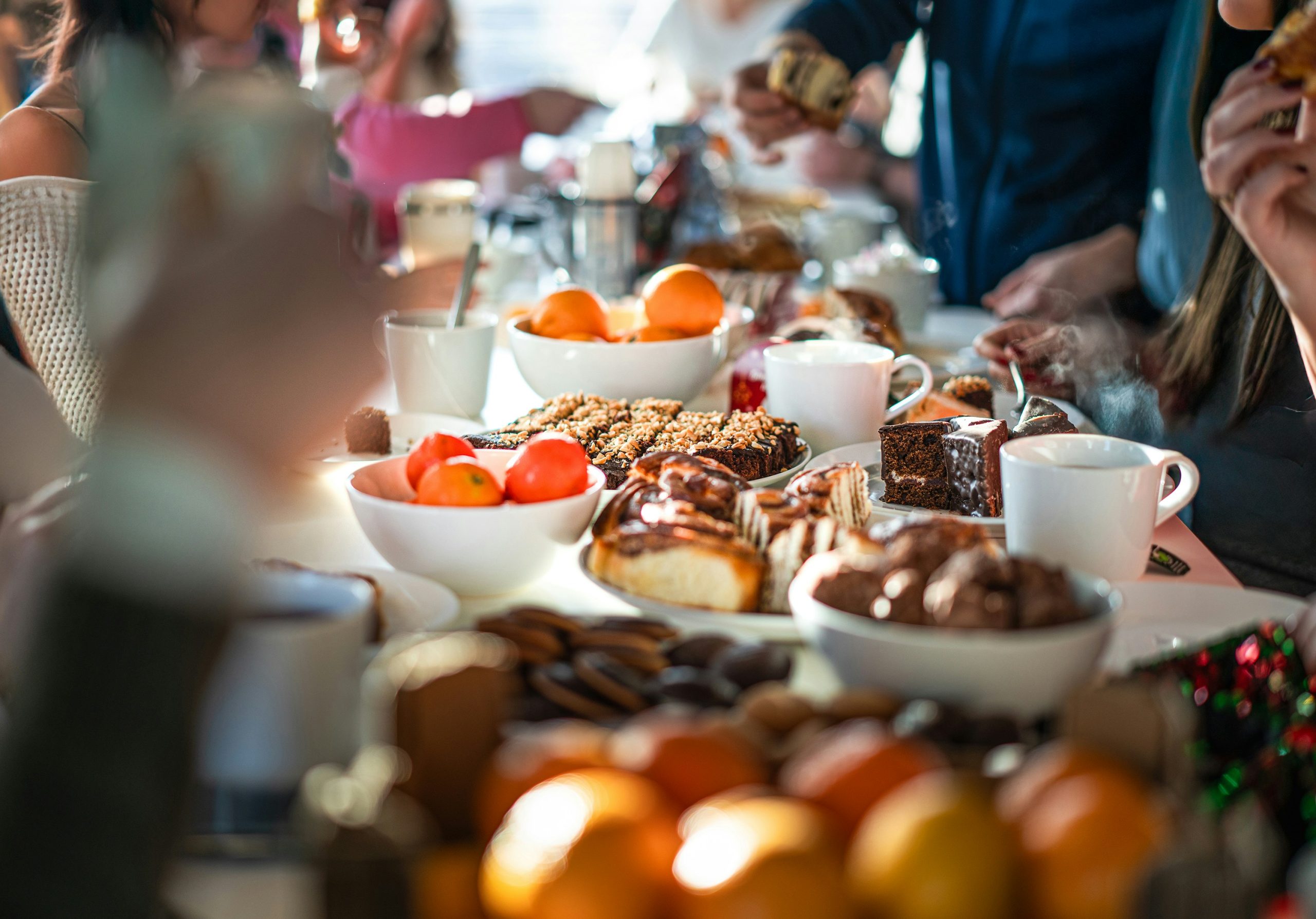
Lead photo credit: Jakub Zerdzicki via Unsplash
This weekend I made bagels. Homemade, sourdough bagels—some sesame seed, a handful of cheddar jalapeno, a few plain, and a couple everything bagels to round out the three dozen I pulled, steaming, from the oven at seven pm on a blustery Saturday evening, just in time to slather with cream cheese, top with ham, and eat for dinner.
I learned to make bagels a couple of years ago, after I had begun to experiment with sourdough, when I had grown tired of round loaves and square loaves, of sandwich bread, and focaccia, of pancakes and crackers and all the other myriad uses for a superfluous sourdough starter. So, bagels. I found I liked more than eating them—I liked making them as well. It was an interesting challenge, a rewarding way to spend an afternoon, and they were delicious to boot.
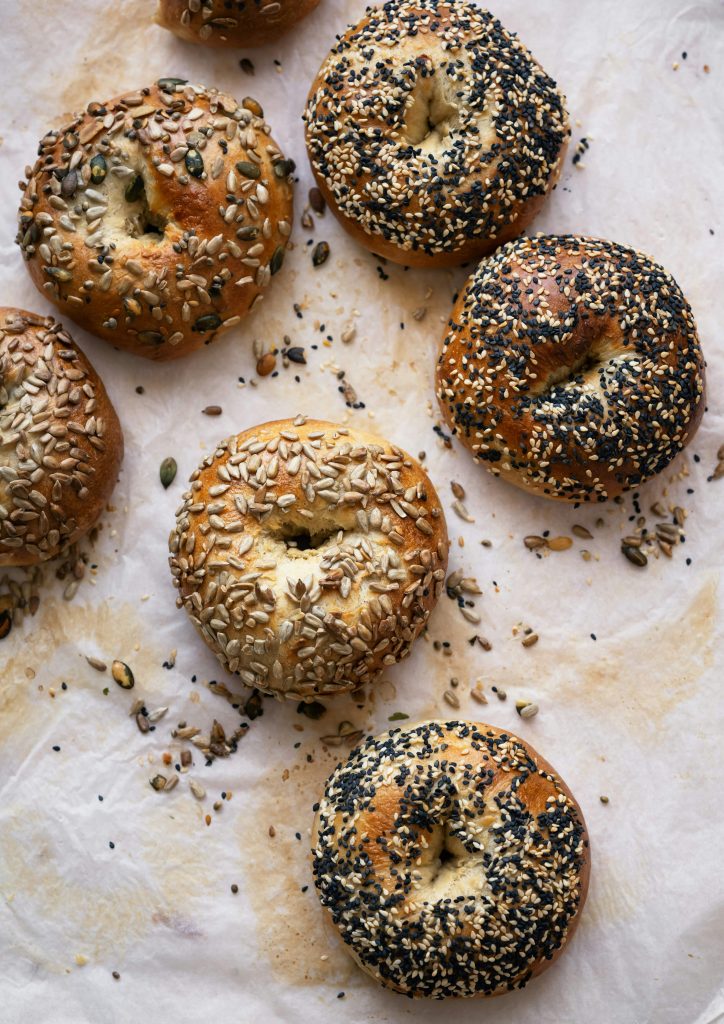 Photo credit: Monika Grabkow via Unsplash
So this weekend I made bagels for my daughter, who was visiting from Florida, home for a long weekend during which we were required to revisit all her favorite things—hand pies at the farmers market, chocolates from the store we’ve frequented since before she was born, whoopie pies from the bakery down the street, sodas from the shop on the corner. Somehow most of her favorite traditions revolve around food.
So do mine. In that way the apple truly does not fall far from the tree.
But back to the bagels. They were the only things she asked me to make, although I know she loves my curry, and my lasagna, and my cinnamon rolls, my beef stroganoff that I learned to make from my sister, and she loves her father’s chicken and rice casserole, but it was the bagels she asked for, a week before she came to town.
They were the only thing she requested, so I planned ahead, and fed the starter, and mixed the flour into the sponge, and found something to do during the long, slow rise, and shaped the dough, and boiled the bagels, and then slid them into the oven to bake to a perfectly chewy golden brown. And during the long hours from beginning to finish, I had time to think—which is part of the attraction, for me, of making bread. It is a slow process. A focusing.
A meditation.
I could not help remembering the first time I made bagels, could not help but recall the lumpy, dense rocks that resulted, and the way my kids ate them anyway, with fake enthusiasm and false encouragement. And the next time I made them, when I remembered to allow long enough for the rise, they turned out chewy but also fluffy, dense, but also somehow light enough to float when they were boiled. That time the two dozen I made disappeared quickly as my kids and their friends all took one, and then another, and then another, until there were only crumbs and stray sesame seeds scattered over the counter like a breadcrumb trail leading to nowhere in particular.
There is nothing more satisfying to a cook than to realize that what you made has been devoured, inhaled, and consumed.
Now, you might be asking yourself why I am spending so much time talking about bagels? They are only bread, after all.
Well, here’s the thing. Bread, in my opinion, is very seldom simply bread, and when it comes to food, a meal is very seldom simply something to eat. As a writer I think a great deal about the power of storytelling, and most of the stories I love and return to again and again involve or even revolve around food. There are the four sisters in Little Women carrying Christmas Dinner to the neighbors in the snow, or a simple picnic in The Wind in the Willows. There is food as welcome and celebration in My Antonia, and Little House on the Prairie. There is food as temptation in The Bible, in The Lion, The Witch and the Wardrobe, and of course, in Winnie the Pooh. But mostly, food seems to be a way to connect. A way to bring together family and friends and communities of people to share nourishment and conversation and working and creating and making and tasting and talking—a group of individuals with their own particular cares and concerns and joys but in the moment of breaking bread they are all together, they are all one.
It is a small thing, yes. But it is a small thing that means a great deal.
Food is tied to our ideas of home, our understanding of family, our traditions, and our vision of community.
Food is tied to the way we socialize, the way we communicate, the way we worship.
Food is tied to our ideas of who we are, what we like, and how we serve others.
Food is among one of the most intimate, spiritual, dedicated ways we can join our lives with other people. There is a reason most of our holidays revolve around food. There is a pageantry to it, a solemnity, a sense of hope and happiness. A connection of compassion and concern and care.
There is a reason both the Hobbit and The Lord of the Rings begin with great feasts, with songs and laughter, with strangers knocking on the door—strangers who come in, gather around the table, eat all the food, and leave as comrades in arms, as fellow adventurers, and possibly, as friends.
My love of food in literature began when I was young. A child of the eighties I was raised on Arnold Lobel, and books like Frog and Toad, and Owl at Home, and Mouse Soup, which features a clever mouse trying to avoid being eaten by a hungry weasel by telling stories to ‘season the soup,’ but my favorite was always a story called Tear Water Tea, where an owl sits with a teapot and thinks of sad things in order to create tears for his tear water tea, and I cannot remember why the thought delighted me so much, that we might need tears, that we might need to think of great tragedies like songs that cannot be sung and stories that cannot be told and mornings that nobody saw, and the thing that has stayed with me for all these years, almost thirty and counting, is that it was not the worldly things that made the owl sad, not large disasters and terrible politics and cruel people, but the ordinary tragedies of forgotten meals and unseen sunrises, and yes, I know it is a book, but there is a great deal of truth in stories, I have found, and a great deal of power in the acts that the world would tell us are unimportant and unseen and small.
There is something beautiful about a story that asks us to feel, to appreciate the unnoticed, to practice empathy—and to sit down with a cup of tea at the end. Many of the books I read as a child had some sort of message imparted through food, through eating, through sharing that food with others. These stories are, for me, a blueprint. A map. A guide to what adventures we might have, what joys we might experience if we allowed ourselves the freedom to imagine we might.
From Stone Soup I learned about mutual aid, I learned that when we all pitch in, marvelous feasts can appear out of thin air. Strega Nona taught me about generosity and forgiveness, and that good pasta never goes to waste. Cloudy with a Chance of Meatballs taught me humor, and that it was ok to laugh, to be absurd, to indulge in nonsense. James and the Giant Peach taught me the importance of finding a place to belong.
Every one of these stories, every one of these meals, every one of these dishes, are experienced in communion with others—in a kind of oneness that reaches out a welcoming hand, invites a stranger in out of the cold, sets out a plate of cookies, and tells of friendship and companionship and fellowship. There is a reason so much of community action revolves around physical needs like food, focusing on feeding the young, the widowed, the poor. Which is not to say that the more existential, spiritual needs are not important, but I have found that many of our spiritual needs can be better met by being well fed, which is one reason I love the stories of fatted calves, and flour and oil, and sheaves of wheat gleaned from fields and threshed and ground and baked.
There is a reason so much of our spiritual devotion can be symbolized in feasts and fishes and loaves.
It is a metaphor for care. A metaphor for service. A metaphor for a way of life we’ve been told is unnecessary, for after all there are stores and markets and fast food and instant delivery to meet our needs, all is required is a card and an app and whatever you need or want can be there in a moment. But baking bread is more than that. As the bread rises it pushes back against a mindset of scarcity and consumerism and an economy that only values what you have to sell and not what you have to offer, not the support systems and networks of nourishment that come so naturally to many as we feed those around us, as we offer abundance and understanding and love.
For me, bread has come to represent the way I want to engage in the world, the structures that build up instead of tear down, and the small acts that can change large organizations.
When I stop to really consider it, there are many things I wish I could change in this world. There are people I wish we were kinder to, trees I wish we had saved, spaces that were once thriving community centers that now sit dull and dusty and lifeless as we stay home, as we stay inside, as we stay focused on the phones in our hands or the fear in our hearts.
Baking, I have come to realize even in the moment I write, even as I explore this idea, is one way I engage in slow, meaningful acts. It is one way to combat the influences that try to pull me away from connection, from interaction, from making. It is one way to resist technology’s colonization of my attention, my time, and my creativity.
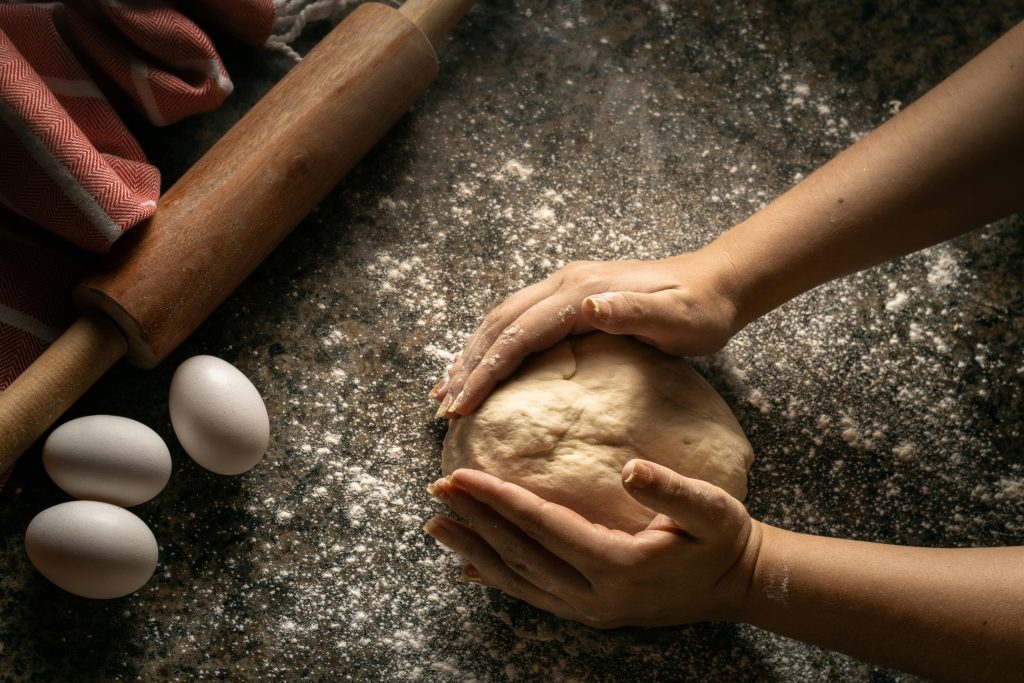 Photo credit: Ian Talmacs via Unsplash
Baking bread can feed a family, but it can also feed just an individual—and one well-fed individual can change the world. Baking bread is one way I practice the living of this life—the weighing and measuring and feeding and nourishing and serving. It is one way I learn to dedicate myself to the radical act of looking after great sweaty boys just after they come rattling in the door, joyful with enthusiasm from playing basketball and near-sighted girls who have studied all day and classes of youth and gatherings of church groups and individuals—neighbors who are joyful and neighbors who are despairing and strangers who I do not know at all, and yet wish I did.
The nourishment I give to others also nourishes me—it feeds my heart, my spirit, and my body. It feeds my imagination, and my vision of the world I would like to see. It feeds my children. My neighbors.
It feeds my creativity. And my community.
So. I baked this weekend. And it was no big deal. It was no trial or burden or unwelcome task. It only took a few hours, and at the end of it we had delicious, warm, freshly-baked bread to eat.
It was only a bagel, you see.
And yet, I can’t help thinking. It feels like so much more.
En Español:
Traducido por Jessica Yanez Barker
Té de agua de lágrimas, sopa de piedra y lecciones que aprendí de los libros sobre la construcción de comunidades
Este fin de semana hice bagels. Bagels caseros de masa madre: unos con semillas de sésamo, un puñado de cheddar y jalapeño, unos cuantos sin nada y un par de bagels con todo para completar las tres docenas que saqué humeantes del horno a las siete de la tarde de un sábado ventoso, justo a tiempo para untarlos con queso crema, cubrirlos con jamón y cenar.
Aprendí a hacer bagels hace un par de años, después de empezar a experimentar con la masa madre, cuando me cansé de los panes redondos y cuadrados, del pan de molde, la focaccia, los panqueques, las galletas y la infinidad de usos para la masa madre sobrante. Así que, bagels. Descubrí que me gustaba hacerlos más que solo comerlos. Era un reto interesante, una forma gratificante de pasar la tarde, y además estaban deliciosos.
Así que este fin de semana preparé bagels para mi hija, que estaba de visita desde Florida y regresó a casa para pasar un fin de semana largo, durante el cual tuvimos que revisitar todas sus cosas favoritas: pasteles del mercado, chocolates de la tienda que frecuentamos desde antes de que naciera, pasteles whoopi de la panadería de la calle, refrescos de la tienda de la esquina. De alguna manera, la mayoría de sus tradiciones favoritas giran en torno a la comida. Las mías también. De esa manera, la manzana no cae lejos del árbol.
Pero volvamos a los bagels. Fueron lo único que me pidió que hiciera, aunque sé que le encanta mi curry, mi lasaña, mis rollos de canela, mi stroganoff de res que aprendí a hacer con mi hermana, y le encanta el guiso de pollo y arroz de su padre, pero fueron los bagels los que me pidió una semana antes de venir a la ciudad.
Era lo único que me pidió, así que planifiqué con antelación, alimenté la masa madre, mezclé la harina con el bizcocho, busqué algo que hacer durante el largo y lento timpo de leudado, le di forma a la masa, herví los bagels y luego los metí al horno para hornearlos hasta que adquirieran un dorado perfecto y masticable. Y durante las largas horas de principio a fin, tuve tiempo para pensar, lo cual es parte del atractivo, para mí, de hacer pan. Es un proceso lento. Un proceso de concentración.
Una meditación.
No pude evitar recordar la primera vez que hice bagels, no pude evitar recordar las rocas densas y grumosas que resultaron, y cómo mis hijos los comieron de todos modos, con falso entusiasmo y falsas ganas. Y la siguiente vez que los hice, cuando recordé dejar que leudaran lo suficiente, quedaron masticables pero también esponjosos, densos, pero también lo suficientemente ligeros como para flotar al hervirlos. Esa vez, las dos docenas que hice desaparecieron rápidamente mientras mis hijos y sus amigos comían uno, y luego otro, y luego otro, hasta que solo quedaron migas y semillas de sésamo sueltas esparcidas por la mesa como un rastro que no llevaba a ningún sitio en particular.
No hay nada más satisfactorio para un cocinero que darse cuenta de que lo que ha preparado ha sido devorado, inhalado y consumido.
Ahora bien, quizá se pregunten por qué dedico tanto tiempo a hablar de bagels. Al fin y al cabo, solo es pan.
Bueno, la cuestión es la siguiente. El pan, en mi opinión, rara vez es simplemente pan, y en cuanto a la comida, una comida rara vez es simplemente algo para comer. Como escritora, pienso mucho en el poder de la narración, y la mayoría de las historias que me encantan y a las que vuelvo una y otra vez involucran o incluso giran en torno a la comida. Están las cuatro hermanas de Mujercitas llevando la cena de Navidad a los vecinos bajo la nieve, o un simple picnic en El viento en los sauces.
Hay comida como bienvenida y celebración en Mi Antonia y La casa de la pradera. Hay comida como tentación en La Biblia, en El león, la bruja y el armario, y por supuesto, en Winnie the Pooh. Pero sobre todo, la comida parece ser una forma de conectar. Una forma de reunir a familiares, amigos y comunidades para compartir alimento, conversación, trabajo, creación, elaboración, degustación y charlas: un grupo de individuos con sus propias preocupaciones, inquietudes y alegrías, pero que al partir el pan están todos juntos, son uno solo.
Es algo pequeño, sí. Pero es algo pequeño que significa mucho.
La comida está ligada a nuestra idea del hogar, a nuestra comprensión de la familia, a nuestras tradiciones y a nuestra visión de la comunidad.
La comida está ligada a nuestra forma de socializar, de comunicarnos y de celebrar nuestros cultos.
La comida está ligada a nuestras ideas sobre quiénes somos, qué nos gusta y cómo servimos a los demás. La comida es una de las maneras más íntimas, espirituales y dedicadas de conectar nuestra vida con los demás. Hay una razón por la que la mayoría de nuestras festividades giran en torno a la comida. Hay una pompa, una solemnidad, una sensación de esperanza y felicidad. Una conexión de compasión, preocupación y cuidado.
Hay una razón por la que tanto El Hobbit como El Señor de los Anillos comienzan con grandes festines, con canciones y risas, con extraños llamando a la puerta; extraños que entran, se reúnen alrededor de la mesa, comen toda la comida y se van como compañeros de armas, como compañeros de aventuras y, posiblemente, como amigos.
Mi amor por la comida en la literatura comenzó cuando era joven. Un niño de los años ochenta, me crié con Arnold Lobel y libros como Frog and Toad, y Owl at Home, y Mouse Soup, que presenta a un ratón astuto que intenta evitar ser comido por una comadreja hambrienta contando historias para “sazonar la sopa”, pero mi favorito siempre fue una historia llamada Tear Water Tea, donde un búho se sienta con una tetera y piensa en cosas tristes para crear lágrimas para su té de agua de lágrimas, y no puedo recordar por qué la idea me deleitaba tanto, que podríamos necesitar lágrimas, que podríamos necesitar pensar en grandes tragedias como canciones que no se pueden cantar e historias que no se pueden contar y mañanas que nadie vio, y lo que se me ha quedado grabado durante todos estos años, casi treinta y contando, es que no eran las cosas mundanas las que entristecían al búho, ni los grandes desastres ni la política terrible ni la gente cruel, sino las tragedias ordinarias de comidas olvidadas y amaneceres nunca vistos, y sí, sé que es un libro, pero he descubierto que hay mucha verdad en las historias y mucho poder en la actos que el mundo nos diría que son insignificantes, invisibles y pequeños.
Hay algo hermoso en una historia que nos invita a sentir, a apreciar lo inadvertido, a practicar la empatía y a sentarnos con una taza de té al final. Muchos de los libros que leí de niña transmitían algún tipo de mensaje a través de la comida, de comer, de compartir esa comida con los demás. Estas historias son, para mí, un modelo. Un mapa. Una guía de las aventuras que podríamos vivir, de las alegrías que podríamos experimentar si nos permitiéramos la libertad de imaginarlas.
De La Sopa de Piedra aprendí sobre la ayuda mutua, aprendí que cuando todos colaboramos, surgen festines maravillosos de la nada. Strega Nona me enseñó sobre la generosidad y el perdón, y que la buena pasta nunca se desperdicia. Lluvia de albóndigas me enseñó el humor y que está bien reír, ser absurdo, caer en tonterías. James y el durazno gigante me enseñaron la importancia de encontrar un lugar al que pertenecer.
Cada una de estas historias, cada una de estas comidas, cada uno de estos platos, se vive en comunión con los demás, en una especie de unidad que extiende una mano acogedora, invita a un extraño a entrar para protegerse del frío, sirve un plato de galletas y habla de amistad, compañerismo y camaradería. Hay una razón por la que gran parte de la acción comunitaria gira en torno a necesidades físicas como la comida, centrándose en alimentar a los jóvenes, a los viudos, a los pobres. Esto no quiere decir que las necesidades espirituales, más existenciales, no sean importantes, pero he descubierto que muchas de nuestras necesidades espirituales se pueden satisfacer mejor estando bien alimentados, y esa es una de las razones por las que me encantan las historias de terneros cebados, harina y aceite, y gavillas de trigo recogidas de los campos, trilladas, molidas y horneadas. Hay una razón por la que gran parte de nuestra devoción espiritual puede simbolizarse en festines, peces y panes.
Es una metáfora del cuidado. Una metáfora del servicio. Una metáfora de un estilo de vida que nos han dicho que es innecesario, pues, después de todo, existen tiendas, mercados, comida rápida y entregas instantáneas para satisfacer nuestras necesidades; solo necesitas una tarjeta y una aplicación, y lo que necesites puede llegar en un instante. Pero hornear pan es más que eso. A medida que el pan leva, se opone a una mentalidad de escasez y consumismo, y a una economía que solo valora lo que se vende y no lo que se ofrece, ni a los sistemas de apoyo y las redes de nutrición que a muchos les resultan tan naturales al alimentar a quienes nos rodean, al ofrecer abundancia, comprensión y amor.
Para mí, el pan ha llegado a representar la forma en que quiero interactuar con el mundo, las estructuras que construyen en lugar de destruir y los pequeños actos que pueden cambiar a las grandes organizaciones.
Cuando me detengo a pensarlo, hay muchas cosas que desearía poder cambiar en este mundo. Hay personas con las que desearía ser más amable, árboles que desearía haber salvado, espacios que antes eran centros comunitarios prósperos y que ahora se ven aburridos, polvorientos y sin vida mientras nos quedamos en casa, mientras nos quedamos encerrados, mientras nos concentramos en los teléfonos que tenemos en las manos o en el miedo que nos invade.
Hornear, me he dado cuenta incluso al escribir, incluso al explorar esta idea, es una forma de participar en actos lentos y significativos. Es una forma de combatir las influencias que intentan alejarme de la conexión, la interacción y la creación. Es una forma de resistir la colonización de mi atención, mi tiempo y mi creatividad por parte de la tecnología.
Hornear pan puede alimentar a una familia, pero también a una sola persona, y una sola persona bien alimentada puede cambiar el mundo. Hornear pan es una de mis maneras de vivir esta vida: pesar, medir, alimentar, nutrir y servir. Es una de mis maneras de aprender a dedicarme al acto radical de cuidar a los niños sudorosos que entran por la puerta, llenos de alegría por jugar al baloncesto, a las niñas miopes que han estudiado todo el día, a las clases de jóvenes y a las reuniones de grupos religiosos e individuos: vecinos alegres, vecinos desesperados y desconocidos que no conozco en absoluto, pero que desearía conocer.
El alimento que doy a los demás también me nutre a mí: alimenta mi corazón, mi espíritu y mi cuerpo. Alimenta mi imaginación y mi visión del mundo que me gustaría ver. Alimenta a mis hijos. A mis vecinos. Alimenta mi creatividad. Y a mi comunidad.
Así que horneé este fin de semana. Y no fue para tanto. No fue una prueba, una carga ni una tarea indeseada. Solo me llevó unas horas, y al final tuvimos un pan delicioso, calentito y recién horneado para comer.
Solo era un bagel, ¿sabes?
Y, sin embargo, no puedo evitar pensar. Parece mucho más.

Shelli is an advocacy writer and creative writing teacher. She loves to spend time with her husband (usually in the garden) and their four almost adult children. She also loves to sew (usually for the local community theater), to read, to write, and to drag her family outside to look at the sky. Shelli is passionate about poetry, Broadway show tunes, and telling stories -- of ourselves, our families, and our communities.
View Author PageStay Inspired
Join Our Newsletter Journey
Dive deeper into the world of Big Ocean Women. By subscribing to our newsletter, you'll receive a monthly dose of empowering stories, insightful articles, and the latest news from our global sisterhood. Don't miss out on the wave of inspiration – subscribe now and be part of our ever-growing community.