
On Badgers, Bears, and Beauty: Learning to be Whole and Holy
I am not, by nature, a morning person, although as I get older that has started to change, partly due to the necessity of rising to teach early 8 a.m. classes, and to take out dogs who do not understand the concept of leisure and who rise to bark at the slightest hint of the sun, and all the other adult demands that overwhelm my propensity for admiring late nights where the moon shines silver through the shades and denies my simple satisfaction in slow and sleepy sunrises.
The only place that has been an exception to my night owl nature has been in the mountains, among the tree-covered hills in the state where I was raised and where I have camped for a few days summer after summer after summer for as long as I can remember. And if it is true that I am not a morning person, it is also true that I am also not a camper, and yet…I find myself persuaded for a brief week every year to venture out of my carefully air-conditioned home into the great outdoors. There, somehow, I am always up early, always one of the first to wander out of a tent or a cabin, always the first to stir up the fire and set water to boil and listen to the sound of the mountain coming to life.
My earliest memories of camping were with family, sensory snapshots of shivering in unstable tents pitched in the expansive backyards at my grandparents houses with clutches of cousins all huddled under hand sewn blankets that had been washed until the fabric was thin and worn and relegated solely to outdoor adventures. Those memories are made of waking in the cold hours before dawn with an elbow in my face and a knee in my back, and the heat from our collective breath steaming in the early air.
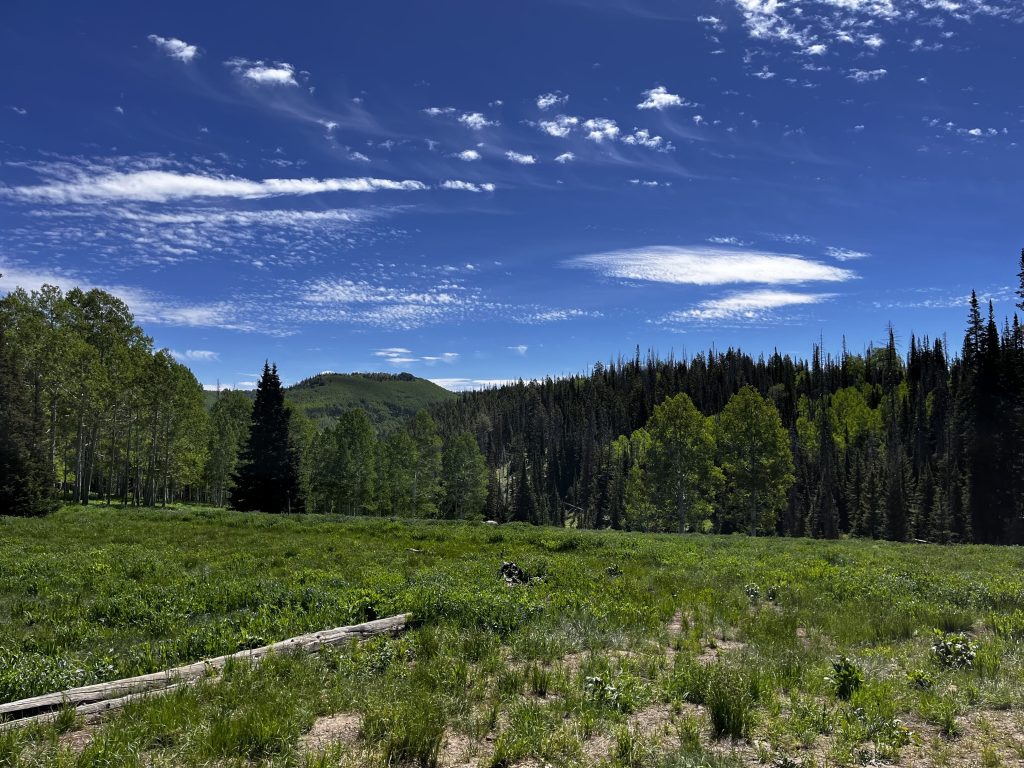
Later, as a young teenager, I remember going to youth camps further away, in the Rocky Mountains, among the fir trees and the quaking aspens, above lakes and atop mountain heights where you could see for miles, all rolling ridges that melted into one another in an astonishing vista that stretched endlessly into the distance. I remember hiking along barely broken trails and huddling around a campfire with other young women my age, and days of rain and even some snow, and the taste of hot soup heated over smoky fires.
I have gone camping as a young mother, and as a young youth leader, and now, comfortably in my forties, I still find myself still packing up my bags and bringing my faded blankets and trekking into the wild with a group of other women of all ages to camp under the wide wild blue sky of the mountains deep in the heart of the state in which I was born.
There is a peculiar kind of peace to be found in the wilderness. A way of becoming and belonging that does not happen when we are all isolated into our individual spaces, with rigid routines, and strict schedules. There is a way of welcoming that happens when we walk a variety of dusty trails together. There is a way of belonging and becoming that happens when we share early risings on cold mornings and the pleasure of shadowy shade on hot afternoons and complain together about the annoyance of sweat and dirt and the rocks trapped in the bottoms of our shoes.
No matter how well you think you know someone before you go into the wilderness with them, you know them better after walking 847 steps uphill together in the dark with a roll of toilet paper clutched to your chest to visit the bathrooms that have not been updated since before you were born. No matter how well you think you know someone in the comfort of your home, you know them better after waking up together at 2 a.m. as you try to decide if the scratching you can hear at the edges of the cabin are the scrapings of a stray dog, or a badger, or something scarier, like a bear. (In the thirty years I have been camping I have heard others tell me about seeing bears, but I have not, whether that is due to my severe nearsightedness, my habit of staying close to camp, or simply luck, who can tell. I was once confronted by a grumpy badger disturbed from its wanderings by the winding path we tried to take among some interesting trees, but I have found wild animals to be content enough to leave me alone if I afford them the same courtesy, and simply waited until he waddled away.)
No matter how well you think you know someone you see around the neighborhood or in line at the grocery store, you know them better when you have to decide together whether the food is still raw or if it is about to burn while you cook over a fire with ash and smoke in your eyes. No matter how well you think you know someone you meet at the mailbox, you know them better when you rely on them to put sunscreen on your neck, to make sure you drink enough water, and to help you chase moths and bats out of the cabins and tents and outhouses at night before you go to sleep.
There is a sacred type of belonging that happens when we go into the wild together, one that echoes stories of sacraments and scriptures, of wandering hand in hand through the wilderness, of holy dedication and a kind of close community built before we were taught to put up walls and fences and wide yards to keep one another out and to keep ourselves in. But this separation makes of us small, distinct pieces of what we could be, a larger and more satisfied whole.
The wilderness is difficult. It takes more time to do less—to boil water, to make meals, to sit around a low burning campfire and talk until the moon rises high above the tree lined horizon. The wilderness demands dedication, dependance, and devotion. It is not easy to walk the wilderness alone.
Like traveling in the wilderness, life, I have found, is not a solo journey. Oh, there are many times when the world and the forces within it would try to convince us that we are alone, that we are isolated, that the challenges we face are ones that we have to face in silent solitude. In our suburban homes, surrounded by the weight of demanding schedules and separated from nature and from one another, it is easy to feel unknown and unwelcome, to wrap ourselves in independence as a type of protection. But this sense that we can be entirely self-sufficient is a deception, for we are always going to be better when we have a family, a neighborhood, a community. We are stronger when we stand side by side. This life was not designed to live alone.
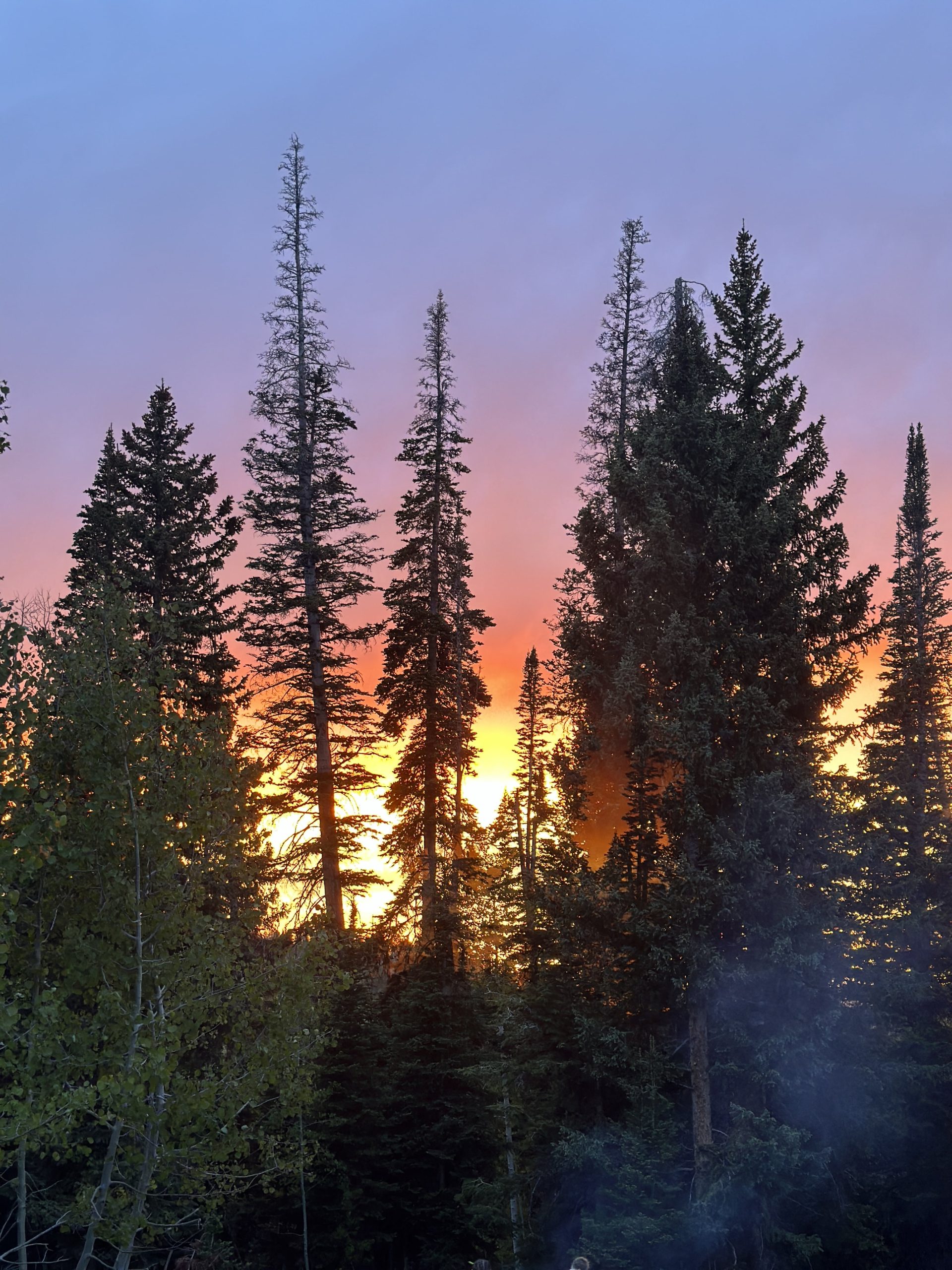
We are more complete when we travel together, when we create communities, when we remember what it is to belong, when we help one another recognize the beauty of the world—the tender white bark of a sapling bending in the wind, or the soft fuzzy body of a caterpillar creeping along crisp leaves, or the bright blaze of the sun as it sinks below the trees.
The world is burning, or so the experts say, painting pictures of distress and doom and denial, smoky visuals taken straight from disaster movies and apocalyptic books, and they offer one of a hundred different solutions, all of which take us further from the land on which we were once forced to learn to rely. These solutions often separate us from one another—they strive to keep us broken and alone. They fail to acknowledge that we do not exist in isolation from everything and everyone who has come before us. They do not see the humanity in those around them. They ignore the beauty of the simple things.
It seems to me that the answer could be simple. That it might not be found in the fear and hate and suspicion that colors our media, but in love for one another and for the land we have almost forgotten. It seems to me the answer might not be in buying and selling new products, in giving in to the overwhelming currents of consumption, but in an appreciation for creativity and creation, and an honest type of stewardship that remembers what it was like to work with the wilderness instead of working to defeat it. It seems to me that the answer could be found in a return to what was once easy— a return to friendship and community and a return to the wild.
The world—and the people in it—are as beautiful as they have ever been, with stunning sunsets and startling sunrises that start far too soon, and long trails outdoors where we can walk and talk together until we reclaim the sense that we belong to one another and to the land. I wonder if we have simply forgotten how to wake up, if we have forgotten how to look out the window and watch the sun edge over the horizon with a flash of red and pink and and gold in the cool morning air, if we have forgotten the brilliant brightness that illuminates the horizon for long sacred moments before it fades into the dull light of the every day. When was the last time you rose early, and wandered outside, simply to look at the mundane miracle of the sky?

Shelli is an advocacy writer and creative writing teacher. She loves to spend time with her husband (usually in the garden) and their four almost adult children. She also loves to sew (usually for the local community theater), to read, to write, and to drag her family outside to look at the sky. Shelli is passionate about poetry, Broadway show tunes, and telling stories -- of ourselves, our families, and our communities.
View Author PageStay Inspired
Join Our Newsletter Journey
Dive deeper into the world of Big Ocean Women. By subscribing to our newsletter, you'll receive a monthly dose of empowering stories, insightful articles, and the latest news from our global sisterhood. Don't miss out on the wave of inspiration – subscribe now and be part of our ever-growing community.