
I Call it Faith; The Radical Nature of Loving Your Neighbor
“Imagine what our real neighborhoods would be like if each of us offered, as a matter of course, just one kind word to another person.” — Fred Rogers
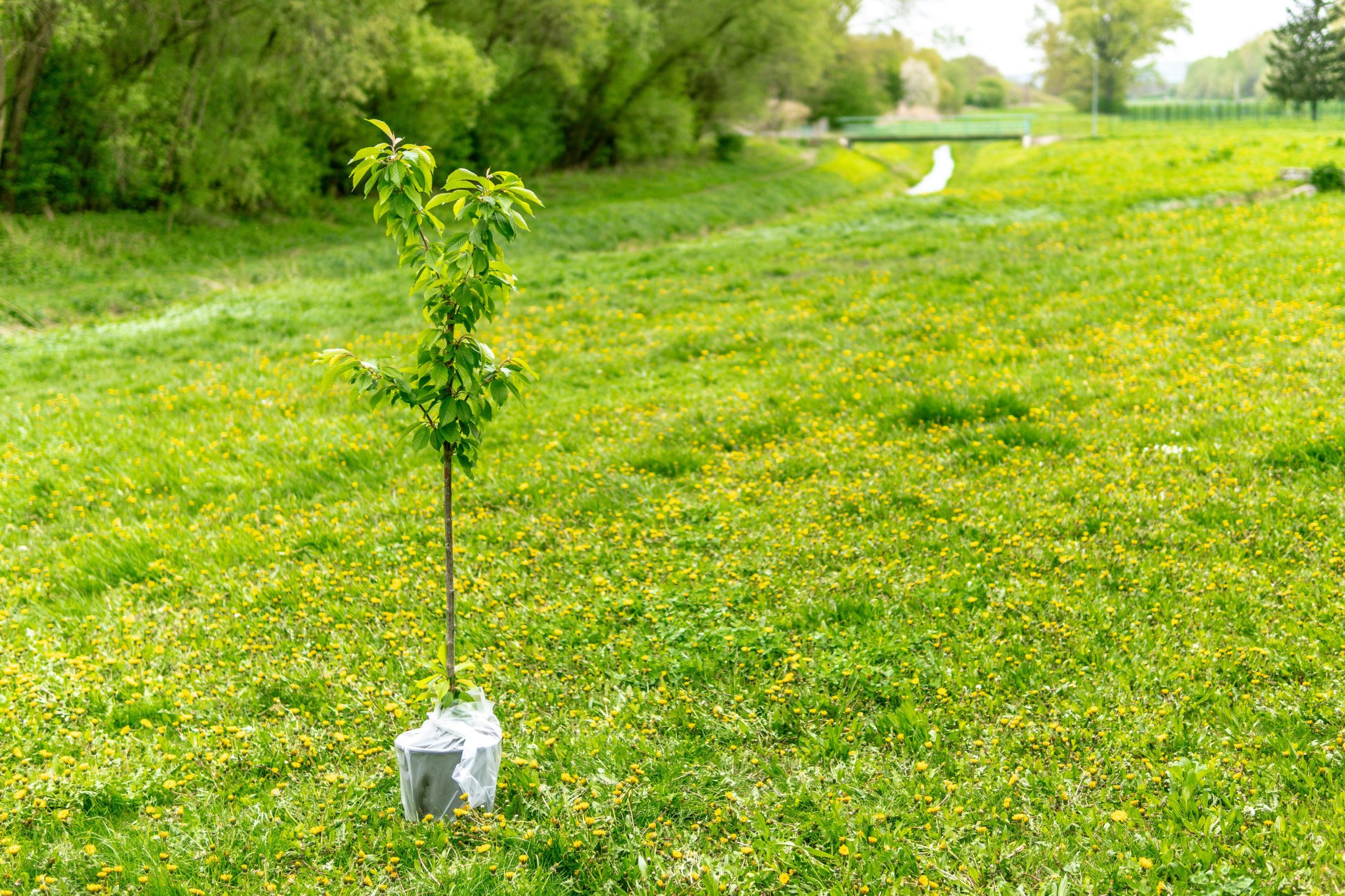
I’ve written about it before, but all good things bear repeating, so see with me this scene etched in my mind, one I have never managed to forget, although I forget many things, a tiny vignette I observed one spring morning when I was hurrying four small children into clothes and coats and backpacks, as I was making sandwiches and portioning carrots into small plastic baggies and packing lunches while trying to remember which child did not like peanut butter and which one liked only jam, as I was rushing out the front door and tying shoes and buckling car seats and seat belts and hurrying the ten blocks between our house and the schoolhouse and I looked out my car window as I was driving and in just a single brief moment saw an old man and an old woman, hand in hand, standing in the center of their front lawn with a shovel and a small tree, the kind of fragile sapling that looked delicate and dainty, as if it could be blown over by any wayward wind, and I was past them in a second, maybe two, but they looked to be deep in discussion about the placement of the young sapling in relation to the sidewalk and the front of the house and how far from the foundation to dig and plant and water the tree that in its inevitable course will outlast them both. Although that singular moment on that long ago morning is now a decade or more in the past, I still think about it—especially when I think about my children going to elementary school, although my children are now grown and in college or beyond, or sometimes, I think about it when I see couples both old and young walking hand in hand, or occasionally I find myself thinking about it when I walk my dogs past the street where a once tiny tree now towers taller than the house it was planted in front of and spreads it branches over the young family that now lives there.
You might ask yourself, as I have also asked myself, why it is this one moment that struck me in such a way that I remember it so vividly, even these many years later, the height of the tree, the wood handle of the shovel, the knife pleat neat blue slacks of the old woman? Why did this one scene engage my imagination so completely that I can still picture the exact shade of the red shirt the man was wearing, or the distinct slant of the early morning sun streaming over the mountain peaks to the east, rising quickly, well on its way to bringing in the warmth of the day? And the truth is, I don’t know, except that it seems to me that this couple, stoop shouldered and gray haired, are the best of us, the ones who looked around them at the world, saw what they might do to make it a little better, to bring beauty, to bring joy, and despite the fact that they would not live to see the fruits of their labor, they set out to do it anyway.
There is a great deal of hope in that. A great deal of consecration. More than a little faith, and a good portion of kindness. We live in a busy world, one full of danger and disasters and the sharp edge of solitude lurking in the shadows that stretch between ourselves and others, and it seems sometimes hopeless, like there is nothing we can do, like there is no answer to the question, what is it we can do to effect change?
And my answer is radical in that it is not radical at all.
We can plant. We can nurture. We can water, and nourish, and dig in the soil to keep it soft and to encourage growth that we cannot see. We can wait. We can watch. We can grow roots strong enough to sustain us against the strong winds that threaten to uproot us all. We can have faith.
Many things take faith.
Parenting takes faith—the caring for children who you carry, who you guide, one unsteady step after another, their sticky fingers holding tight to yours, children who with time and grace and vast quantities of food and love and attention but mostly food, grow into larger children and then adult children who are suddenly interesting and opinionated and full of a surety that I do not remember having, especially at their age which I barely remember at all.
Caring for animals takes faith—small hatchlings who grow into cranky chickens who refuse to lay eggs unless the season is right and the feed is right and the light is right until it feels like the gift of an egg is a great honor which they bestow unwillingly on the unworthy; and cats who are so sure of their place in the world that they march regally through their days leaving their caretakers bemused and eager to record their antics for others to enjoy; and dogs, who we do not deserve at all, the weight of their warm bodies curled by our sides, bodies vibrating with enthusiasm for all sticks and stick like objects and balls thrown for them to fetch, their ears pricked alert, all earnest loyalty and love for even the most undeserving owner.
Loving your neighbor takes faith, something I think those teachers who wrote the divine word were aware of as they recorded the great commandment to love others, a simple thing we are not always very good at doing, for we are mercurial creatures who want to be loved and are not sure how to love, who are confused about the nature of spirit and spirituality and faith and joy and hope and holiness, and, yes, love itself.
We underestimate not only our own abilities but also the power of our own small actions; easy connections that strengthen the fabric of our communities, the joy of simple meals and rambling walks and stopping in the aisles of our local market to say hello and how is your mother or your father or your child or your doted upon pet, and we forget the power of neighborhood gatherings and farmers markets and story times at the library where words create the miracles of new worlds and brave ideas, and we forget the power of plays at the local high school and community theater and outdoor stage, and the kindness of knowing the names of those you meet as you walk through the mundane meanderings of living a full life.
We have been taught that we as individuals do not matter. But what matters more? When people talk about taking action, and about grassroots change, we forget that we are the ones who can plant the grass, and watch it grow—if only we remember it is something for us to do, and that good can outweigh the bad. All we have to do is learn to care.
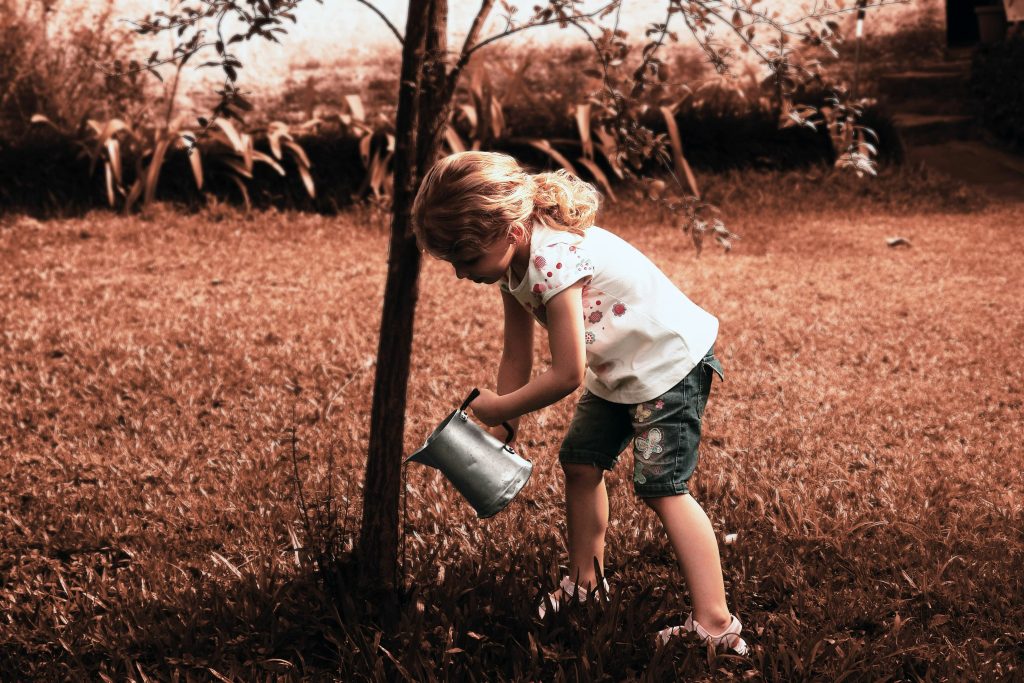
There is another thing I remember from when my kids were young, and it is a simple song, sung by a kind man with a quiet voice who always wore soft clothes and practical shoes that talked about neighbors and beauty and play and connection, and I often remember the words, an earworm winding its way through the notes of my day, the tune whistling around in the back of my head and it goes like this— “So let’s make the most of this beautiful day, since we’re together we might as well say, would you be mine, could you be mine, won’t you be my neighbor?” And it’s a question I feel needs to be asked more often, with more dedication and more devotion, and more faith in the outcome of what can happen when we make room for each other, and learn to encourage our communities to grow.
Active community building is not something strange or foreign or unknown. It looks like going to church with others, and standing together to worship in silent prayer with out-of-tune singing ringing in our ears and children scattering snacks at our feet. It looks like gathering a group and going to dinner, eating food that is sometimes delicious and sometimes disappointing but always interesting as you talk and laugh over a long table in low light. It looks like gathering in communal spaces, although there are so few of them left, and sitting in a circle with those older than ourselves, their hands gnarled and wrinkled by time, and those younger with endless energy and enthusiasm, to knit or paint or make out of simple materials something of beauty.
Loving our neighbors, creating community, nurturing the connections around us—it seems to me to be one of the most powerful, peaceful, and radical actions we can take. More than that, it is something that each one of us is uniquely qualified for. To walk down the street and know not only the names of your neighbors, but those of their children and their grandchildren as well. To pull the weeds lining not only your own garden, but that of your friends. To plant. To water. To encourage growth. To tend. To wonder. To observe small miracles.
We think of change as some large and drastic event, something sudden, something strange. But we dismiss the long, slow growth of a tree, branches spreading wider year after year, roots digging deep down below the ground where we walk, leaves unfurling every spring like a clockwork recording of our living, all winding together the very foundation of our lives, and in the rustle of the leaves hearing whispered words echoing a question we have only recently learned to hear—won’t you be my neighbor?
“As human beings, our job in life is to help people realize how rare and valuable each one of us really is, that each of us has something that no one else has—or will ever have—something inside that is unique.” — Fred Rogers.
A Practical Guide to Personal Preparedness: Things you can do to be able to care for your family and community
- Get healthy—Walk, sleep, drink water. You cannot care for your community if you are busy caring for illness or injury.
- Connect—Get to know your neighbors. Engage in a church or faith community. Build relationships. No one can prepare alone. Be a part of a larger web that keeps you connected, informed, and involved.
- Get active—Take part in small actions that help the community or the earth. Letter writing. Calling trees. Volunteering. Being a small part of something larger builds hope in the world we live in.
- Inventory what you have to offer—What are your skills? What are your talents? You do not need to learn a radically different skill set. You only need to figure out where your current skills can be applied.
- Read and inform yourself—Know what is going on around you, on both local and larger levels. Research so you cannot be led astray by false information. Read books by authors who dealt with both social, environmental, and political emergencies in the past. Learn from history.
- Disengage from consumption—Be mindful about where and how you use your resources. Is it a need? Is it something that will benefit your family, your community, or your cause?
- Rest—No one can make change alone. Make sure you are physically and emotionally ready to help, and that requires not being exhausted by what you see and worry about. Find joy in small things, in family, and in community.
Lead photo credit: George Bakos via Unsplash

Shelli is an advocacy writer and creative writing teacher. She loves to spend time with her husband (usually in the garden) and their four almost adult children. She also loves to sew (usually for the local community theater), to read, to write, and to drag her family outside to look at the sky. Shelli is passionate about poetry, Broadway show tunes, and telling stories -- of ourselves, our families, and our communities.
View Author PageStay Inspired
Join Our Newsletter Journey
Dive deeper into the world of Big Ocean Women. By subscribing to our newsletter, you'll receive a monthly dose of empowering stories, insightful articles, and the latest news from our global sisterhood. Don't miss out on the wave of inspiration – subscribe now and be part of our ever-growing community.