
On Frogs and Freedoms and Flights to Space; or the Endless Possibilities of Pure Imagination to Enact Change and Accomplish Advocacy
When I was young we moved, for no reason I could ever divine, into a little yellow house in the wilds of Northern California. It was not the California of white beaches and star-studded walks and Hollywood and movie stars, not the California in films or books or movies. No, this was a different California, one of redwoods and red mud and red poppies growing in the long grass along even longer winding roads on which one or two neighbors lived down the way, not too close but not too far away—a rural community of forests and rivers and hidden homes and tiny grocery stores and weekly treks to town to stock up on what we might need for meals, a place where we wandered in the untamed land near the school on our way home, deep in the green of the woods chasing frogs which we could see and fairies which we could not.
No one had a lawn around their house, for what use did you have for a small patch of tidy green when you were surrounded by the whole array of nature in shades of pine and cedar and emerald and sage? What use did you have for a sprinkler when you could walk through trickling streams? What use was there for a side walk when there was a faint forest path to follow until you got to the place at the fork in the road where every morning the school bus would stop and wait?
We had a television, of course we did, but it was old and staticky and the gleaming silver antennae refused to tune to more than one or two stations, mostly reruns of old movies and faintly alarming news, and the reassuring voice of Fred Rogers, telling us that we children were supposed to play, that it was good to explore, that our imaginations could change the world.
It was a long time ago, now.
Almost forty years, by my count, although I do not especially like to count back so far, the years a reminder that I am no longer the girl with the braids down her back who wandered in muddy clothes to the house down the lane where the horses lived to pull great hanks of grass from the ground so I could lure them to the fence, careful always of their large, square teeth, a vivid image I can recall as if it was yesterday or last week, or just a moment ago. And in the background of my memory there is a song, from one of the few movies that would reliably show up on that faded television set on Saturday afternoons, a song about imagination and creation and following a gaudily dressed pied piper into a chocolate factory where a young boy would be met with astounding sights and marvelous creations and the hope that he, too, could create a new and delicious world.
As a child of early eighties optimism I was raised on public tv and reruns of Charlie and the Chocolate Factory, and the idea that the imagination is a powerful thing, a reassurance that the climbing of trees and the stirring of mud and the soft slant of the sun over a brittle bed of pine needles was, at the end of the day, the only thing that mattered when you were young and carefree.
We were shown a world that did not truly exist, one where love and hope and speaking kindly about our neighbors made change and created opportunity, one where the sun never set on anger or despair. We were shown a world that came to pass only through the imagination of hopeful adults, the manipulation of puppets, and the vision of creators who wished with all their might that the world they raised their children in would be kinder than the one they had known.
We were shown a world of imagination and inspiration and peace and joy—and sometimes I think I have been looking for it ever since.
The song Pure Imagination from Charlie and the Chocolate Factory has been covered many times, by many different artists. But my favorite version was released in 1976, in the year I was born, although it was not until many years later that I heard the low drawl of Lou Rawls sing about viewing paradise, about making dreams real enough to reach out and touch. It was not until I discovered that in 1983, three years before the Challenger shuttle disintegrated before the eyes of my entire elementary school classroom, Gluoin Bluford, the first African American to go to space, carried a recording of Rawls out of the atmosphere of the earth and into the wide dark expanse of new possibilities and new frontiers.
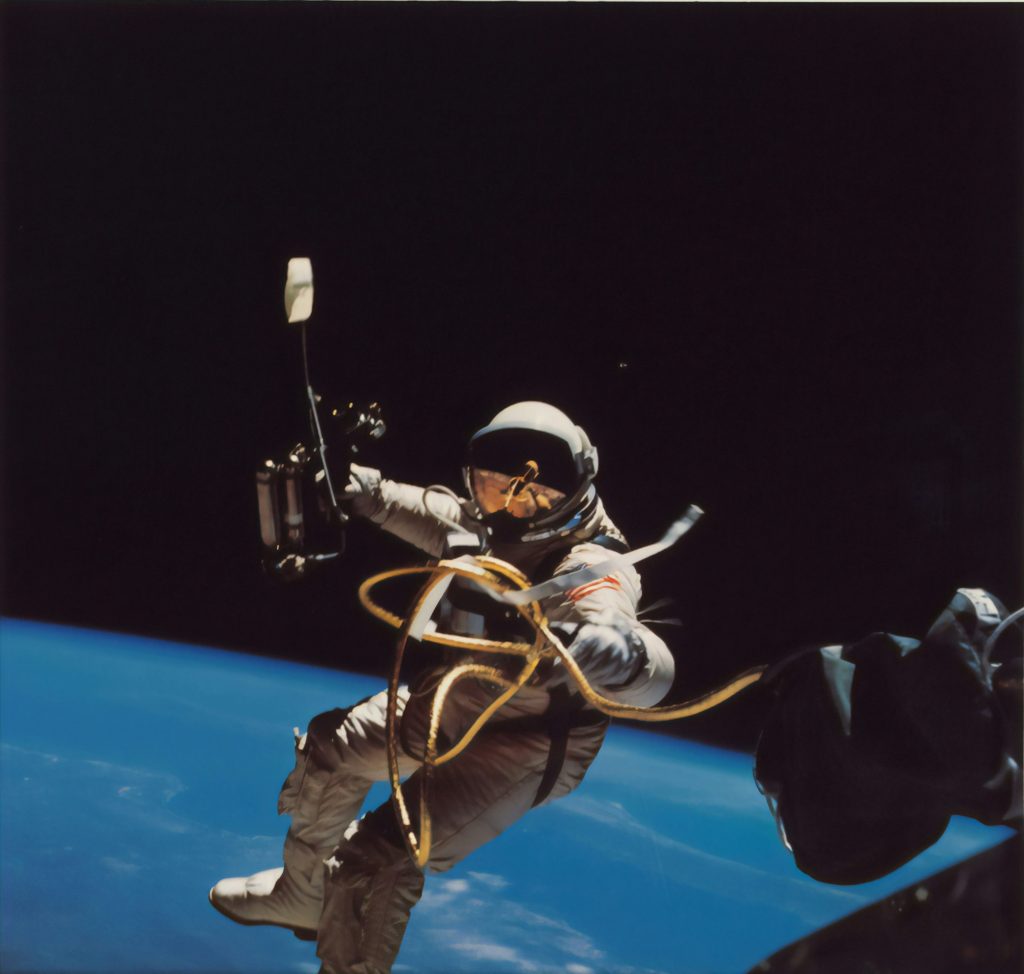 Image from The New York Public Library via Unsplash
Pure Imagination in space, I thought. How fitting.
I still think about it, sometimes. About the way an entire generation was raised to believe in the good of the world, in the power of change, in the potential of our own imagination. It was a lovely childhood, a start to a streak of optimism I am trying to take with me into my later adulthood, that I look for as I write.
After all, what are we here for, if not to dream?
The problem is, I think, that we have forgotten how to begin. We wait until someone else beckons to us, with a song and a dance and a promise, an invitation to follow them into the unknown. We wait for the music makers, the artists, the writers to create for us fanciful worlds. We stand in the chocolate factory with Charlie and look at the fantastical creations of someone else instead of reaching out and crafting our own.
How, then, to start? Doesn’t every art begin with a lump of clay or an empty canvas? Doesn’t every holy religion begin with the words, In the Beginning? Doesn’t every positive change begin with someone who stood in the center of some problem and said, ‘I think I can do something about this’? It is in the middle of the dusty floor, after all, that you first learn to sweep.
The biggest failure in our efforts to enact change is not a failure of policy. It is not a failure of values, or a failure of dedication.
It is a failure of imagination. Our biggest flaw is our inability to see the possibilities of change in the faces of those who live and work beside us, to hope for it in our daily interactions, to strive for it in our work and in our play, to embody it in our industry and in our art. To demand it from our communities and leaders and politicians.
If we cannot imagine the alternatives to the status quo then our sentence will be to live within it. If we cannot begin to see the seeds of solutions in the rocky problems and dried out soil we grapple with in the day to day, we are doomed to accidentally walk on the seedlings that might one day have bloomed and flowered into beauty and joy.
I think, if we find ourselves content to only exercise our imagination in service to some other person’s dream played out on tiny hand held screens, instead of embracing in full, vibrant technicolor the everyday movement of our own magical lived moments then we will be forever caught in a dusky half existence of looking through a window at somebody else enjoying what we once hoped we could have.
I think, if we cannot shape the world to meet the standards of our ideals, to aspire to our hopes, to enact the miraculous or marvelous, we are doomed to exist in a failing system that was created for someone else.
By the time I was in high school we had moved from California to a town in the middle of Utah, where the wild is drier and rockier but no less beautiful. I went to school in a large white square cinder block building with a courtyard at the center, and in that courtyard was an evergreen tree that had been planted by a class of seniors many years before, and it had thrived and grown and soared into the sky, taller than even the tallest part of the school.
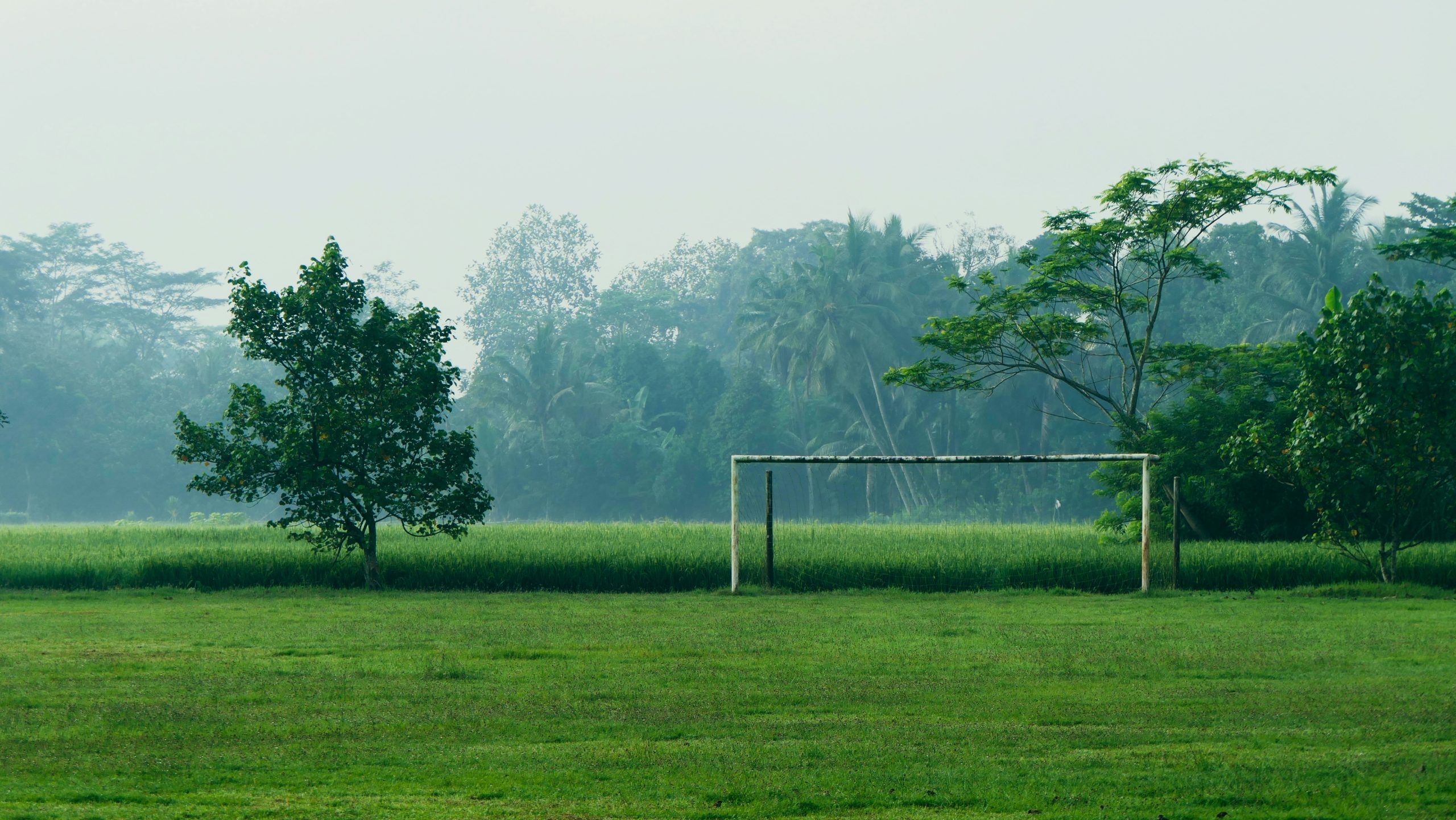
Over time the school aged, as schools do, heavy with the weight of lead paint and adolescent angst, and a decade ago now they decided to rebuild, to move the building and level the foundations and make soccer fields out of where the original once stood. But what to do about the tree? It was healthy and strong. It did not deserve to be razed along with the cement and rebar and cinder block of the old buildings. But who has ever imagined a soccer field with a tree standing right in the middle? We watched the demolition over a course of months—the careful way they fenced off the roots, protected the branches, kept rubble from falling into the tender bark. The new school went up nearby. The ground around the fencing was leveled. New grass was planted. Ribbons were cut and school started, and along with it sports, and suddenly students began playing on that field, kicking balls back and forth under a clear cloudless Utah sky. And right in the middle of it all, that tree still stands, a testament to the graduating class that planted it so long ago.
It is a beautiful thing. I think it is worth the time to appreciate beautiful things.
So my question is this:
Can we imagine the new world we want to live in? Can we imagine a sustainable community, designed for every member to thrive without signing away their rights, their dignity, or their resources—the air they breathe, the soil they work, the sun shining over their heads? Can we imagine a world where everyone finds peace and love and joy? Can we imagine a tree growing tall in the middle of a soccer field, sheltering a community beneath its wide-spreading branches?
What are we doing, if we do not try to create, in our language and in our communities, in our art and in our homes, a new truth about the world we live in?
In the end, it all comes down to still another question:
Do we believe we have the power to remake the world? And if not us, then who?
If we cannot even imagine the world we want to live in, how will we make it come to pass?
I believe in the power of individuals. I believe in the power of small actions—in baking bread, in writing stories, in growing gardens, in sharing meals, in planting trees, in walking together down winding paths. I believe in grace, and hope, and wonder. I believe we can grow tiny yellow flowers even in the dry and cracked dirt of the desert, if we learn how to water and hoe and weed.
I believe in faith.
Most of all, I believe in imagination.
Lead Photo credit: Utsman Media via Unsplash

Shelli is an advocacy writer and creative writing teacher. She loves to spend time with her husband (usually in the garden) and their four almost adult children. She also loves to sew (usually for the local community theater), to read, to write, and to drag her family outside to look at the sky. Shelli is passionate about poetry, Broadway show tunes, and telling stories -- of ourselves, our families, and our communities.
View Author PageStay Inspired
Join Our Newsletter Journey
Dive deeper into the world of Big Ocean Women. By subscribing to our newsletter, you'll receive a monthly dose of empowering stories, insightful articles, and the latest news from our global sisterhood. Don't miss out on the wave of inspiration – subscribe now and be part of our ever-growing community.