
On the Miraculous Nature of Being Human and Holy
My knees hurt this morning.
The odd and nagging pain is nothing new, simply a reminder that I am no longer as young as I always think I am when I start a new exercise regimen, a souvenir of twenty years of kneeling on the floor as I mothered young children, an indication that I need to move more, a sign that I should probably walk further, a hint that I should care more for the state of my joints.
It seems a small thing really. A very human thing. It seems to be the point of bodies. To remind us how human we are.
I have been thinking a lot lately about what it means to be human. About what it is to be fallible, and frail, and at times faulty and flawed.
 I have been thinking about holes.
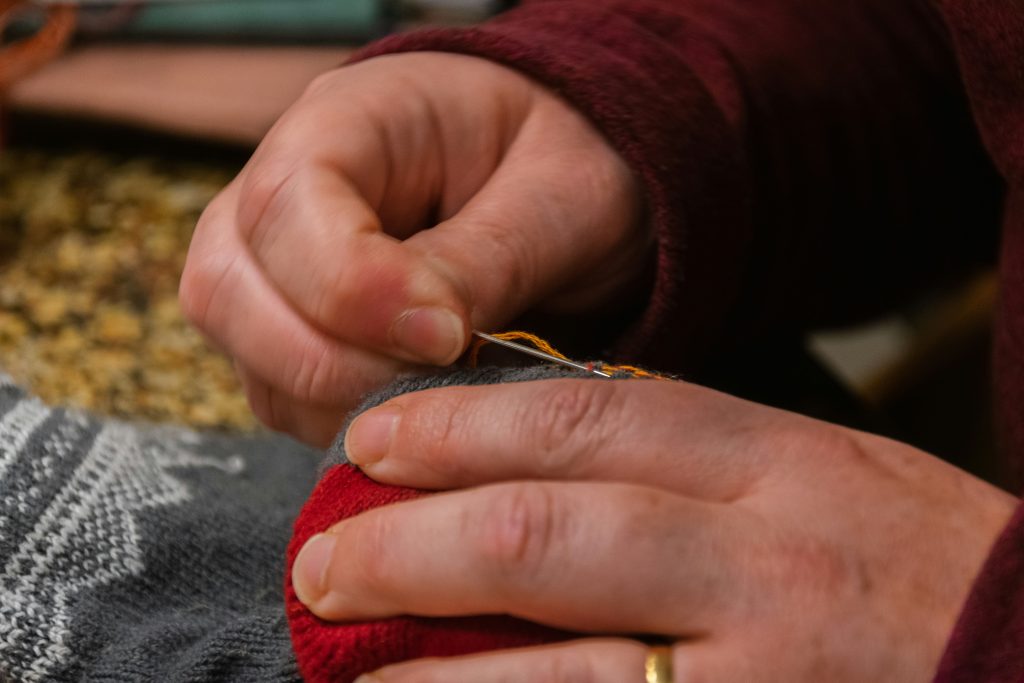
I blame it on the mending. I find it to be the fault of the untidy pile of clothes sitting abandoned on a chair next to the desk in my front room, an unstable stack waiting patiently for a little bit of attention. This shirt needs a button. This skirt needs a hem repaired. This pair of pants has a hole in the knee, and needs to be mended, needs to be patched, needs to be fixed to be presentable and failing that, could possibly be made into a pair of shorts. There is almost never a question of throwing something out. After all—most of it just needs a bit of care. A bit of concern. A spot of mending and smoothing and ironing and washing. A little looking after. Maybe it is the influence of my grandmother, who taught me to sew and who was born during one world war and raised during another, a woman who lived through a depression and raised seven children, five of them boys who I am sure snagged their shirts on fences and pants on bike handles and door handles and rake handles and wore holes in their socks by running outside without shoes, at least if they were anything like my boys, or it might be the fault of my mother who took the worn-out drapes from my bedroom and cut them up into a Halloween costume one year, there was a bit of fading, sure, but if you cut it the right way it wouldn’t show, or maybe it is because of the woman down the street who made me a blanket when my oldest daughter was born, knit from yarn she had saved from an old worn-out sweater she had rolled into a tidy ball, or maybe it is because I love to quilt, to make large blocks out of the smallest discarded pieces of fabric, to combine loud and colorful patterns into something warm and comforting to snuggle with in the dark, or maybe it is none of these at all, but I find myself looking at everything with an eye to mending and making do, contemplating what I could create if only I could cut around the holes.
After all, we are all of us living lives full of holes. We are each in need of mending. And we are each capable of making something new out of what we have left. Again, it seems to be another very human thing, this need to fix what is in need of fixing. We are the menders, the makers, the creators. We are the ones who look at an absence and say, “I can do something about that.” It seems to be that the very act of being broken is to be human, to be in need of filling, in need of stitching together.
It feels sacred. It feels holy.
It is a strange word, when you think about it. Holy.
It is a word that might mean to be full of holes, on one hand, and on the other, might mean to be divine, to be devout, to be sacred. To be good and right and revered.
It is brokenness and blessedness in one.
It is Holy.
When I was in high school there was an old man who lived down the street, although now that I am older myself I begin to doubt my mental picture of him as ancient and lined and weathered. I do know for sure he was old. Old and alone, and probably lonely.
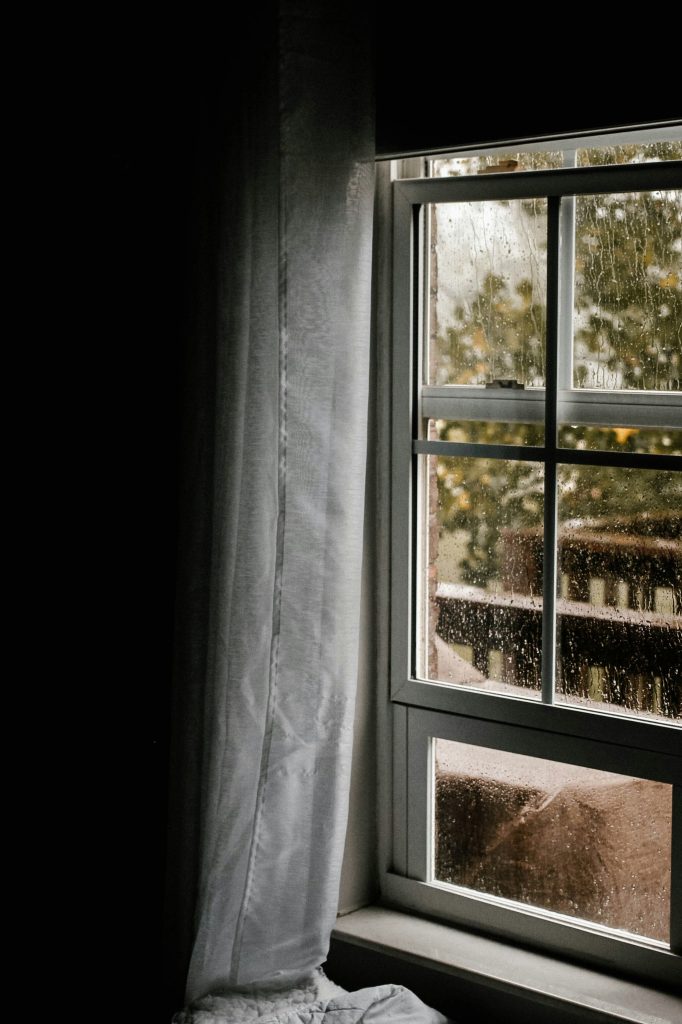
He lived in a house with a wide front window past a neatly trimmed lawn that edged a winding sidewalk that looked out over where the bus stopped, and we saw him there, every day, standing at his east facing window and watching as students walked past his house in the early morning light, and he would wave to the kids who glanced his way.
He became a routine. A fixture. A habit. He stood there, every morning and every night, a silent sentinel keeping watch as we went to school, and when we came home. The Waving Man, we called him. When he died the local paper did a story on him, which I remember, but could not find. He used to be a policeman. And then he grew old, as we all do, and he retired. He became a crossing guard. He used to hold a sign in the middle of the intersection and make sure it was safe for children to cross the road. He used to be a protector. And then he grew even older, as we all will eventually do, and he retired again, retreating to his small house with very little company and found himself at loose ends. One morning he looked out his window and waved at someone walking by, and they waved back. And so it began and so it continued, for so many years that I used to drive my young children past his house in the mornings so that they could wave too, and then one morning he was not there.
I still point out his house when I drive by. “That is where the Waving Man lived,” I say.
I like to think that whatever hole was left in his life after retirement, whatever gap, whatever absence, it was at least partially filled by the children who came to look forward to his daily presence. I like to think it meant as much to him as it did to us.
I have tried to be grateful, lately, for the ache in my knees. After all, it is a very human pain, isn’t it? And being human is, at the end of the day, a holy thing. It allows us to connect in very visceral ways to others, or it would, if we let ourself celebrate the pain of what it means to be so completely human.
Not a part of some segment of humanity. Not a label, and not an expectation. Not an idea.
Simply a human.
It takes a great deal of love to feel grateful for the holes—and the holiness—in our lives. But the world is a hard place to practice gratitude, and I worry sometimes that we have lost what it feels like to embrace the sacred, or the sanctified. I worry that we are so busy with the what of living that we fail to appreciate the why, that we do not see in each other the seeds of a greater spiritual nature, that we miss out on a deeper understanding of what it means—to simply be holy.
I wonder if we see others—our neighbors, our family, our friends, our acquaintances, the strangers we make eye contact with as we pick out the best apples from the large pyramid in the grocery store or the people we pass on the sidewalk on our way to the mailbox as we walk through our small communities—simply as replaceable cogs in an all-consuming machine. If so then we have truly wandered and become lost.
I like to think we are not so hopeless. After all, I am not the only one with a pile of mending in my home. I am not the only one who likes to sew and quilt. I am not the only one who gardens and cooks and talks to strangers in the produce section of the local grocery store. I am not the only one who wakes up in the morning with aches in my joints. More connects us than separates us, I think. I hope. If nothing else I think we are broken in the same ways.
I write often about planting, about baking, about crafting and sewing and making and creating. I have thought about what these things share that draws me towards them, that captures my interest and keeps me coming back again and again, both in action and in word. What I have decided is this—they are all tasks that deal in potentials.
There is a potential in a small black seed to become a lush and leafy head of romaine lettuce by the end of the growing season, just in time to chop up with a sun-ripened tomato and toss with a handful of olives and a bit of soft feta cheese for a delicious evening meal while sitting in the last rays of the setting summer sun. At least, that is, if I do my part. If I plant the seed. If I water it. If I weed and watch and weather the season’s late storms.
There is potential in a scant jar of sourdough starter to become a fragrant loaf of bread, that is if I add a little flour, a little water, a little salt, and a little time. Every word I write has the potential to combine with a string of other words to reach off the page in a way that will make someone smile or laugh or think or feel. Every length of fabric has the potential to be a warm and welcome quilt to wrap a new baby in, to spread over the grass, to build forts in the front room, to nap on and read on and snuggle on and love on.
Every person has potential as well. After all, we only have to look to see the sacredness in each other—the key is in recognizing it. In honoring it, no matter how different it looks from what we are used to. Who am I to decide what is holy for someone else? Who am I to limit the possibilities of holiness? I can only be open to the possibilities. I can only remember that we can each become gatherers. We can each become makers. We can each know what it means to be holy, as we scrub the dirt from our hands and sweep the dead leaves from the corners of our edge of the world before we wave to the children passing by and sit down to rest. (Resting is important. It is work, after all, this doing and making and growing.)
It seems to me sometimes that in this mental shift there is only a before and an after. There is a line somewhere in there that we must cross—an unspoken acknowledgement of the sacred nature of all humanity. Once we see it, there is no unseeing it. There is only accepting it. Welcoming it. Embracing it. The author William Blake proclaimed that “everything that lives is holy,” that all things, and all people, were made of the stuff of the divine. Once we acknowledge the frailties of our own bodies, we can no longer deny the frailties of those around us. Once we see the holiness of ourselves, we must also see the holiness of others.
One cannot exist without the other. We are either all human and heavenly, or none of us are. We are each of us ordinary, born of dust and dirt, or we are each of us divine, made of the stuff of stars. We all lay down at night, sore from our daily labors. We are all blessed. We are all broken. We are all full of holes. We are all holy.
So I think we should spare a thought for the planters, the sowers, the sewers and stitchers and makers and mothers. The small children with the torn pants and a smudge of green grass on their scabbed over knees. We need to spare a thought for the broken. For the weary. For the homeless and hopeless and heartbroken and healing. We should spare a thought for the refugees and the exiles and the outcasts and the immigrants gathering as a family for the first time in a new home. We must spare a thought for the old, alone in their solitary homes, and the young who are just walking by. We ought to spare a moment for the aches and pains of the middle aged.
There is no other way to create the world we want to live in. It cannot be left to others, the shaping of it, the molding, the building out of plain sand, grand towers on the edge of the sea. We must be a part of the design. We must be a part of the vision. We must take our creaky, painful joints and wrinkled skin and broken hearts and tired hands and pour our efforts into healing one another’s hurts, for only then can we know what it means.
To truly be made holy.

Shelli is an advocacy writer and creative writing teacher. She loves to spend time with her husband (usually in the garden) and their four almost adult children. She also loves to sew (usually for the local community theater), to read, to write, and to drag her family outside to look at the sky. Shelli is passionate about poetry, Broadway show tunes, and telling stories -- of ourselves, our families, and our communities.
View Author PageStay Inspired
Join Our Newsletter Journey
Dive deeper into the world of Big Ocean Women. By subscribing to our newsletter, you'll receive a monthly dose of empowering stories, insightful articles, and the latest news from our global sisterhood. Don't miss out on the wave of inspiration – subscribe now and be part of our ever-growing community.