
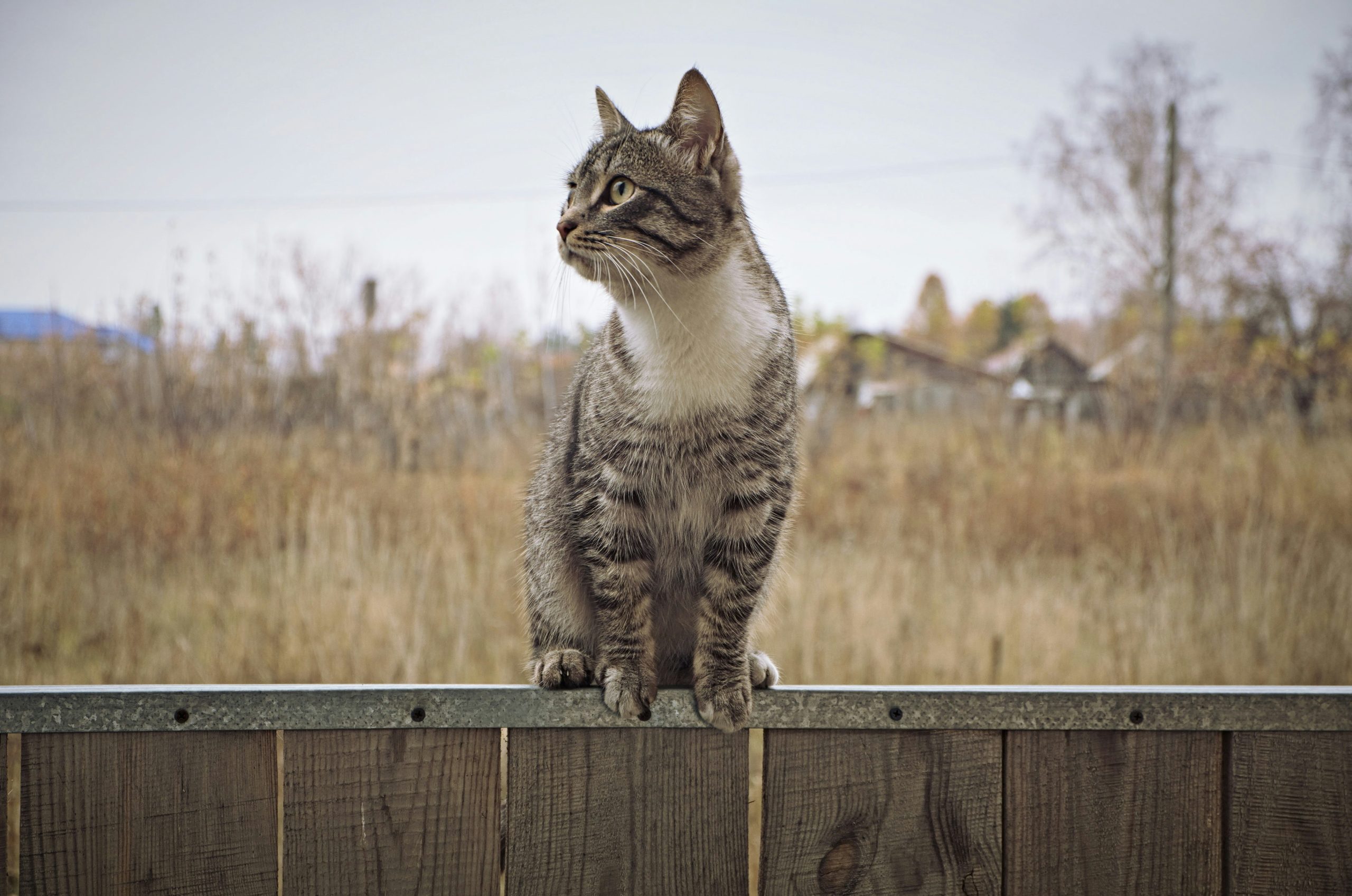
Curiosity Killed the Cat and Other Lies Our Parents Told Us (English & Spanish)
The cure for boredom is curiosity. There is no cure for curiosity.
~Dorothy Parker
Curiosity killed the cat, they told us—a reminder, a warning, an admonition or an advice whispered in the dark of the night when little ones keep talking long past the hour when they are supposed to be in bed, asking question after question as their inquisitive minds wander the events of the day. Curiosity killed the cat, they repeat, so don’t question or query, don’t conjecture, don’t ponder too much, and I’ve always wondered at the strangeness of the phrase—along with the morbidity. The implied violence. Besides, what do cats have to do with curiosity anyway?
I had a cat once, when I was young, a cat that adopted us one crisp autumn day when the leaves were falling from the trees and the light had turned flat and gray. It scratched, yowling at the door and demanded to be let in—a sleek gold and black Himalayan with long whiskers who came in from the cold and never left, who would curl in my lap purring, and then bolt out of the room to wander the edges of our yard, who would tiptoe on the tops of fences, the edges of rooflines, the borders of gardens and then rumble, judging from up high, mocking the dogs fenced safe and secure in their own yards.
On second thought, maybe cats are a good metaphor for curiosity after all.
Stay on the path, they told us. You never know what dangers might lurk in the woods, what hazards you might meet, what frights you might find, so be back before dark and keep your eyes up, and don’t get distracted by the wonders in your way—don’t wander, don’t stray. But ordinary paths, I’ve found, tend to be lined with amazing artifacts that beckon, just out of reach. Shining quartz pebbles, and last year’s bird nests, and broken twigs, and trickling streams glittering with the shine of sun on wet rocks lined with large boulders to sit on that seem tailor made for dipping tired feet into the water in the heat of the day.
Be careful, my teachers said, my parents said, and I have said, hoping to keep safe the young, wild things in my care, and I meant ‘make wise choices’ and ‘stay away from deep water’ and ‘wear shoes when you walk across the street,’ but maybe I should have phrased it more cautiously, been more deliberate in my choice of words, because I do not, in fact, want my children to avoid all the unpleasant things in life, and I worry that we have repeated this advice so many times, in so many ways, that our young have learned to shield themselves from everything awkward and uncomfortable and irksome and irritating, and what is life then, if it is lived so painstakingly that you never risk real rewards for fear of what might happen if you fail?
I have never been good at sticking to one path.
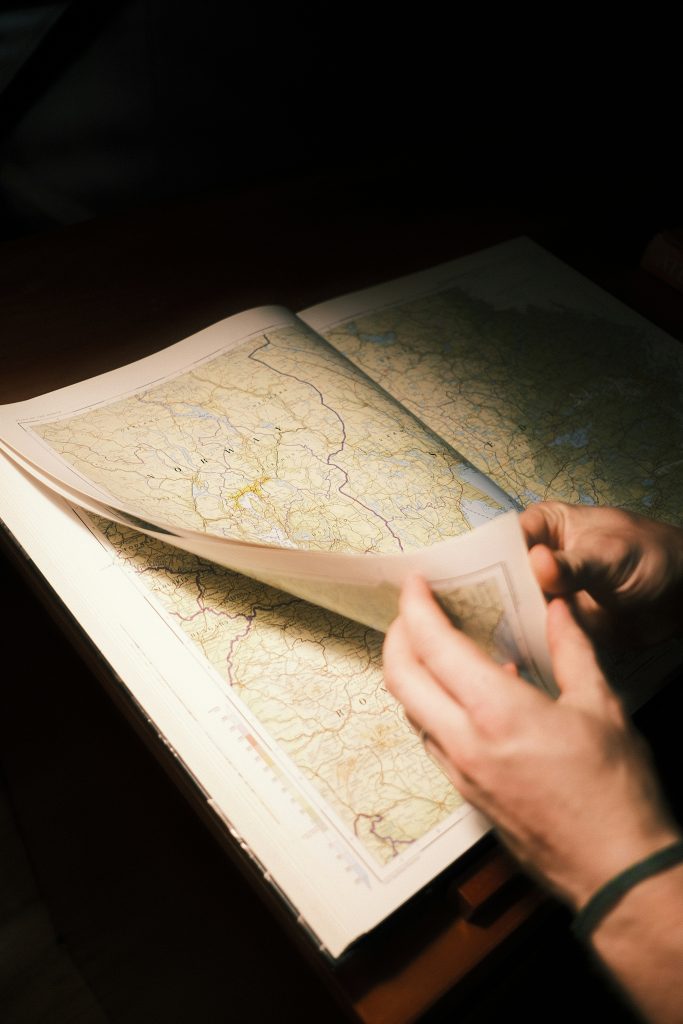
I have always been curious. I have always been intrigued by the possibilities of following fascinating trails to far off places and interesting destinations. I have a large book of maps on my shelf, page after watercolored page that chart exotic, imaginary places like Middle Earth and Narnia and Neverland, and one painstakingly drawn depiction of Islandia, or an ancient Iceland, with shaded green land surrounded by tiny sailing ships and slithering sea monsters colored in inks of bronze and gold and black and red. The blue seas bear the words ‘Here there be Dragons’ in curling script, a warning that beckons to my adventurer’s heart, because I have always wanted to see a dragon, I have never been afraid of the unknown, and I have learned that sometimes there is value in learning to get lost.
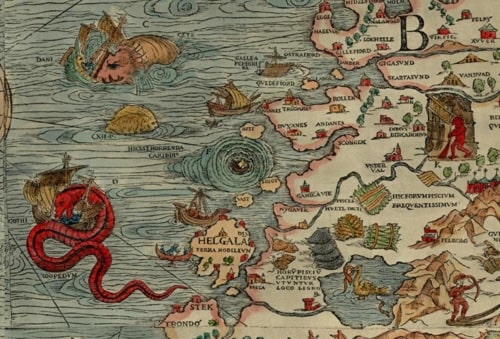
Sometimes there are meetings that happen along the way, knowledge that can be gained in no other place, a call that beckons and says ‘pack your bags, there are things to see, and adventures to be had before the end of day.’
Perhaps it’s why I have always loved to read—reading offers a chance to open a book on unexpected worlds, unimaginable characters, and exciting adventures in fictional worlds. Perhaps it’s why I have always loved the wilderness—the untamed wild is a place to wander past waterfalls and wildflowers and dusty dirt tracks that open on beautiful vistas that change with the time of day, the season of the year, the shift of the light. Perhaps it is why I have always loved to travel—unfamiliar cities offer the opportunity to ramble down unknown roads in search of the new and novel places that others have walked before in search of unexpected experiences and exciting architecture.
Perhaps it is why I’ve always said yes to unanticipated opportunities. Sew costumes for the local theater? Yes. Learn yoga? Yes. Join a writing group? Yes. Become PTA president? Yes. Get involved in advocacy, politics, community aid? Yes.
Yes, yes, and yes.
I spend a lot of my time in classrooms. I spend a majority of my day teaching, and talking about teaching, and thinking about teaching, and wondering how to help my students become better listeners of that teaching. I love the traditional spaces where we go to learn.
But I also love the mountains. The parks. The backyards. The libraries. The kitchens. The driveways and walkways and pathways where we travel side by side, where we help one another, where we talk, where we look at the world around us in wonder. Where we listen for the click of dog claws on pavement, the trill of birdsong in the trees, the hum of bike tires on paved paths, the whisper of wind through the tops of the trees.
And although I enjoy the comfortable air conditioned classrooms where I work, I know that learning is not something that is restricted to those classrooms—to desk-filled spaces that smell of books and sweat and dusty chalk.
Learning is not something that happens to us. It is a skill we hone, like a sharp edged blade, or maybe a sharp tipped quill, especially if my undergrad Shakespeare teacher can be believed and the pen is, after all, mightier than the sword.
So what does it mean, to learn?
I think it means to be curious. To ask questions.
To read books about people unlike ourselves. To practice empathy.
To embrace truth. To explore. To wander.
To get lost.
To follow where your curious mind leads. To look at the world through the windows of other people’s houses, peer through keyholes and pinholes and loopholes and rabbitholes, and see the spaces we pass through the way someone else sees them, in all the many hued shades of another’s lived experience—to appreciate the world as something complex, nuanced, and hard to describe.
I think it means we step into the shoes of others—into scuffed-up leather loafers and teetering high heels and mud-weighted duck boots and maybe a pair of grass-stained sneakers with worn-down soles and one broken lace.
I think it means we need to examine our relationship with the why of things.
Children are good at this. Why is the sky blue? Why is that flower brown and dead? Why do earthworms come out in the soaking summer rains to wriggle and crawl their way across the damp pavement instead of burrowing through the darkness of their dirt-filled dens?
Exploring. Learning. Discovering.
Children are naturals—they are inherently curious about the world. They want to learn, to grow, to find new ways of understanding. They touch and grab and feel and talk and taste and watch and smell and listen to the world in all its bold and beautiful variations, large and small.
And then we grow and get to an age where we are suddenly counseled to choose the safe, the comfortable, the reliable, the known.
So how do we recapture that child-like curiosity?
Show enthusiasm. Find joy. Open ourselves up to the beauty of the world and master the habits that help make learning out of every moment of our lives. Try a new recipe. Learn a new craft. Take a new route to work. Stop and talk to the person standing next to you in line at the grocery store. Reach out to people.
Make friends.
J.R.R. Tolkien addresses all of this in one line of The Hobbit. “I am looking for someone to share in an adventure.”
An adventure requires risk. It requires bravery. It requires the daring to tackle new opportunities, new tasks, new ways of doing old things. It requires stepping out our front doors and asking, ‘what is there to learn today?’
It requires courage. And it requires companionship. A home to return to. And someone to travel with. Someone to talk with. Someone to eat with. Someone to walk with. Someone to read with.
Last year my husband built me a little library out of a discarded kitchen cabinet. He painted it and weather-proofed it, and glued thatching to the roof to create a tiny cottage to sit out in front of our house, and then we filled it with picture books and chapter books, with short books and long books, with books for children and books for adults. With adventures in every size and shape.
I love to watch from the upstairs window as people stop to look, to pull out a book and turn the pages and tuck it away to read. I love to hover outside and give recommendations. I love to eavesdrop on conversations about what people like to read and why. I love the variety of people who stop to choose a book. I love the tiny community that is being built, one person at a time around the cast-off kitchen cabinet my husband reshaped into an opportunity. It reminds me that the world can always be, as Alice said in Wonderland, curiouser and curiouser.
Curiosity killed the cat, they told us, and no offense to cats, but it seems to me to be a small sacrifice, in the grand scheme of interesting things. A noble end that leads to a winding path filled with imagination, and creativity, and dragon filled sea passages that lead us in turn to great and worthy adventures.
If we allow ourselves to open the door and go.
Feature Image credit: Alexey via Unsplash
En Español:
Traducido por Jessica Yanez Barker
La curiosidad mató al gato y otras mentiras que nos contaron nuestros padres
La cura del aburrimiento es la curiosidad. No hay cura para la curiosidad.
—Dorothy Parker
La curiosidad mató al gato, nos decían: un recordatorio, una advertencia, una admonición o un consejo susurrado en la oscuridad de la noche, cuando los pequeños siguen hablando mucho después de la hora en que deberían de estar acostados, haciendo una pregunta tras otra mientras sus mentes inquisitivas divagan sobre los acontecimientos del día. La curiosidad mató al gato, repiten, así que no preguntes ni indagues, no conjetures, no reflexiones demasiado, y siempre me ha sorprendido la extrañeza de la frase, junto con su morbosidad. La violencia implícita. Además, ¿qué tienen que ver los gatos con la curiosidad?
Tuve un gato una vez, de joven, un gato que nos adoptó un fresco día de otoño cuando las hojas caían de los árboles y la luz se había vuelto plana y gris. Arañó, maulló en la puerta y exigió que lo dejaran entrar, un elegante himalayo dorado y negro con bigotes largos que llegaba del frío y nunca se iba, que se acurrucaba en mi regazo ronroneando y luego salía corriendo de la habitación para vagar por los bordes de nuestro patio, que caminaba de puntillas sobre las partes superiores de las cercas, los bordes de los tejados, los límites de los jardines y luego retumbaba, a juzgar por lo alto, burlándose de los perros cercados y seguros en sus propios patios. Pensándolo bien, quizá los gatos sean una buena metáfora de la curiosidad después de todo.
No te salgas del camino, nos dijeron. Nunca se sabe qué peligros pueden acechar en el bosque, qué peligros puedes encontrar, qué sustos puedes encontrar, así que regresa antes del anochecer y mantén la vista en alto, y no te distraigas con las maravillas que encuentres en tu camino; no deambules, no te desvíes. Pero he descubierto que los senderos comunes tienden a estar llenos de artefactos asombrosos que te atraen, justo fuera de tu alcance. Guijarros de cuarzo brillantes, nidos de pájaros del año pasado, ramas rotas y arroyos que relucen con el sol sobre rocas mojadas bordeadas de grandes rocas para sentarse que parecen hechas a medida para sumergir los pies cansados en el agua durante el calor del día.
Tengan cuidado, me decían mis maestros, me decían mis padres, y yo también lo he dicho, con la esperanza de mantener a salvo a los pequeños a mi cuidado. Quise decir ‘tomen decisiones sabias’ y ‘manténganse alejados de aguas profundas’ y ‘usen zapatos al cruzar la calle’, pero quizá debería haberlo expresado con más cautela, haber sido más deliberada al elegir las palabras, porque, de hecho, no quiero que mis hijos eviten todo lo desagradable de la vida, y me preocupa que hayamos repetido este consejo tantas veces, de tantas maneras, que nuestros jóvenes han aprendido a protegerse de todo lo incómodo, fastidioso e irritante. ¿Y qué es la vida entonces, si se vive con tanto esmero que nunca se arriesgan las verdaderas recompensas por miedo a lo que pueda pasar si se fracasa? Nunca se me ha dado bien seguir un solo camino.
Siempre he sido curiosa. Siempre me han intrigado las posibilidades de seguir rutas fascinantes hacia lugares lejanos y destinos interesantes. Tengo un gran libro de mapas en mi librero, página tras página en acuarela que trazan lugares exóticos e imaginarios como la Tierra Media, Narnia y el País de Nunca Jamás, y una representación minuciosamente dibujada de Islandia, o una antigua Islandia, con tierras verdes sombreadas rodeadas de diminutos veleros y monstruos marinos serpenteantes coloreados con tintas de bronce, oro, negro y rojo. Los mares azules llevan las palabras “Aquí hay dragones” en una escritura ondulada, una advertencia que atrae a mi corazón de aventurera, porque siempre he querido ver un dragón, nunca he tenido miedo a lo desconocido y he aprendido que a veces es valioso aprender a perderse.
A veces hay encuentros en el camino, conocimientos que no se pueden adquirir en ningún otro lugar, una llamada que te habla y te dice: ‘Haz las maletas, hay cosas que ver y aventuras que vivir antes de que acabe el día.’
Quizás por eso siempre me ha gustado leer: leer ofrece la oportunidad de abrir un libro sobre mundos inesperados, personajes inimaginables y emocionantes aventuras en mundos ficticios. Quizás por eso siempre me ha gustado la naturaleza: la naturaleza salvaje es un lugar para pasear entre cascadas, flores silvestres y polvorientos caminos de tierra que abren a hermosas vistas que cambian con la hora del día, la estación del año y el cambio de luz. Quizás por eso siempre me ha gustado viajar: las ciudades desconocidas ofrecen la oportunidad de recorrer caminos desconocidos en busca de lugares nuevos y novedosos que otros ya han recorrido en busca de experiencias inesperadas y una arquitectura fascinante.
Quizás por eso siempre he dicho que sí a las oportunidades inesperadas. ¿Coser vestuario para el teatro local? Sí. ¿Aprender yoga? Sí. ¿Unirme a un grupo de escritura? Sí. ¿Convertirme en presidenta de la Asociación de Padres y Maestros (PTA)? Sí. ¿Involucrarme en la defensa de los derechos de los demás, la política, la ayuda comunitaria? Sí.
Sí, sí y sí.
Paso mucho tiempo en las aulas. Paso la mayor parte del día enseñando, hablando de la enseñanza, pensando en la enseñanza y preguntándome cómo ayudar a mis alumnos a ser mejores oyentes de esa enseñanza. Me encantan los espacios tradicionales donde vamos a aprender.
Pero también me encantan las montañas. Los parques. Los patios. Las bibliotecas. Las cocinas. Los caminos y los senderos donde caminamos juntos, donde nos ayudamos, donde hablamos, donde contemplamos el mundo que nos rodea con asombro. Donde escuchamos el clic de las garras de los perros en el pavimento, el trino de los pájaros en los árboles, el zumbido de las ruedas de las bicicletas en los caminos pavimentados, el susurro del viento entre las copas de los árboles.
Y aunque disfruto de las cómodas aulas con aire acondicionado donde trabajo, sé que aprender no es algo que se limite a esas aulas, a espacios llenos de escritorios que huelen a libros, sudor y tiza polvorienta. Aprender no es algo que nos sucede. Es una habilidad que perfeccionamos, como una cuchilla afilada, o tal vez una pluma de punta afilada, especialmente si puedo creerle a mi profesor de Shakespeare de la universidad, y la pluma es, después de todo, más poderosa que la espada.
Entonces, ¿qué significa aprender?
Creo que significa ser curioso. Hacer preguntas.
Leer libros sobre personas diferentes a nosotros. Practicar la empatía.
Aceptar la verdad. Explorar. Vagar. Perderse.
Seguir adonde te lleve tu mente curiosa. Mirar el mundo a través de las ventanas de las casas de otras personas, mirar por los ojos de las cerraduras, de los agujeros de alfiler, de las aspilleras y de las madrigueras de los conejos, y ver los espacios por los que pasamos como los ve otra persona, en todos los matices de la experiencia vivida de otros: apreciar el mundo como algo complejo, lleno de matices y difícil de describir.
Creo que significa ponernos en la piel de los demás: mocasines de cuero desgastados, tacones altos tambaleantes, botas de agua llenas de barro y quizás unas zapatillas manchadas de hierba con suelas desgastadas y un cordón roto.
Creo que significa que necesitamos examinar nuestra relación con el porqué de las cosas.
A los niños se les da bien esto. ¿Por qué el cielo es azul? ¿Por qué esa flor es marrón y está muerta? ¿Por qué las lombrices salen con las lluvias torrenciales de verano para arrastrarse por el pavimento húmedo en lugar de excavar en la oscuridad de sus guaridas llenas de tierra?
Explorar. Aprender. Descubrir.
Los niños son innatos: sienten una curiosidad innata por el mundo. Quieren aprender, crecer, encontrar nuevas formas de comprender. Tocan, agarran, sienten, hablan, saborean, observan, huelen y escuchan el mundo en todas sus audaces y hermosas variaciones, grandes y pequeñas.
Y luego crecemos y llegamos a una edad en la que, de repente, se nos aconseja elegir lo seguro, lo cómodo, lo confiable, lo conocido. Entonces, ¿cómo recuperamos esa curiosidad infantil?
Mostramos entusiasmo. Encontramos alegría. Nos abrimos a la belleza del mundo y dominamos los hábitos que nos ayudan a aprender de cada momento de nuestras vidas. Probamos una nueva receta. Aprendemos un nuevo oficio. Tomamos una nueva ruta al trabajo. Detente y habla con la persona que está a tu lado en la fila del supermercado. Acércate a la gente. Haz amigos. J.R.R. Tolkien aborda todo esto en una sola línea de El Hobbit: “Busco a alguien con quien compartir una aventura.”
Una aventura requiere riesgo. Requiere valentía. Requiere la osadía de afrontar nuevas oportunidades, nuevas tareas, nuevas formas de hacer las cosas de siempre. Requiere salir de casa y preguntarse: “¿Qué hay que aprender hoy?”.
Requiere valentía. Y requiere compañía.
Un hogar al que regresar. Y alguien con quien viajar. Alguien con quien hablar. Alguien con quien comer. Alguien con quien caminar. Alguien con quien leer.
El año pasado, mi esposo me construyó una pequeña biblioteca con un armario de cocina que ya no servía. La pintó, la impermeabilizó y pegó paja al techo para crear una pequeña cabaña frente a nuestra casa. Luego la llenamos de libros ilustrados y de capítulos, libros cortos y largos, libros para niños y libros para adultos. Con aventuras de todos los tamaños y formas.
Me encanta observar desde la ventana del piso de arriba cómo la gente se detiene a mirar, a sacar un libro, pasar las páginas y guardarlo para leer. Me encanta rondar por la calle y dar recomendaciones. Me encanta escuchar a escondidas las conversaciones sobre qué le gusta leer a la gente y por qué. Me encanta la variedad de personas que se detienen a elegir un libro. Me encanta la pequeña comunidad que se está construyendo, una persona a la vez, alrededor del armario de cocina abandonado que mi marido transformó en una oportunidad. Me recuerda que el mundo siempre puede ser, como dijo Alicia en el País de las Maravillas, cada vez más curioso.
La curiosidad mató al gato, nos dijeron, y sin ofender a los gatos, pero me parece un pequeño sacrificio en el gran esquema de las cosas interesantes. Un final noble que conduce a un camino sinuoso lleno de imaginación y creatividad, y pasajes marinos llenos de dragones que nos llevan a su vez a grandes y valiosas aventuras. Si nos permitimos abrir la puerta e irnos.

Shelli is an advocacy writer and creative writing teacher. She loves to spend time with her husband (usually in the garden) and their four almost adult children. She also loves to sew (usually for the local community theater), to read, to write, and to drag her family outside to look at the sky. Shelli is passionate about poetry, Broadway show tunes, and telling stories -- of ourselves, our families, and our communities.
View Author PageStay Inspired
Join Our Newsletter Journey
Dive deeper into the world of Big Ocean Women. By subscribing to our newsletter, you'll receive a monthly dose of empowering stories, insightful articles, and the latest news from our global sisterhood. Don't miss out on the wave of inspiration – subscribe now and be part of our ever-growing community.