
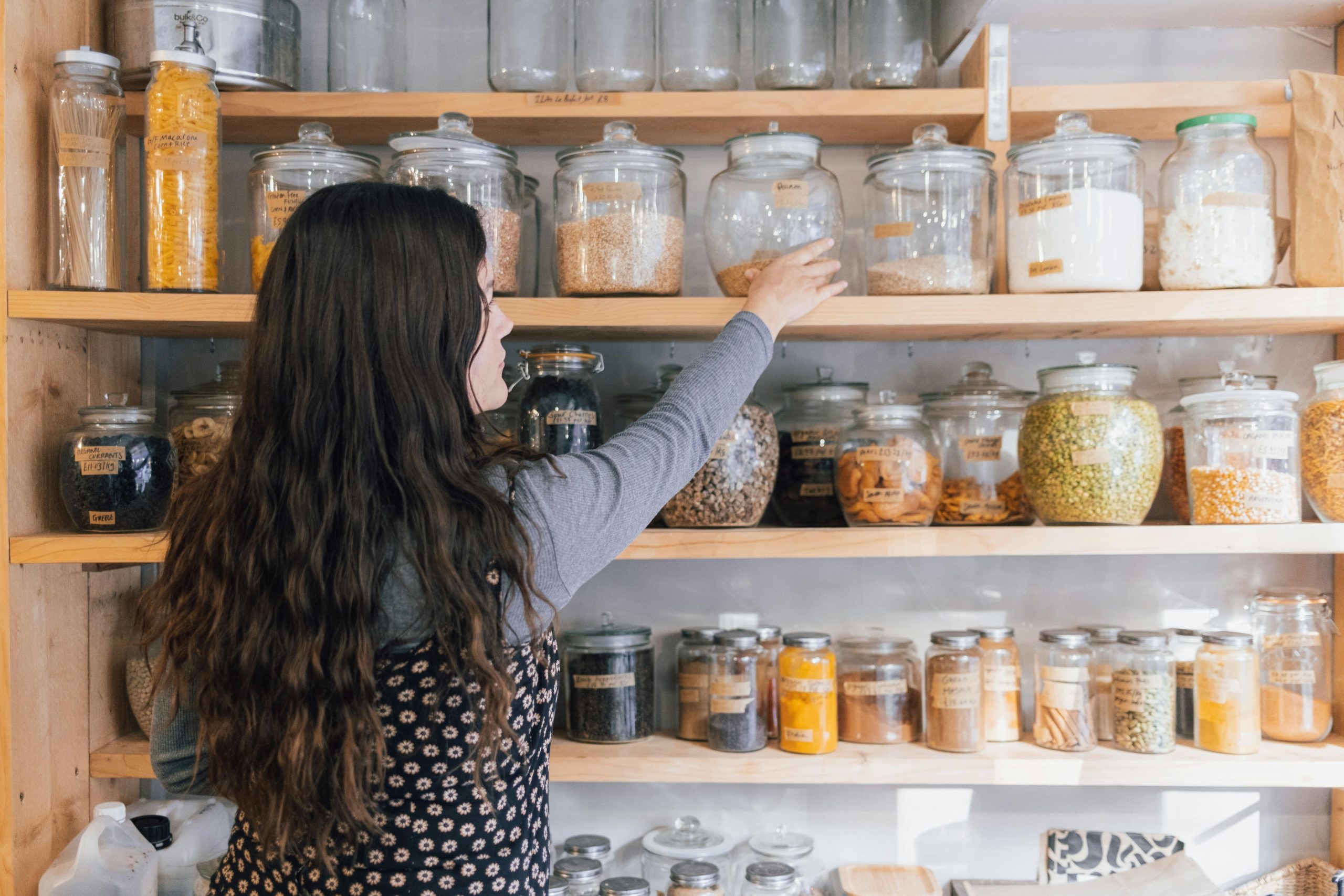
“Love doesn’t just sit there, like a stone, it has to be made, like bread; remade all the time, made new.”
—Ursula Le Guin
“Food is our common ground, our universal experience.”
—James Beard
It is called the Sunday Pantry, and it has been around for so many years now, too many, really, for me to wonder at where it started, except that I vaguely remember one Sunday when my children were babies playing at my feet and I was making bread for dinner to impress my mother-in-law and I ran out of flour, which is an essential ingredient for bread, you know, and instead of running to the store I ran to the neighbors, for it was Sunday, after all, and we were getting ready for church, getting ready to gather together and sing and pray and commune, getting ready to rest, and I had no time for the store, no time for the bread really, but I was rushing and hoping to get it done in the time I had, and so I stood on the steps of the house next door with a dented metal cup measure in one hand and asked for a little bit of flour.
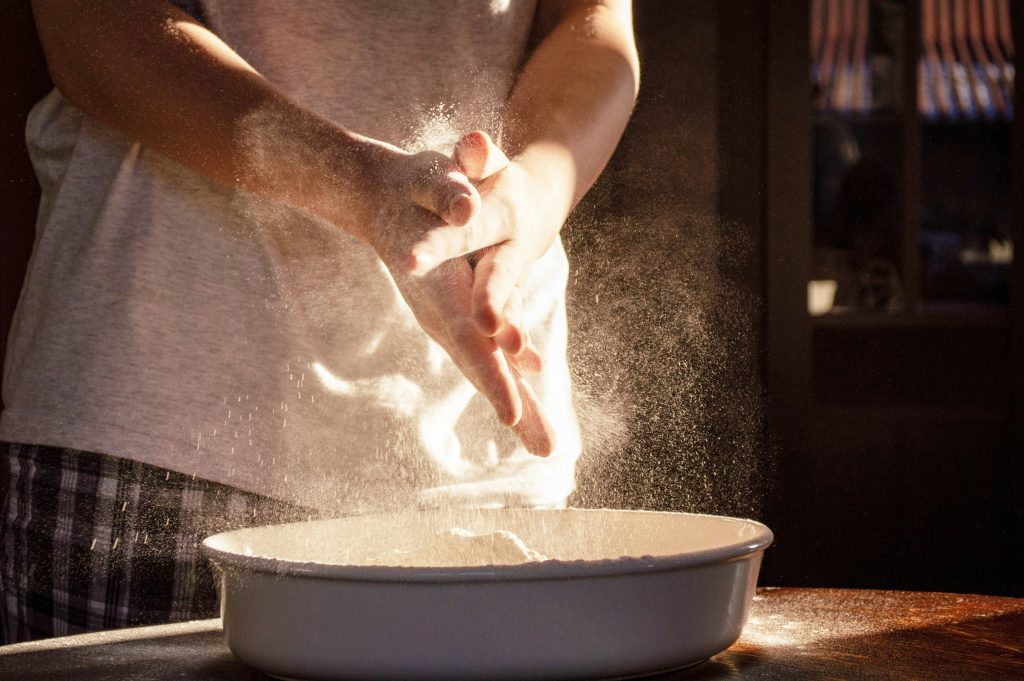
It felt remarkably like the scene in the musical Oliver when the main character (Oliver, of course) stands in front of the head of the orphanage and says, “Please sir, may I have some more?” except instead of being dismissed and denied I walked home with my cup measure full, overflowing really, and trailing little puffs of flour down the sidewalk from their house to mine as I went back to my kitchen to stir it into the half-finished dough and set it to rise and go on with the rest of my day.
The next time it was a stick of butter. Then a cup of sugar.
Within a short span of time I was finding my neighbors on my doorstep as well, and their requests were sometimes more exotic. Do you have some grated parmesan cheese? An extra gallon of milk, and I’ll bring you a replacement tomorrow? Do you have pecans? Do you have an orange?
Do you have a cabbage? (This is still one of the most memorable, not only for the request, but also because yes, I did, in fact, have an extra cabbage to lend for my neighbor to make into coleslaw for the family dinner they were having later that night, to go with the fish tacos they had planned, and it sounded so delicious that I might have invited myself over for a taste.)
Somewhere along the years and decades now that we have been lending and borrowing and baking out of one another’s cupboards and drawers and refrigerators, someone coined the term Sunday Pantry, and it stuck, much like the faint remnants of the carrot cake batter I spilled one time that no matter how hard I scrub I cannot quite get out of the nooks and crannies where it has permanently dried.
Last week my phone rang at 8:00 am on Sunday morning, and I answered to hear the voice of a young mother from two streets over hesitantly introduce herself and say, “This is a weird question, but someone told me about the Sunday pantry, and I was wondering if anyone can join in,” she said, and in the background I could hear her kids, four little boys that I see around the neighborhood, playing in the yard, racing through the church house, four little kids that remind me of my own four children, now in their twenties and busy with their young adult lives, and she went on to ask if I had a cup of mayonnaise, either that or a cup of sugar, she was out of both, and I had the sugar, but not the mayonnaise, but we found another neighbor had the mayonnaise and we gathered the ingredients up for her and sent her on her way, after finding out what she was making because my curiosity was piqued and I was imagining deviled eggs and some kind of dessert or a sweet coleslaw (as long as she had the cabbage) or perhaps a sweet corn salad, but I didn’t imagine an old-fashioned chocolate cake made with mayonnaise in place of the eggs and the oil, and now I need to get her recipe and make one of my own.
I have been thinking a lot about the Sunday Pantry since then. I have been thinking about what makes good spaces. About what makes good neighbors, and how I can be one, and what makes good communities, and how we can create one, and I have, perhaps, been yearning for a time that seemed simpler, when I was the child running through a kitchen that others had charge of, not the one in charge of making the meals, the celebrations, the parties and gatherings and get-togethers, because it seems like an awful lot of responsibility to have, and where does one even start with something like that?
For me it begins with a question. Good things always do. The best of the things this world has to offer begin with interesting questions and uncertain answers.
So what is mine?
How do we create the world we want to live in? The community we wish to see? Or more specifically, how do we want to meet people, to interact with individuals, to build strong connections and lasting relationships?
Is it through screens and messages and the chimes of a text thread? Is it as we drive to the store, solitary, past the darkened windows of our neighbors, unwilling to be involved in what is happening inside those walls that are designed to keep us apart, to keep us alone?
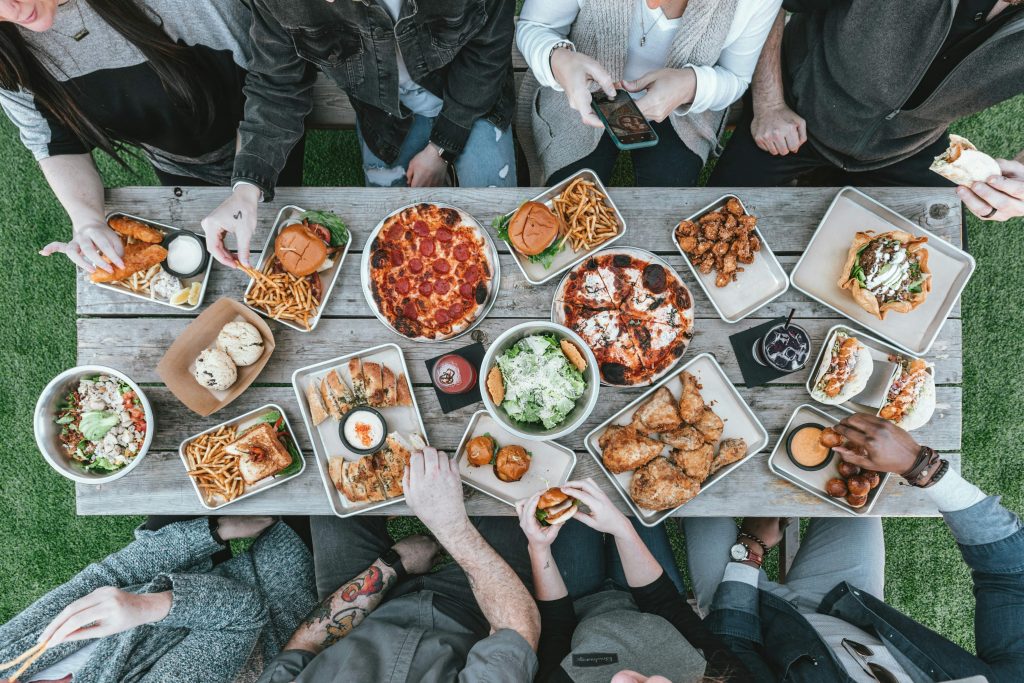
Or do you want to meet people over a wide table heavy with delicious dishes and new foods and interesting flavors as someone gestures for you to pull up a chair and introduce yourself, to join the conversation, to attend the feast? Do you want to meet over youtube tutorials? Or do we want to meet over shared recipes, loaned ingredients, inquisitive conversations, and the gift of an extra cabbage, when you had no use for it yourself?
And I can’t help thinking that Louise Fresco, the writer and sustainable food scientist, was correct when she claimed that food, well, food is everything.
“Food is as important as energy, as security, as the environment. Food is everything, linked together,” and if it is, if our food and our meals and our paltry offerings of mayonnaise and sugar and butter and cheese can be a catalyst for change, I want to be on the front lines of that effort, sunk deep in the art and the love that is an offering from the depths of my pantry, the binding ties that come with dropping bread off at someone’s front door and staying a little bit too long, ‘just to chat,’ the lineage of a community family tree that comes with a recipe that has been shared and altered and shared and adapted and shared again, until it no longer resembles the original, but has history marked deep in the crossed out lines of instructions and scribbled in amounts of ingredients and hurried commentary written in the margins and the wash of old stains from spills and drips and smudges that cover the surface like a portrait, a chart, a map of old experiences and new friends.
Whether you buy it or bake it or borrow it, food is a binding. A beautiful communion. A conservation of the collective.
An act of faith.
And I have to wonder, as we cook and bake and sautee and fry, as we consume together the things which we have made, I have to consider, what if we take in more than calories and nutrients and nutrition? What if we are consuming collaboration and culture and care, with every ingredient and every bite, making it an essential part of our bodies, and our lives?
We do not bring back community by complaining about what we lack. We do not defeat isolation by giving in to what some might see as inevitable, by huddling alone in our private spaces, facing a glowing screen that promises a sliver, a shade, a shadow of real comfort, real interaction, real connection, when there is no one real around.
No—we overcome the forces that try to divide us through sharing. We resist cruelty through kindness. We make change through hope.
We defeat isolation as we throw open our pantry doors and bring others into our kitchens, our dining rooms, our homes, our private spaces. As we cook together and eat together, and wash up together. As we laugh together, as we make meals together that become gatherings, that become celebrations.
After all, what is worth saving is worth celebrating, and how better to celebrate than with good food?
Darkness is not overcome by despair, but through our efforts to turn on the light.
It seems fitting, somehow, as I sit here writing this essay in the cold dark days of a snowless winter, to remember that we are not victims of the dark—we defy it. We strike the match and light the candle and turn on the stove and set something fragrant to bubble on the back burner. We change the world through sharing the power of collective good and eggs and flour and love—a love that chooses to create communion by serving the individual. A love that chooses to walk up close to someone new and say, hey, I haven’t seen you around here before. Can we be friends? And do you happen to have a cup of flour to spare?
Lead image: Sam Harrons via Unsplash
En Español:
Traducido por Jessica Yanez Barker
Yo lo llamo comunidad: Reflexiones sobre la despensa dominical
“El amor no se queda ahí, inmóvil como una piedra; hay que crearlo, como el pan; recrearlo constantemente, hacerlo nuevo una y otra vez.”
—Ursula Le Guin
“La comida es nuestro punto en común, nuestra experiencia universal.”
—James Beard
Se llama la despensa del domingo, y ha existido por tantos años ya —demasiados, en realidad— como para que me pregunte dónde comenzó, excepto que recuerdo vagamente un domingo en que mis hijos, aún bebés, jugaban a mis pies mientras yo hacía pan para la cena con la intención de impresionar a mi suegra, y me quedé sin harina, que es un ingrediente esencial para el pan. Y en lugar de correr a la tienda, corrí a casa de los vecinos, porque era domingo y nos estábamos preparando para ir a la iglesia, preparándonos para reunirnos, cantar, orar y convivir, preparándonos para descansar, y no tenía tiempo para la tienda, ni realmente para el pan, pero estaba apurada y esperaba lograrlo con el tiempo que tenía. Así que me quedé en los escalones de la casa de al lado con una taza medidora de metal abollada en la mano y pedí un poco de harina.
Se sintió sorprendentemente parecido a la escena del musical Oliver cuando el protagonista (Oliver, por supuesto) se planta frente al director del orfanato y dice: “Por favor, señor, ¿podría darme un poco más?”, excepto que, en lugar de ser rechazada y negada, regresé a casa con mi taza medidora llena —rebosante, en realidad— dejando pequeñas nubecitas de harina por la acera desde su casa hasta la mía mientras volvía a mi cocina para mezclarla con la masa a medio hacer, dejarla levar y continuar con el resto de mi día.
La siguiente vez fue una barra de mantequilla. Luego una taza de azúcar.
En poco tiempo también empecé a encontrar a mis vecinos en mi puerta, y sus pedidos a veces eran más exóticos. ¿Tienes queso parmesano rallado? ¿Un galón extra de leche? Mañana te traigo el reemplazo. ¿Tienes nueces pacanas? ¿Tienes una naranja?
¿Tienes un repollo? (Este sigue siendo uno de los más memorables, no solo por la petición, sino también porque sí, de hecho, tenía un repollo extra para prestarle a mi vecina, que lo necesitaba para hacer ensalada de col para la cena familiar que tendrían esa noche, para acompañar los tacos de pescado que habían planeado, y sonaba tan delicioso que quizá me habría invitado yo misma a probarlo).
En algún punto, a lo largo de los años y décadas en que hemos estado prestándonos y pidiéndonos ingredientes y horneando con lo que hay en los armarios, cajones y refrigeradores de unos y otros, alguien acuñó el término Despensa del Domingo, y se quedó, muy parecido a los restos casi invisibles de la masa de pastel de zanahoria que derramé una vez y que, por más que restriego, no logro sacar del todo de los rincones donde se secó para siempre.
La semana pasada, mi teléfono sonó a las 8:00 de la mañana del domingo, y al contestar escuché la voz de una joven madre que vive a dos calles de distancia presentarse con cierta timidez y decir: “Esta es una pregunta rara, pero alguien me habló de la Despensa del Domingo y quería saber si cualquiera puede participar”. Al fondo podía oír a sus hijos —cuatro niños pequeños que veo por el vecindario— jugando en el patio, corriendo por la casa y por la iglesia, cuatro pequeños que me recuerdan a mis propios cuatro hijos, ahora en sus veintes y ocupados con sus vidas de adultos jóvenes. Ella continuó preguntando si tenía una taza de mayonesa, o bien una taza de azúcar; no tenía ninguna de las dos. Yo tenía el azúcar, pero no la mayonesa, aunque encontramos a otro vecino que sí tenía mayonesa. Reunimos los ingredientes para ella y la enviamos de regreso a su casa, no sin antes averiguar qué estaba preparando, porque mi curiosidad ya estaba despierta y yo imaginaba huevos rellenos, algún tipo de postre, una ensalada de col dulce (siempre y cuando tuviera el repollo) o quizá una ensalada de maíz dulce. Pero no imaginé un pastel de chocolate a la antigua hecho con mayonesa en lugar de huevos y aceite, y ahora necesito que me pase su receta para hacer uno yo también.
He estado pensando mucho en la Despensa del Domingo desde entonces. He estado pensando en qué hace que un espacio sea bueno. ¿Qué hace que los vecinos sean buenos, y cómo puedo serlo yo? ¿Qué hace que una comunidad sea buena, y cómo podemos crear una? Y quizá he estado añorando un tiempo que parecía más sencillo, cuando yo era la niña que corría por una cocina bajo el cuidado de otros, y no la persona encargada de preparar las comidas, las celebraciones, las fiestas, las reuniones y los encuentros, porque parece una responsabilidad enorme, y ¿por dónde empieza una con algo así?
Para mí, todo comienza con una pregunta. Las cosas buenas siempre lo hacen. Lo mejor que este mundo tiene para ofrecer empieza con preguntas interesantes y respuestas inciertas. Entonces, ¿cuál es la mía? ¿Cómo creamos el mundo en el que queremos vivir? ¿La comunidad que deseamos ver? O, más específicamente, ¿cómo queremos encontrarnos con las personas, interactuar con los demás, construir conexiones sólidas y relaciones duraderas?
¿Es a través de pantallas, mensajes y los sonidos de las notificaciones de un chat? ¿Es mientras conducimos al supermercado, solos, pasando junto a las ventanas oscuras de nuestros vecinos, reacios a involucrarnos en lo que sucede dentro de esas paredes diseñadas para mantenernos separados, para mantenernos solos?
¿O prefieres conocer gente alrededor de una mesa grande repleta de platos deliciosos, comidas nuevas y sabores interesantes, mientras alguien te invita a sentarte, a presentarte, a unirte a la conversación, a participar del banquete? ¿Quieres conocer gente a través de tutoriales de YouTube? ¿O preferimos conocernos compartiendo recetas, prestando ingredientes, teniendo conversaciones interesantes y regalando una col que nos sobra?
Y no puedo evitar pensar que Louise Fresco, la escritora y científica especializada en sostenibilidad alimentaria, tenía razón cuando afirmó que la comida, bueno, la comida lo es todo.
“La comida es tan importante como la energía, como la seguridad, como el medio ambiente. La comida es todo, todo está conectado”. Y si es así, si nuestra comida y nuestras humildes ofrendas de mayonesa y azúcar y mantequilla y queso pueden ser un catalizador de cambio, yo quiero estar en la primera línea de ese esfuerzo, sumergida en el arte y el amor que son una ofrenda desde lo más profundo de mi despensa; en los lazos que se crean al dejar pan en la puerta de alguien y quedarse un ratito de más, “solo para charlar”; en el linaje de un árbol genealógico comunitario que nace de una receta compartida, alterada, compartida de nuevo, adaptada y vuelta a compartir, hasta que ya no se parece a la original, pero lleva la historia marcada en las líneas tachadas de instrucciones, en las cantidades anotadas a mano, en los comentarios apresurados escritos en los márgenes y en el rastro de viejas manchas de derrames, gotas y borrones que cubren la superficie como un retrato, un diagrama, un mapa de experiencias pasadas y nuevas amistades.
Ya sea que lo compres, lo hornees o lo pidas prestado, la comida es un lazo. Una hermosa comunión. Una conservación de lo colectivo.
Un acto de fe.
Y no puedo evitar preguntarme, mientras cocinamos y horneamos y salteamos y freímos, mientras consumimos juntos las cosas que hemos preparado, ¿qué pasaría si estuviéramos absorbiendo algo más que calorías y nutrientes? ¿Y si estuviéramos consumiendo colaboración, cultura y cuidado con cada ingrediente y cada bocado, convirtiéndolos en una parte esencial de nuestros cuerpos y de nuestras vidas?
No recuperamos la comunidad quejándonos de lo que nos falta. No derrotamos la soledad rindiéndonos a lo que algunos podrían ver como inevitable, acurrucándonos solos en nuestros espacios privados, frente a una pantalla brillante que promete una pizca, un matiz, una sombra de consuelo real, de interacción real, de conexión real, cuando no hay nadie real alrededor.
No—superamos las fuerzas que intentan dividirnos mediante el acto de compartir. Resistimos la crueldad con bondad. Generamos cambio con esperanza.
Derrotamos la soledad cuando abrimos de par en par las puertas de nuestra despensa y dejamos entrar a otros en nuestras cocinas, nuestros comedores, nuestros hogares, nuestros espacios privados. Cuando cocinamos juntos y comemos juntos y lavamos los platos juntos. Cuando reímos juntos, cuando hacemos comidas que se convierten en reuniones, que se convierten en celebraciones.
Después de todo, lo que vale la pena salvar vale la pena celebrarlo, y ¿qué mejor manera de celebrar que con buena comida?
La oscuridad no se vence con desesperación, sino con nuestros esfuerzos por encender la luz.
Parece apropiado, de algún modo, mientras me siento aquí escribiendo este ensayo en los días fríos y oscuros de un invierno sin nieve, recordar que no somos víctimas de la oscuridad: la desafiamos. Encendemos el fósforo y prendemos la vela y encendemos la estufa y ponemos algo fragante a hervir a fuego lento en la hornilla de atrás. Cambiamos el mundo al compartir el poder del bien colectivo y los huevos y la harina y el amor—un amor que elige crear comunión al servir al individuo. Un amor que elige acercarse a alguien nuevo y decir: oye, no te había visto por aquí antes. ¿Podemos ser amigos? Y, por cierto, ¿tendrás una taza de harina que te sobre?

Shelli is an advocacy writer and creative writing teacher. She loves to spend time with her husband (usually in the garden) and their four almost adult children. She also loves to sew (usually for the local community theater), to read, to write, and to drag her family outside to look at the sky. Shelli is passionate about poetry, Broadway show tunes, and telling stories -- of ourselves, our families, and our communities.
View Author PageStay Inspired
Join Our Newsletter Journey
Dive deeper into the world of Big Ocean Women. By subscribing to our newsletter, you'll receive a monthly dose of empowering stories, insightful articles, and the latest news from our global sisterhood. Don't miss out on the wave of inspiration – subscribe now and be part of our ever-growing community.