
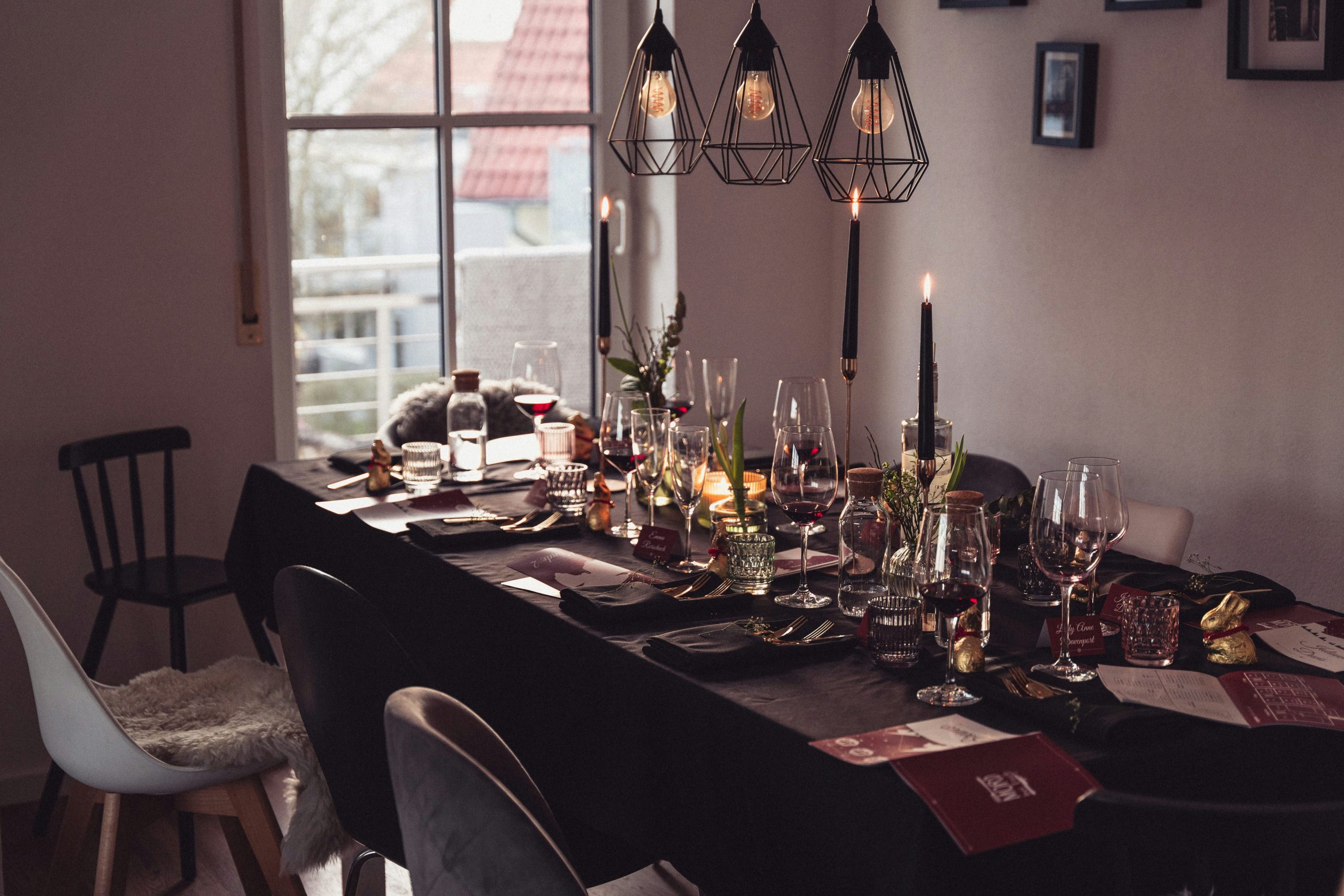
What is a Kitchen Table if not a Place to Gather the Wide World? (English & Spanish)
My first kitchen table was an impractical, small thing, made entirely of glass and perfectly square and barely 3 feet across, large enough for a chair at each side where it was set in a small area which was too modest to deserve the title dining room; no, it was more of a pause, a quick stutter step of space between the kitchen and the family room in the very first home where we lived, my husband and I, in an end-of-the-row townhouse that sat so close to the trainyard that our beds would shake at night as the cars slammed into one another to couple and uncouple. The cups in our cupboards would vibrate as the great lines of boxcars rushed past in the early morning; the table itself would vibrate as the peace of the day was broken with whistles and bells and the clack clack clack of trains.
It was an impractical choice. The table, that is.
It was glass, first of all. Thick, durable glass, but still glass. And glass, as anyone knows, shows every smudge. Every fingerprint. Every trace of dirt and dust falling through the air in the course of the living of a busy day.
And we were young marrieds, we had small children, one after another after another in those years, and children, as every parent soon finds, are an endless source of smudges and fingerprints and dirt and dust.
Our second table was wood. A solid, sturdy, round table three feet across with graceful turned legs and a leaf that could be added when company came. It was a lovely pale oak, and I sanded the surface and whitewashed the wood and painted delicate flowers around the edge, sealing it all with a coat or two or three of shiny shellac.
I loved it—the silky feel of the wood under my rough work-worn hands, the care that I had put into the flowers that twined around the circumference, the way it looked in our small room with four chairs pulled close and a few extra set to the side, for when family came or neighbors came or friends came to visit.
It was a good table. Serviceable.
A practical choice made beautiful with hard work and the hours we spent gathered around while our family grew and time passed, until suddenly it was no longer practical at all.
By then we had four children—four small and squirming toddlers with sticky hands and laughing mouths and a determination to do things themselves even if that meant that the food they were trying to eat sometimes fell to the table, their laps, or the floor. We had four small children in five short years and we no longer even ‘sort of’ fit around that cramped round table, even with the leaf added, even with the extra chairs.
So we got a bigger table. And a bigger room.
Time passed.
Change was logical. It made sense. It was simply a part of expanding our lives and our space—a part of pulling up new chairs, adding new leaves. It was a part of the passing of time when those toddlers became children became teenagers and suddenly we were looking around a larger table during dinner, which was sometimes served at a respectable 6pm, but sometimes as late as 8 or 9 after those teenagers had finished sports and dance and theater and work, and we were gathered at last for a meal.
The change was a simple matter of embracing our group of people—people who also changed over the years as the ebb and flow of family life brought individuals into and then out of our circle of care.
In the shapeliness of living a life, the proportions of one’s kitchen table are very seldom taken into account. And yet…it is one of the places where most of our living is done. It is the spot where we wait on late nights and early mornings with a warm mug between our hands and peace pulling at our souls. It is the place where we sit on uncomfortable chairs to have hard conversations and to endure difficult silences. It is the space where we come together, adults and children and friends and family, sitting side by side, leaning in to make and to create and to interweave our lives.
It is where we eat. It is where we play.
It is where we live.
My husband and I have purchased several more kitchen tables over the course of our almost 30 year marriage. We have walked showroom floors with elaborate displays, we have strolled through secondhand stores and thrift stores and consignment stores and wide echoing warehouses. We have considered the benefits of square versus round versus oval versus oblong. We have tested weight and heft and sturdiness (after all, our last table met its final end after being sat on one too many times by eager teenagers jumping up to sit and with great enthusiasm and waving hands tell us about their gloriously ordinary day, and while I appreciated the enthusiasm I did not appreciate the destruction that came as a result—the cracking, tipping, sliding, shrieking moment as the top of our table separated from its base and slid slowly to the floor, tumbling teenager in tow).
Our table is larger now. Wider. Longer. Able to gather and hold and support more. More people. More food. More activities. More living.
More joy.
Last night we cleared off one end of the table to play games, my children and husband, my future daughter-in-law and I. First card games. Then board games. It was long, as lazy Sundays should be. It was loud, for my children are fierce competitors, and defenders of their turns and choices and cards laid.
I am not.
No, I play for the fun of it. For the feel of good conversation and laughter and teasing and the occasional underhanded alliance that outrages the others into squawks and squeaks and accusations of double dealing. (Games are serious business at our house and at our table.)
So we played and our future daughter-in-law played and we had fun and I looked around and thought suddenly about how once more our family is growing.
And so are the places we gather together.
And it is possible that we might need a new table—a larger one. One that will include the addition of in-laws and grandchildren and new babies and new neighbors and new friends and new acquaintances.
But that is life, isn’t it? If there is one constant it is that the way we care is constantly expanding, growing, shifting until there no longer seem to be limits at all.
At least I hope not. I hope that wherever we are, there is always room for one more, or two, or a dozen. I hope we always find ways to widen our circle or square or rectangle until we are sitting shoulder to shoulder, knee to knee, sharing seats in a kind of communion or community created by cozy closeness and a shortage of chairs.
As I consider those first kitchen tables it strikes me that for all the trappings of economics and free markets and capitalism we live under, we cannot buy what matters most. We cannot commodify community. We cannot purchase the pieces and parts of a system we were meant instead to make, an influence we were meant to be.
But we can buy a bigger table. We can make a bigger meal. We can assess our talents and see what we have to share, what we have to lay out on the surface, be it glass or wood or tile or stone, in order to nurture any who might find themselves wandering by.
At least, I like to imagine it that way.
As a writer, I often find myself concerned about language. Of course I am. I spend my life with language—writing, reading, teaching, making meaning, and communicating with students, with other writers, with readers.
As a society we have a lot of idioms that talk about tables. To have something be ‘off the table,’ or to ‘put your chips on the table,’ or to ‘come to the table,’ or to ‘turn the tables.’ But also, ‘have a seat at the table,’ which implies that there is only one table, with a limited number of seats, a veritable scarcity of spaces. Which seems to say that if we do not fight our way into a space, we will find ourselves isolated and alone.
But I have spent my life finding new tables. Larger tables in larger rooms with new people to sit next to. Buying into the idea that there is no space to be found at important tables would have us believe that we have limits on the way we show up for one another, on the spaces we hold, and the ways that we care—that there is no room in the discussion or the meal or the creating or the playing for someone new. And space might be a problem, but not the kind of problem most people think.
It seems to me to be mostly a problem of imagination.
A lack of creativity not a lack of capacity.
You see, the problem with tables is always one of scope. The table has to fit the space—the edges of the kitchen, the banquet hall, the dining room. It comes with an automatic boundary, a fence line of sorts that tells others that our space is limited, that our guest list must be kept manageable and mediated. That we can only care about those seated in our sightlines.
But what if that was not the case? What if we were to imagine a different kind of table? A different kind of room?
I have an image in my head—a picture of a long table in the middle of a forest glade, with mismatched chairs lining each of the sides, with the feet sunk deep into the soft soil of the wilderness, with candles dotting the surfaces, with plates and platters and serving dishes competing for space on the surface in a clear summons and a true abundance. But in my imagination there is no end to the table itself—it extends into the distance further than I can see. And around the edges of it all kinds of people gather in celebration, in conversation, in joyful reunion, in meeting and in true communion with one another.
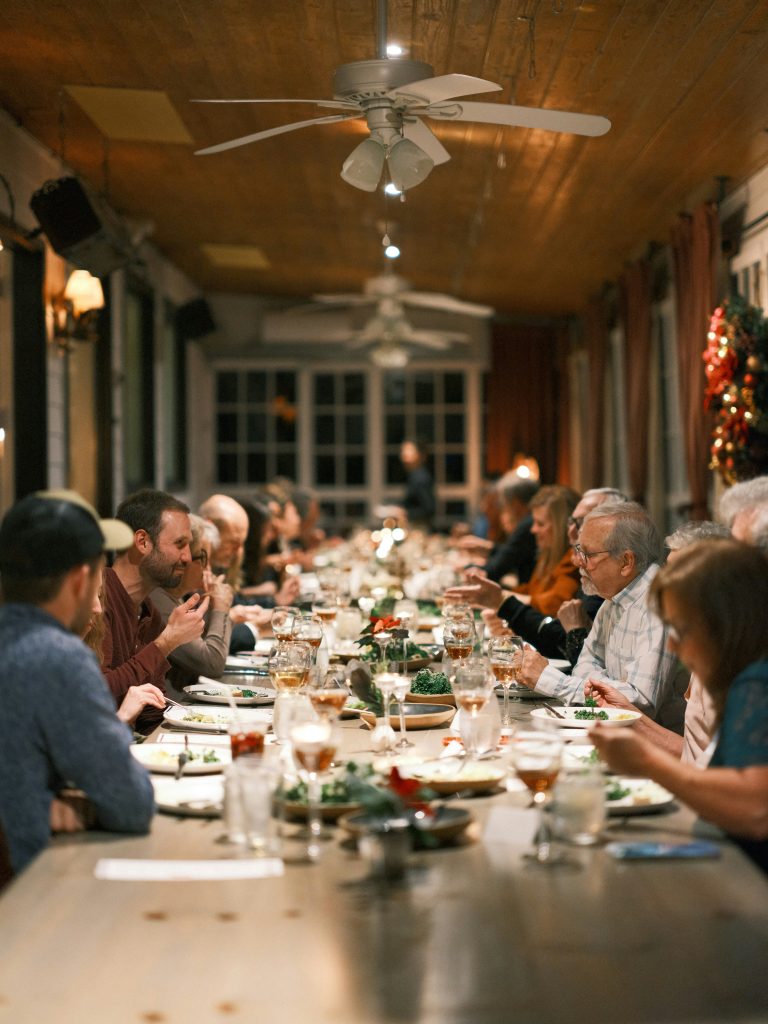 Photo credit: Taylor Heery via Unsplash
This table in my imagination is not a barrier. It is not a limit. It is an invitation. A petition.
It is a space for coming together. And at the end of the day, isn’t that what a kitchen table should do? Bring people together? After all, a kitchen table should be a place of nourishment and nurture. A place to feed each other and ourselves. A place for enjoying the familiar and a space to embrace the new.
It strikes me as I write that there are many places that embody more than the simple nature of what they are. Holy places.
Sacred sites.
Touchpoints that allow us to connect to something greater—something larger, something higher, something more. These sites are dotted around the globe, a constellation of belief and faith and dedication created by what they mean to the people that visit them—those who go on pilgrimage to cathedrals and mosques and churches and temples and monasteries and tombs and shrines, and I am awed and intrigued by these travelers who are seeking spiritual enlightenment and physical renewal and healing and community and peace.
I am also convinced that for all its ordinary plainness, its prosaic use, and its practical nature, the kitchen table is one of these places—a place of communion, a place of thanksgiving, a place of holy celebration.
After all, a kitchen table is an expanse filled with dinners and breakfast and birthday cakes with the candles glowing against the dark. It is a surface covered in the artifacts of a life lived well—in dirty dishes and unopened mail and ink-stained worksheets and half read books with a page turned down partway through. It is a space where we gather to rest, and to work and to play and to find one another, at all hours of the day and night, gathered like the moths around the lamp in my backyard that keeps the baby chicks warm in the springtime cold. And perhaps it serves the same purpose.
A place to keep us warm.
A table filled with memories that tie us together. An embrace in furniture form that says, “Sit and rest a while. Eat. Play. Be. There is room for you here.”
I find myself hoping that is the case. Imagining it.
I find myself dreaming of the time where we each tend to our own tables, and where we each deliberately widen our spaces and imagine how to invite each other in.
Lead photo credit: Patrick Pahl via Unsplash
En Español:
Traducido por Jessica Yanez Barker
¿Qué es una mesa de cocina sino un lugar para reunir al vasto mundo?
Mi primera mesa de cocina era algo poco práctico, pequeña, hecha completamente de vidrio, perfectamente cuadrada y de apenas un metro de ancho, lo suficientemente grande para una silla a cada lado. Estaba colocada en un espacio tan modesto que no merecía el título de comedor; no, era más bien una pausa, un pequeño tropiezo de espacio entre la cocina y la sala familiar, en la primera casa donde vivimos mi esposo y yo, en una vivienda adosada al final de la fila, tan cerca del patio de trenes que nuestras camas temblaban por la noche cuando los vagones chocaban entre sí para acoplarse y desacoplarse. Las tazas en los armarios vibraban cuando las largas filas de vagones pasaban a toda velocidad en la madrugada, y la mesa misma vibraba cuando la paz del día se rompía con silbatos, campanas y el clac clac clac de los trenes.
Fue una elección poco práctica. La mesa, quiero decir.
Era de vidrio, para empezar. Vidrio grueso y resistente, pero vidrio al fin. Y el vidrio, como cualquiera sabe, muestra cada mancha. Cada huella dactilar. Cada rastro de suciedad y polvo que cae en el aire durante el ajetreo de un día ocupado.
Y nosotros éramos recién casados, con niños pequeños, uno tras otro en esos años, y los niños, como pronto descubre cualquier padre, son una fuente interminable de manchas, huellas, suciedad y polvo.
Nuestra segunda mesa era de madera. Una mesa redonda, sólida y resistente, de un metro de ancho, con patas torneadas y una extensión que podía añadirse cuando venían invitados. Era un hermoso roble claro, y lijé la superficie, blanqueé la madera y pinté delicadas flores alrededor del borde, sellándolo todo con una o dos o tres capas de brillante goma laca.
La amaba: la sensación sedosa de la madera bajo mis manos ásperas por el trabajo, el cuidado que puse en las flores que rodeaban la circunferencia, la forma en que se veía en nuestra pequeña habitación con cuatro sillas juntas y algunas más a un lado, para cuando venía la familia o los vecinos o los amigos.
Era una buena mesa. Funcional.
Una elección práctica embellecida con trabajo duro y con las horas que pasamos reunidos mientras nuestra familia crecía y el tiempo pasaba, hasta que de pronto dejó de ser práctica.
Para entonces teníamos cuatro hijos: cuatro pequeños y movedizos niños con manos pegajosas, risas fáciles y una determinación de hacerlo todo por sí mismos, incluso si eso significaba que la comida que intentaban comer terminaba en la mesa, en sus regazos o en el suelo. Cuatro niños pequeños en cinco cortos años, y ya no cabíamos ni “más o menos” alrededor de esa mesa redonda, ni siquiera con la extensión puesta, ni siquiera con las sillas extra.
Así que conseguimos una mesa más grande. Y una habitación más grande.
El tiempo pasó.
El cambio era lógico. Tenía sentido. Era simplemente parte de expandir nuestras vidas y nuestro espacio, parte de añadir nuevas sillas, nuevas extensiones. Era parte del paso del tiempo, cuando esos niños pequeños se convirtieron en niños, luego en adolescentes, y de pronto nos encontrábamos mirando alrededor de una mesa más grande durante la cena, que a veces se servía a una respetable hora de las seis, pero a veces tan tarde como las ocho o nueve, después de que esos adolescentes terminaban deportes, danza, teatro o trabajo, y por fin nos reuníamos para una comida.
El cambio era simplemente una cuestión de abrazar a nuestro grupo de personas, personas que también cambiaron con los años, mientras el flujo y reflujo de la vida familiar traía individuos dentro y fuera de nuestro círculo de cuidado.
En la forma de vivir una vida, rara vez se consideran las proporciones de la mesa de cocina. Y sin embargo… es uno de los lugares donde más vivimos. Es el sitio donde esperamos en noches tardías y mañanas tempranas con una taza tibia entre las manos y la paz tirando de nuestra alma. Es donde nos sentamos en sillas incómodas para tener conversaciones difíciles y soportar silencios complicados. Es el espacio donde nos reunimos, adultos y niños, amigos y familia, sentados lado a lado, inclinándonos para crear, para hacer, para entretejer nuestras vidas.
Es donde comemos. Es donde jugamos.
Es donde vivimos.
Mi esposo y yo hemos comprado varias mesas de cocina más a lo largo de nuestros casi treinta años de matrimonio. Hemos caminado por salas de exhibición con elaboradas decoraciones, hemos recorrido tiendas de segunda mano, de consignación y enormes almacenes resonantes. Hemos considerado los beneficios de lo cuadrado versus lo redondo versus lo ovalado versus lo rectangular. Hemos probado peso, firmeza y estabilidad (después de todo, nuestra última mesa llegó a su fin tras ser usada como asiento una vez más por adolescentes entusiastas que saltaban para contarnos, con manos agitadas, su gloriosamente ordinario día. Y aunque apreciaba el entusiasmo, no aprecié la destrucción que siguió: el crujido, el vuelco, el deslizamiento, el grito cuando la parte superior de la mesa se separó de la base y cayó lentamente al suelo, arrastrando al adolescente con ella).
Nuestra mesa ahora es más grande. Más ancha. Más larga. Capaz de reunir, sostener y apoyar más. Más personas. Más comida. Más actividades. Más vida.
Más alegría.
Anoche despejamos un extremo de la mesa para jugar, mis hijos y mi esposo, mi futura nuera y yo. Primero juegos de cartas. Luego juegos de mesa. Fue largo, como deben ser los domingos perezosos. Fue ruidoso, porque mis hijos son competidores feroces, defensores de sus turnos y decisiones y cartas jugadas.
Yo no lo soy.
No, yo juego por diversión. Por la sensación de buena conversación, risas, bromas y la ocasional alianza secreta que indigna a los demás con chillidos y acusaciones de doble juego. (Los juegos son asunto serio en nuestra casa y en nuestra mesa.)
Así que jugamos, y nuestra futura nuera jugó, y nos divertimos, y de pronto miré alrededor y pensé en cómo, una vez más, nuestra familia está creciendo.
Y también los lugares donde nos reunimos.
Y es posible que necesitemos una nueva mesa, una más grande. Una que incluya a los nuevos miembros políticos de la familia, a los nietos, a los nuevos bebés, nuevos vecinos, nuevos amigos, nuevas personas que lleguen a nuestras vidas.
Pero así es la vida, ¿no es así? Si hay una constante, es que la manera en que cuidamos se expande continuamente, crece, cambia, hasta que parece no haber límites.
Al menos eso espero. Espero que dondequiera que estemos, siempre haya espacio para uno más, o dos, o una docena. Espero que siempre encontremos maneras de ensanchar nuestro círculo, nuestro cuadrado o nuestro rectángulo hasta que estemos sentados hombro con hombro, rodilla con rodilla, compartiendo asientos en una especie de comunión o comunidad creada por la cercanía acogedora y la escasez de sillas.
Al pensar en aquellas primeras mesas de cocina, me doy cuenta de que, a pesar de todos los adornos de la economía, los mercados libres y el capitalismo bajo los que vivimos, no podemos comprar lo que más importa. No podemos convertir la comunidad en mercancía. No podemos adquirir las piezas y partes de un sistema que, en realidad, está destinado a ser creado por nosotros mismos, una influencia que estamos destinados a encarnar.
Pero sí podemos comprar una mesa más grande. Podemos preparar una comida más abundante. Podemos evaluar nuestros talentos y ver qué tenemos para compartir, qué podemos colocar sobre la superficie —sea de vidrio, madera, azulejo o piedra— para nutrir a cualquiera que pueda encontrarse pasando por allí.
Al menos, me gusta imaginarlo así.
Como escritora, a menudo me preocupa el lenguaje. Por supuesto que sí. Paso mi vida entre palabras: escribiendo, leyendo, enseñando, dando significado y comunicándome con estudiantes, con otros escritores, con lectores.
Como sociedad, tenemos muchos modismos que hablan de mesas. Que algo esté “fuera de la mesa”, o “poner tus fichas sobre la mesa”, o “venir a la mesa”, o “cambiar las tornas”. Pero también “tener un asiento en la mesa”, lo cual implica que solo hay una mesa, con un número limitado de asientos, una verdadera escasez de espacios. Lo que parece decir que si no luchamos por entrar, nos encontraremos aislados y solos.
Pero he pasado mi vida encontrando nuevas mesas. Mesas más grandes en habitaciones más grandes, con nuevas personas a mi lado. Creer en la idea de que no hay espacio en las mesas importantes nos haría pensar que existen límites en la manera en que nos apoyamos unos a otros, en los espacios que sostenemos y en las formas en que cuidamos; que no hay lugar en la conversación, en la comida, en la creación o en el juego para alguien nuevo. Y el espacio podría ser un problema, pero no del tipo que la mayoría imagina.
Me parece que es, sobre todo, un problema de imaginación.
Una falta de creatividad, no una falta de capacidad.
Verás, el problema con las mesas siempre es uno de escala. La mesa tiene que ajustarse al espacio: los bordes de la cocina, el salón de banquetes, el comedor. Viene con un límite automático, una especie de línea de cerca que les dice a los demás que nuestro espacio es limitado, que nuestra lista de invitados debe mantenerse manejable y moderada. Que solo podemos cuidar de quienes están dentro de nuestro campo de visión.
Pero ¿y si no fuera así? ¿Y si imagináramos otro tipo de mesa? ¿Otro tipo de habitación?
Tengo una imagen en mi mente: una mesa larga en medio de un claro del bosque, con sillas desparejadas a cada lado, con las patas hundidas en la tierra blanda del bosque, con velas salpicando la superficie, con platos y bandejas y fuentes compitiendo por espacio en una clara invitación y una verdadera abundancia. Pero en mi imaginación, la mesa no tiene fin: se extiende hacia la distancia más allá de lo que puedo ver. Y alrededor de ella se reúne todo tipo de personas, en celebración, en conversación, en alegre reencuentro, en encuentro y en verdadera comunión unos con otros.
Esa mesa en mi imaginación no es una barrera. No es un límite. Es una invitación. Una petición.
Es un espacio para reunirse. Y al final del día, ¿no es eso lo que debería hacer una mesa de cocina? ¿Reunir a las personas? Después de todo, una mesa de cocina debería ser un lugar de alimento y de cuidado. Un lugar para alimentarnos unos a otros y a nosotros mismos. Un lugar para disfrutar lo familiar y un espacio para abrazar lo nuevo.
Mientras escribo, me doy cuenta de que hay muchos lugares que encarnan más que su simple naturaleza. Lugares sagrados.
Sitios santos.
Puntos de contacto que nos permiten conectar con algo más grande: algo más amplio, más elevado, más profundo. Estos lugares están esparcidos por todo el mundo, una constelación de creencia, fe y dedicación creada por lo que significan para quienes los visitan: quienes peregrinan a catedrales, mezquitas, iglesias, templos, monasterios, tumbas y santuarios. Y me asombran y me intrigan estos viajeros que buscan iluminación espiritual, renovación física, sanación, comunidad y paz.
También estoy convencida de que, a pesar de su sencillez ordinaria, su uso prosaico y su naturaleza práctica, la mesa de cocina es uno de esos lugares: un lugar de comunión, un lugar de acción de gracias, un lugar de celebración sagrada.
Después de todo, una mesa de cocina es una extensión llena de cenas y desayunos y pasteles de cumpleaños con velas brillando en la oscuridad. Es una superficie cubierta con los artefactos de una vida bien vivida: platos sucios, correo sin abrir, hojas de trabajo manchadas de tinta y libros a medio leer con la página doblada a la mitad. Es un espacio donde nos reunimos para descansar, trabajar, jugar y encontrarnos unos a otros, a todas horas del día y de la noche, reunidos como las polillas alrededor de la lámpara en mi patio trasero que mantiene calientes a los pollitos en el frío de primavera. Y quizá cumple el mismo propósito.
Un lugar para mantenernos cálidos.
Una mesa llena de recuerdos que nos unen. Un abrazo en forma de mueble que dice: “Siéntate y descansa un rato. Come. Juega. Sé. Hay espacio para ti aquí”.
Me encuentro esperando que así sea. Imaginándolo.
Me encuentro soñando con el momento en que cada uno cuide su propia mesa, y en que cada uno amplíe deliberadamente sus espacios e imagine cómo invitar a los demás a entrar.

Shelli is an advocacy writer and creative writing teacher. She loves to spend time with her husband (usually in the garden) and their four almost adult children. She also loves to sew (usually for the local community theater), to read, to write, and to drag her family outside to look at the sky. Shelli is passionate about poetry, Broadway show tunes, and telling stories -- of ourselves, our families, and our communities.
View Author PageStay Inspired
Join Our Newsletter Journey
Dive deeper into the world of Big Ocean Women. By subscribing to our newsletter, you'll receive a monthly dose of empowering stories, insightful articles, and the latest news from our global sisterhood. Don't miss out on the wave of inspiration – subscribe now and be part of our ever-growing community.