
On Benches, Bookshelves, Back Steps, and the Art and Act of Building a Home (English and Spanish)
“What do you do when conditions are not in your favor? You build anyway.”
—Simone Sanders Townsend.
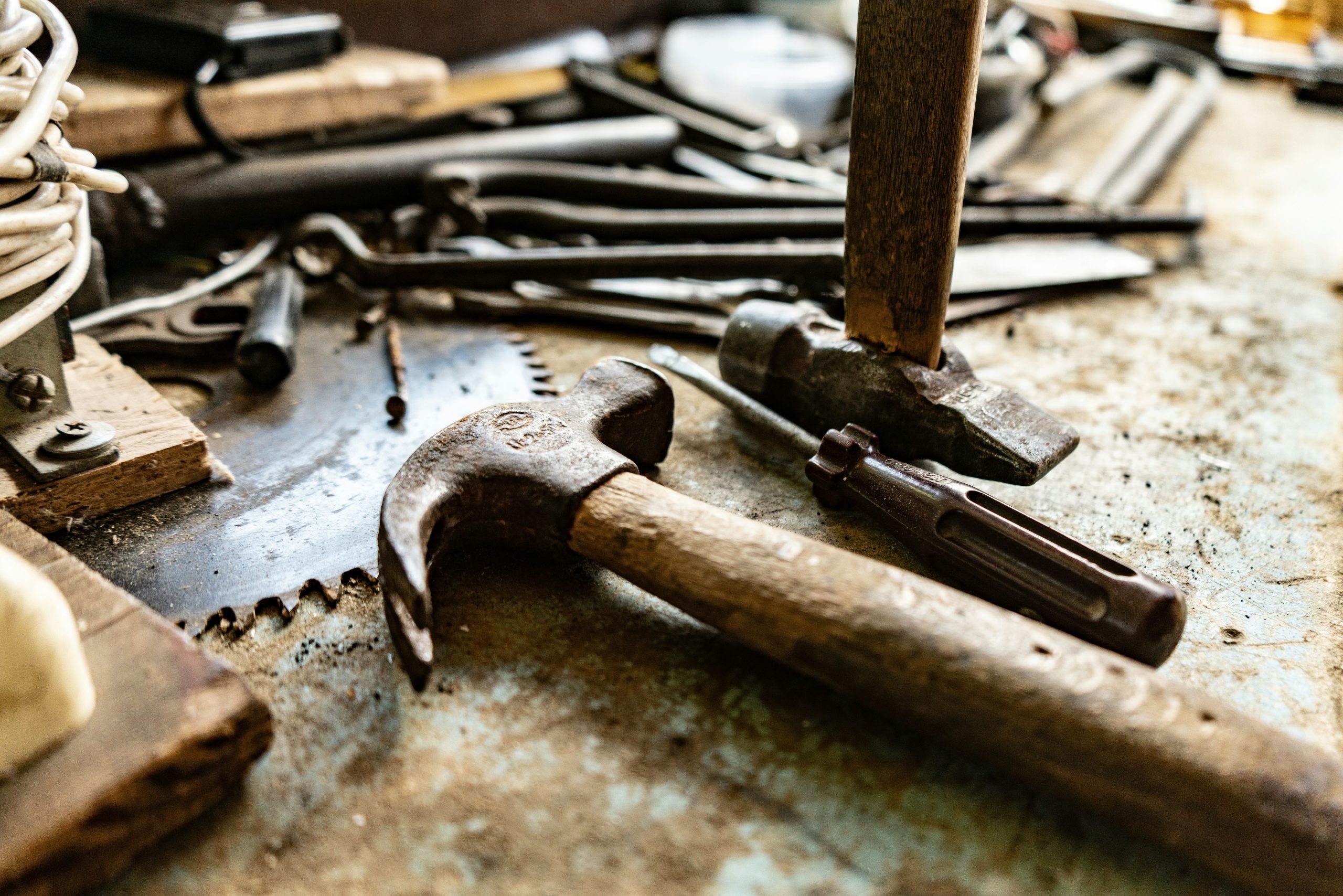
This week I was sitting in my summer writing class, which is a marathon three-hour crash course in all things writing related, and I was guiding my students through an essay exercise when my phone vibrated on the surface of the table where we sat, which I quickly covered with a piece of paper before it could distract anyone but not before I saw the screen lit with a text from my husband—an image and a short text briefly illuminating the tabletop before fading away, and when I had time later to look, after the writing and the reading and the discussing with young writers dedicated to spending their hot summer hours learning in cold classrooms, I saw an unanticipated update—a new notification from home with a picture showing a hammer, a box of screws, and a drill laid on the back steps of our house and underneath a text bubble with the words, “No longer a danger zone!” and a series of clapping hands and thumbs up emoji.
The steps in the photo are weathered—a few years old but made with recycled wood which makes them look older, one side bordered with a hand rail, the other stepping gradually down to the brick patio, and the short strip of lawn, and the garden boxes which line one side of the yard. They are sturdy, those steps, but recently the top step had been sagging a bit, tilting slightly when you stepped on it, somewhat uneven, and mildly unstable, but functional, at least for the time being—a loose support giving way not all at once, but little by little over time, something we only newly noticed when letting the dogs out and checking the garden and watering the lawn. It is the kind of thing I tend to ignore, to leave alone, or to step carefully around, and glare at in passing, and place on a carefully made list of things to get to soon, where soon could mean anything from tomorrow, to next year, to some unmarked time in the future when it seems more relevant than the current moment when I am thinking about lesson plans and writing plans and dinner plans, and definitely not home maintenance plans.
It is the kind of thing my husband looks at, and frowns at, and goes immediately to find the tools to fix, a trait that I love about him, his proactive willingness to jump in with both feet and learn what he needs to know along the way as he makes things around our home better, safer, prettier, and more functional, and not necessarily in that order.
The men in my family are builders. Not the housebuilding kind, although they have left their mark on the walls and floors and doors and steps of the home we live in, both intentionally and accidentally. But that label is too reductive. Too simple to describe what they are, and what they do, and how those actions shape the world around them into something better—into something unique. The men in my family, my husband and my sons, are builders, but not professionally. No, they are the puttering kind. The weekend trip to the hardware store kind. The ‘just one more project’ kind. The pergola building, garden box constructing, brick path laying, home project imagining, wood floor reclaiming, wallpaper hanging, little library raising kind. The kind that are not satisfied with things the way they are, but are constantly imagining how things could be.
An incomplete list of things my husband has built:
Behind my house there is a water fountain that cheerfully bubbles endlessly through the overheated summer months, a fountain made with gray cinderblocks and colorful tiles, and layers upon layers of waterproofing painted carefully into the inside surface to make it watertight before being filled with water, a fountain that was one of the first things my husband built in our yard after we moved into our home almost 25 years ago now.
In my kitchen there is an alcove, which used to be a pantry with white bifold doors, and one day I wondered what it might be like if we took out the shelves and the bifold doors and instead put in drawers and shelves and lights and a counter, and before long my idle wonderings had become shiplapped walls and dark stained shelves and glass jars filled full of treats lining the open storage across the back.
In my sister’s house there is a bench made from an old headboard which we wrestled off the curb and into our van, my husband and I, and he made that headboard into the bench with the addition of some wood and nails and sweat and a little bit of blood and an unexpected trip to the emergency room when a piece of wood hit him in the face, and it sat in our dining room for a decade or more before finding a new home when we needed more space for our family to grow.
In our side yard there is a gate, which was once a trellis, and after that it was another fence, and it is a bit of wood and iron that has been reimagined many times over the years as it has weathered summer storms and determined dogs and winter snows and growing plants and running children and winding vines, and my husband’s desire to make it better every season, and now it bears very little resemblance to the trellis it began as, because he loves a project, my husband does, although he always swears it is ‘just one more,’ especially in the middle stages when everything is a mess and the boards have been cut wrong and the design is not fitting together just right, but by the end when things finally turn out the way he wanted, and sometimes even better, he begins to plan for another project in order to make new things, or use old things in new ways, and I love to see what will happen next when he heads into the yard in search of his next task.
In our front garden there is a little library that he built from a discarded kitchen cupboard with a glass door, a little library that looks like an old English row house, with white paint and dark wood detailing and a thatched roof and a tiny chimney, a little library where people stop on their walks or their drives or their meanderings to open the glass door and pick through the books, and maybe take one home, or perhaps drop one off, and it seems fitting to me that this thing he built from the remains of something else would become a touchstone in the neighborhood where we live.
My sons are builders too.
My older son is a theater tech who builds possibilities out of imagination, who specializes in transporting audiences to strange worlds and guiding actors safely through performances, and who is always looking up new ways to do things, construct things, create things, a habit he built and began when he was barely old enough to walk alone to school but was already making stop motion movies with LEGOs and tiny cardboard backdrops, and building with scrap wood in the backyard, and creating hydroponics gardens in his basement bedroom to grow basil plants in the dark, and I think of those things when I sit in a darkened theater where I know he has hung rigging and built elevators and created special effects that make the audience gasp out loud and where he has fastened actors into harnesses in order to make them fly.
My younger son loves to work with his hands, loves to get dirty and sweaty and tired in the pursuit of some physical manifestation of his effort, and it is something he discovered over COVID when he helped his dad build a pergola in the back yard, and then a pergola in the front yard, and then paint the house, and then build new garden beds, anything and everything to keep making and doing and creating in a time when the world seemed to be full of long stretches of hours unbroken by meaningful activity, and this winter that son remodeled our basement apartment, ripping out old floors and old cupboards and old walls and learning to hang drywall and tape seams and apply texture and paint surfaces, and studying the way floor tiles come together at the corners of rooms before applying himself to the application of mud and mortar and grout, and examining techniques for installing plumbing and pipes and shower floors and getting himself only a little wet in the process of trying to do it himself, and exploring ways to make old spaces into new ones as he refinished it into a home for himself and his new bride to live in after they married this spring.
It seems to me that it is important to be a builder.
After all, an unbuilt bookcase cannot hold anything of worth, cannot be used, cannot even support itself—it is only wood and nails. It is barely an object—it is instead a pile or heap or collection of raw materials. It is the builder who takes them and shapes them into something beautiful, something useful, something to hold books and memories and dreams.
We need builders in this world. Both men and women.
We need people willing to work. Willing to choose action and invention and creation. Willing to sweat and bleed and do hard things and get uncomfortable in the pursuit of something that feels a lot like hope, in attempting an act that feels a lot like peace and love and light.
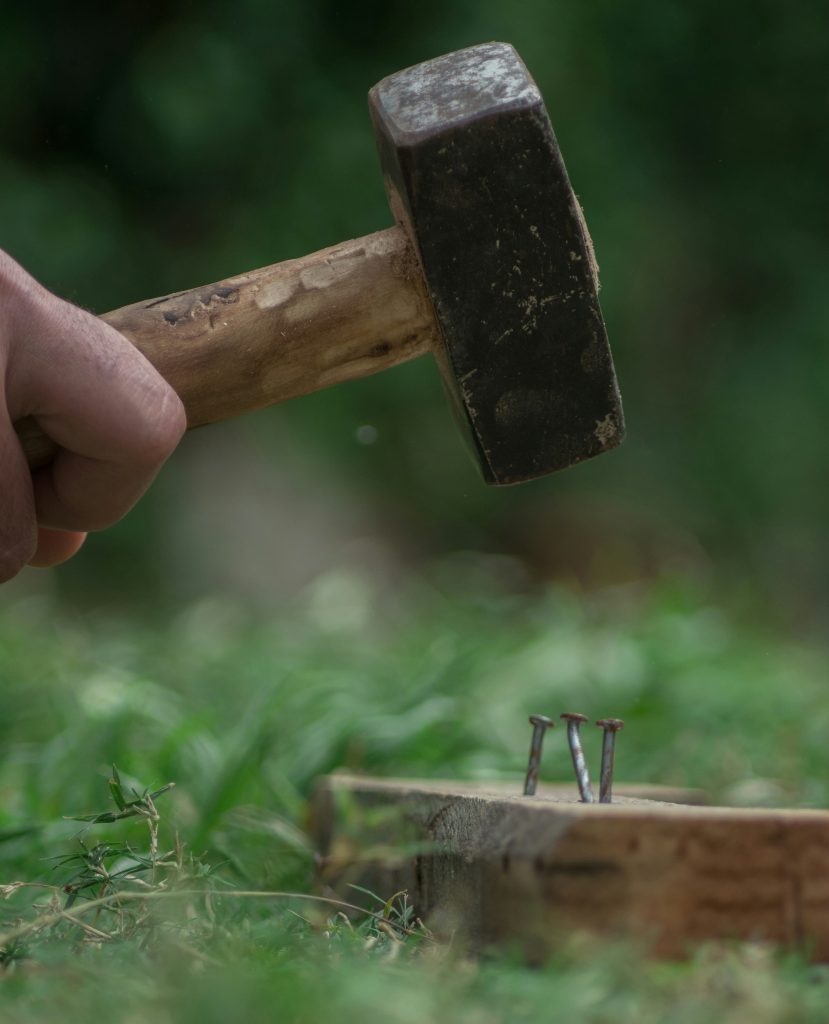 Photo Credit: Fausto Marques via Unsplash
So, a small selection of rules for building:
—You need the proper tools. A hammer—the older the better, preferably one that you cannot remember the origin of, one that shows its age in the nicks and rust and scars on its surface. You need nails. Or screws. Or staples. Some sort of fastenings. Preferably ones dug from the bottom of a workbench drawer inherited from your neighbor or your father-in-law, items once bought for some other project and discarded as too big or too small or too flimsy and kept until they eventually, hopefully, become useful again. And you need a pencil and paper to draw out your plans over and over and over until the measurements make sense.
—You need knowledge in order to build, but knowledge is something that can be gained, so know that you are limited only by your enthusiasm and willingness to watch hundreds of hours of videos instructing you in the step by step process of whatever you are trying to make, and your willingness to fail, and try, and fail, and try, again and again and again.
—You need to acknowledge that blisters and splinters and smashed thumbs are a part of the building process—that pain is a part of creating, just as much as the raw materials and the finished product and the sense of satisfaction when looking at the finished thing that you built.
—You need the raw materials for building, but materials come in many forms, some bought new and some scavenged from the dumpster, and some re-envisioned from the cast-off scraps of other things you thought would look one way but it turned out never fit quite right, but just might be perfect for turning into something else—something newer, something better, something more useful, and that is beautiful, isn’t it? That we are never finished making things, or remaking them, not as long as we have imagination and creativity and a desire to make the world better?
—You need a vision, for building is not solely a physical act, it is a spiritual one as well, it is a way of looking and seeing and hoping and loving and lighting a light when it is dark, and if there is not a light, learning to make one, for that is what builders do, make something where there was nothing, and to do it in the dark if they have to.
The men in my life are builders, and they have made many things, some small, and some large, and out of all of those, the things that I love the most are the things we have built together, for we are all builders, really, all of us. We are all creators. Crafters. Individuals with vision and passion and hope, working endlessly at curiosity and wisdom and the ability to learn and dream and live in a world of our own making.
And I suppose what I am talking about here is not ability, but willingness, for it seems to me that a builder is always willing, even if they are tired, even if they are bruised, even if they are a bit battered, even a little worse for wear. I suppose what I am grappling with is habit and mindfulness and awe and effort and the sweat we shed when trying very hard to build something out of nothing which makes us not perfect but perfectly prepared to fit odd-shaped pieces and angles and edges together in new and wondrous ways to craft creations that no one else might have ever created, carefully crafting new pieces into slip into old spaces and spots in order to shape our homes into something more fit for our living, our loving, our attempts at beauty and grace, and I suppose that what I am trying to say is, that’s what life is, isn’t it? Just one more project?
Just one more board or nail or leaky faucet or garden box or brick pathway or sturdy bookcase or splintered board to be sanded and smoothed and fit to the feet that walk on it? One more day of creating the home you want to inhabit and the life you want to live, and the family you want to love, forever and always and eternally without end?
Isn’t it?
Just one more project to build?
Lead Photo Credit: Oxana Melis via Unsplash
En Español:
Traducido por Jessica Yanez Barker
Bancos, Estanterías, Escaleras Traseras y el Arte y Acto de Construir un Hogar
“¿Qué haces cuando las condiciones no están a tu favor? Construyes de todos modos.”
—Simone Sanders Townsend.
Esta semana estaba sentada en mi clase de escritura de verano, un curso intensivo de tres horas sobre todo lo relacionado con la escritura, y estaba guiando a mis estudiantes en un ejercicio de ensayo cuando mi teléfono vibró sobre la mesa donde estábamos sentados. Lo cubrí rápidamente con una hoja de papel antes de que pudiera distraer a alguien, pero no antes de ver la pantalla iluminada con un mensaje de texto de mi esposo: una imagen y un breve texto que iluminaron la mesa por un instante antes de desvanecerse. Más tarde, cuando tuve tiempo para mirar—después de escribir, leer y conversar con jóvenes escritores dedicados a pasar sus calurosas horas de verano aprendiendo en frías aulas—vi una actualización inesperada: una nueva notificación desde casa con una foto que mostraba un martillo, una caja de tornillos y un taladro colocados en los escalones traseros de nuestra casa, y debajo un globo de texto con las palabras: “¡Ya no es una zona de peligro!”, acompañado de emojis de manos aplaudiendo y pulgares arriba.
Los escalones de la foto están desgastados—tienen algunos años, pero fueron hechos con madera reciclada, lo que los hace parecer más viejos—con un pasamanos en un lado y, en el otro, una bajada gradual hacia el patio de ladrillo, la pequeña franja de césped y las cajas de jardín que bordean un lado del patio. Son resistentes, esos escalones, pero recientemente el escalón superior había empezado a hundirse un poco, inclinándose ligeramente al pisarlo, algo desigual y levemente inestable, aunque funcional, al menos por el momento—un soporte suelto cediendo no de golpe, sino poco a poco con el tiempo, algo que solo notamos recientemente al dejar salir a los perros, revisar el jardín y regar el césped. Es el tipo de cosa que yo tiendo a ignorar, dejar pasar, rodear con cuidado, mirar con fastidio al pasar, y colocar en una lista cuidadosamente elaborada de cosas por hacer pronto, donde pronto puede significar cualquier cosa: mañana, el próximo año, o algún momento indefinido en el futuro cuando parezca más relevante que el momento actual, en el que estoy pensando en planes de clase, planes de escritura y planes de cena, y definitivamente no en planes de mantenimiento del hogar.
Es el tipo de cosa que mi esposo mira, frunce el ceño y va de inmediato a buscar las herramientas para arreglarla, un rasgo que amo de él: su disposición proactiva a lanzarse de lleno y aprender lo que necesite mientras hace que las cosas en nuestro hogar sean mejores, más seguras, más bonitas y más funcionales, y no necesariamente en ese orden.
Los hombres de mi familia son constructores. No del tipo que construye casas, aunque han dejado su huella en las paredes, pisos, puertas y escalones del hogar donde vivimos, tanto intencional como accidentalmente. Pero esa etiqueta es demasiado reductiva. Demasiado simple para describir lo que son, lo que hacen y cómo esas acciones moldean el mundo que los rodea en algo mejor—en algo único. Los hombres de mi familia, mi esposo y mis hijos, son constructores, pero no profesionalmente. No, son del tipo que trastea. Del tipo que hace viajes de fin de semana a la ferretería. Del tipo de “solo un proyecto más”. Del tipo que construye pérgolas, arma cajas de jardín, coloca senderos de ladrillo, imagina proyectos para el hogar, recupera pisos de madera, cuelga papel tapiz, levanta pequeñas bibliotecas. Del tipo que no se conforma con cómo están las cosas, sino que constantemente imagina cómo podrían ser.
Una lista incompleta de cosas que mi esposo ha construido:
Detrás de mi casa hay una fuente de agua que burbujea alegremente sin parar durante los sofocantes meses de verano, una fuente hecha con bloques de cemento grises y azulejos coloridos, y capas y capas de impermeabilizante pintadas cuidadosamente en la superficie interior para hacerla hermética antes de llenarla de agua. Fue una de las primeras cosas que mi esposo construyó en nuestro jardín después de mudarnos a nuestra casa hace ya casi 25 años.
En mi cocina hay un pequeño nicho que solía ser una despensa con puertas plegables blancas, y un día me pregunté cómo sería si quitáramos los estantes y las puertas plegables y, en su lugar, pusiéramos cajones, repisas, luces y una encimera. Y no pasó mucho tiempo antes de que mis cavilaciones ociosas se convirtieran en paredes revestidas de tablones, repisas teñidas de oscuro y frascos de vidrio llenos de golosinas alineados en el almacenamiento abierto del fondo.
En la casa de mi hermana hay un banco hecho de un viejo cabecero que mi esposo y yo recogimos de la acera y metimos a la fuerza en nuestra camioneta. Él convirtió ese cabecero en un banco con la ayuda de madera, clavos, sudor y un poco de sangre, además de un viaje inesperado a la sala de emergencias cuando un pedazo de madera le golpeó la cara. Ese banco se quedó en nuestro comedor durante una década o más antes de encontrar un nuevo hogar cuando necesitábamos más espacio para que nuestra familia creciera.
En nuestro patio lateral hay una puerta que alguna vez fue un enrejado, y después fue otra cerca, y es un pedazo de madera y hierro que ha sido reinventado muchas veces a lo largo de los años mientras ha soportado tormentas de verano, perros decididos, nevadas de invierno, plantas en crecimiento, niños corriendo y enredaderas trepadoras, junto con el deseo de mi esposo de mejorarlo cada temporada. Ahora se parece muy poco al enrejado que fue al principio, porque a mi esposo le encantan los proyectos, aunque siempre jura que es “solo uno más”, especialmente en las etapas intermedias cuando todo es un desastre, las tablas están mal cortadas y el diseño no encaja del todo. Pero al final, cuando las cosas por fin salen como él quería—y a veces incluso mejor—empieza a planear otro proyecto para crear cosas nuevas o usar cosas viejas de nuevas maneras. Y me encanta ver qué pasará después cuando sale al patio en busca de su siguiente tarea.
En nuestro jardín delantero hay una pequeña biblioteca que construyó a partir de un mueble de cocina desechado con una puerta de vidrio, una pequeña biblioteca que parece una casita de una hilera inglesa antigua, con pintura blanca, detalles de madera oscura, un techo de paja y una diminuta chimenea. Una pequeña biblioteca donde la gente se detiene mientras camina, conduce o pasea, abre la puerta de vidrio y revisa los libros, tal vez se lleva uno o deja otro. Y me parece apropiado que algo que él construyó a partir de los restos de otra cosa se haya convertido en un punto de referencia en el vecindario donde vivimos.
Mis hijos también son constructores.
Mi hijo mayor es técnico de teatro, alguien que construye posibilidades a partir de la imaginación, que se especializa en transportar al público a mundos extraños y en guiar a los actores con seguridad durante las funciones. Siempre está buscando nuevas maneras de hacer cosas, construir cosas, crear cosas, un hábito que desarrolló cuando apenas era lo suficientemente mayor para caminar solo a la escuela, pero ya hacía películas stop motion con LEGOs y pequeños escenarios de cartón, y construía con restos de madera en el patio trasero, y creaba jardines hidropónicos en su dormitorio del sótano para cultivar plantas de albahaca en la oscuridad. Pienso en esas cosas cuando me siento en un teatro a oscuras donde sé que él ha colgado aparejos, construido elevadores y creado efectos especiales que hacen que el público suelte un grito de asombro, y donde ha asegurado a los actores en arneses para hacerlos volar.
Mi hijo menor ama trabajar con las manos, le encanta ensuciarse, sudar y cansarse en la búsqueda de alguna manifestación física de su esfuerzo. Descubrió esto durante el COVID, cuando ayudó a su padre a construir una pérgola en el patio trasero, y luego otra pérgola en el patio delantero, y luego a pintar la casa, y luego a construir nuevos arriates de jardín—cualquier cosa y todo lo que le permitiera seguir haciendo, creando y construyendo en un tiempo en que el mundo parecía estar lleno de largas horas sin actividad significativa. Y este invierno, ese hijo remodeló nuestro apartamento del sótano: arrancó pisos viejos, armarios viejos, paredes viejas; aprendió a colgar paneles de yeso, encintar juntas, aplicar textura y pintar superficies; estudió cómo encajan las baldosas en las esquinas de las habitaciones antes de dedicarse a aplicar mezcla, mortero y lechada; examinó técnicas para instalar plomería, tuberías y pisos de ducha, mojándose solo un poco en el proceso de intentar hacerlo él mismo; y exploró maneras de convertir espacios viejos en nuevos mientras lo transformaba en un hogar para él y su nueva esposa, donde vivirían después de casarse esta primavera.
Me parece que es importante ser un constructor.
Después de todo, una estantería sin construir no puede sostener nada de valor, no puede usarse, ni siquiera puede sostenerse por sí misma: es solo madera y clavos. Apenas es un objeto; es más bien un montón o una pila de materiales en bruto. Es el constructor quien los toma y los transforma en algo hermoso, algo útil, algo capaz de sostener libros, recuerdos y sueños.
Necesitamos constructores en este mundo. Tanto hombres como mujeres.
Necesitamos personas dispuestas a trabajar. Dispuestas a elegir la acción, la invención y la creación. Dispuestas a sudar y sangrar y hacer cosas difíciles y sentirse incómodas en la búsqueda de algo que se parece mucho a la esperanza, en intentar un acto que se parece mucho a la paz, al amor y a la luz.
Así que, una pequeña selección de reglas para construir:
—Necesitas las herramientas adecuadas. Un martillo—cuanto más viejo, mejor, preferiblemente uno cuyo origen ya no recuerdes, uno que muestre su edad en las mellas, el óxido y las cicatrices de su superficie. Necesitas clavos. O tornillos. O grapas. Algún tipo de sujeción. Preferiblemente aquellos desenterrados del fondo de un cajón de banco de trabajo heredado de tu vecino o de tu suegro, artículos comprados alguna vez para otro proyecto y descartados por ser demasiado grandes, demasiado pequeños o demasiado endebles, y guardados hasta que eventualmente, con suerte, vuelvan a ser útiles. Y necesitas un lápiz y papel para dibujar tus planes una y otra y otra vez hasta que las medidas tengan sentido.
—Necesitas conocimiento para construir, pero el conocimiento es algo que se puede adquirir, así que entiende que estás limitado solo por tu entusiasmo y tu disposición a ver cientos de horas de videos que te instruyen paso a paso en lo que intentas hacer, y por tu disposición a fallar, e intentar, y fallar, e intentar, una y otra y otra vez.
—Necesitas reconocer que las ampollas, las astillas y los dedos machucados son parte del proceso de construcción—que el dolor es parte de crear, tanto como los materiales en bruto, el producto terminado y la sensación de satisfacción al mirar aquello que construiste.
—Necesitas los materiales para construir, pero los materiales vienen en muchas formas: algunos comprados nuevos, otros rescatados del contenedor de basura, y otros reinventados a partir de restos de cosas que pensaste que se verían de una manera pero que nunca encajaron del todo, aunque podrían ser perfectos para convertirse en algo más—algo nuevo, algo mejor, algo más útil. Y eso es hermoso, ¿no? Que nunca terminamos de hacer cosas, o de rehacerlas, mientras tengamos imaginación, creatividad y el deseo de hacer el mundo mejor.
—Necesitas una visión, porque construir no es solo un acto físico, también es un acto espiritual. Es una manera de mirar, de ver, de esperar, de amar y de encender una luz cuando todo está oscuro; y si no hay luz, aprender a hacer una, porque eso es lo que hacen los constructores: crear algo donde no había nada, y hacerlo incluso en la oscuridad si es necesario.
Los hombres en mi vida son constructores, y han hecho muchas cosas, algunas pequeñas y otras grandes, y de todas ellas, las que más amo son las que hemos construido juntos, porque todos somos constructores, en realidad, todos nosotros. Somos creadores. Artesanos. Individuos con visión, pasión y esperanza, trabajando sin descanso con curiosidad y sabiduría y la capacidad de aprender, soñar y vivir en un mundo que hacemos con nuestras propias manos.
Y supongo que de lo que hablo aquí no es de habilidad, sino de disposición, porque me parece que un constructor siempre está dispuesto, incluso si está cansado, incluso si está magullado, incluso si está un poco golpeado, un poco desgastado. Supongo que lo que estoy tratando de entender es el hábito, la atención plena, el asombro, el esfuerzo y el sudor que derramamos cuando intentamos con todas nuestras fuerzas construir algo de la nada, lo cual no nos hace perfectos, pero sí perfectamente preparados para encajar piezas y ángulos y bordes de formas extrañas de maneras nuevas y maravillosas, para crear cosas que nadie más podría haber creado, elaborando cuidadosamente piezas nuevas para que encajen en espacios viejos y rincones olvidados, con el fin de moldear nuestros hogares en algo más adecuado para nuestro vivir, nuestro amar, nuestros intentos de belleza y gracia. Y supongo que lo que estoy tratando de decir es: eso es la vida, ¿no? ¿Solo un proyecto más?
¿Solo una tabla más, o un clavo más, o un grifo que gotea, o una caja de jardín, o un sendero de ladrillos, o una estantería resistente, o una tabla astillada que necesita ser lijada y suavizada y ajustada a los pies que caminarán sobre ella? Un día más de crear el hogar que quieres habitar y la vida que quieres vivir, y la familia que quieres amar, por siempre y para siempre y eternamente sin fin.
¿No es así?
¿Solo un proyecto más por construir?

Shelli is an advocacy writer and creative writing teacher. She loves to spend time with her husband (usually in the garden) and their four almost adult children. She also loves to sew (usually for the local community theater), to read, to write, and to drag her family outside to look at the sky. Shelli is passionate about poetry, Broadway show tunes, and telling stories -- of ourselves, our families, and our communities.
View Author PageStay Inspired
Join Our Newsletter Journey
Dive deeper into the world of Big Ocean Women. By subscribing to our newsletter, you'll receive a monthly dose of empowering stories, insightful articles, and the latest news from our global sisterhood. Don't miss out on the wave of inspiration – subscribe now and be part of our ever-growing community.