
“Can you play the piano for me?” My grandma asked her mom.
My great-grandma Elsie looked blankly at the keys. “I don’t know how.”
“Just try.”
Laying her wrinkled fingers over the keys, Elsie played. I imagine the other Alzheimer’s patients at the nursing home looking over to see Elsie’s kids gathered around the piano, smiling at her bouncing music. I’ve heard it’s the only kind of music she liked to play. It made people smile.
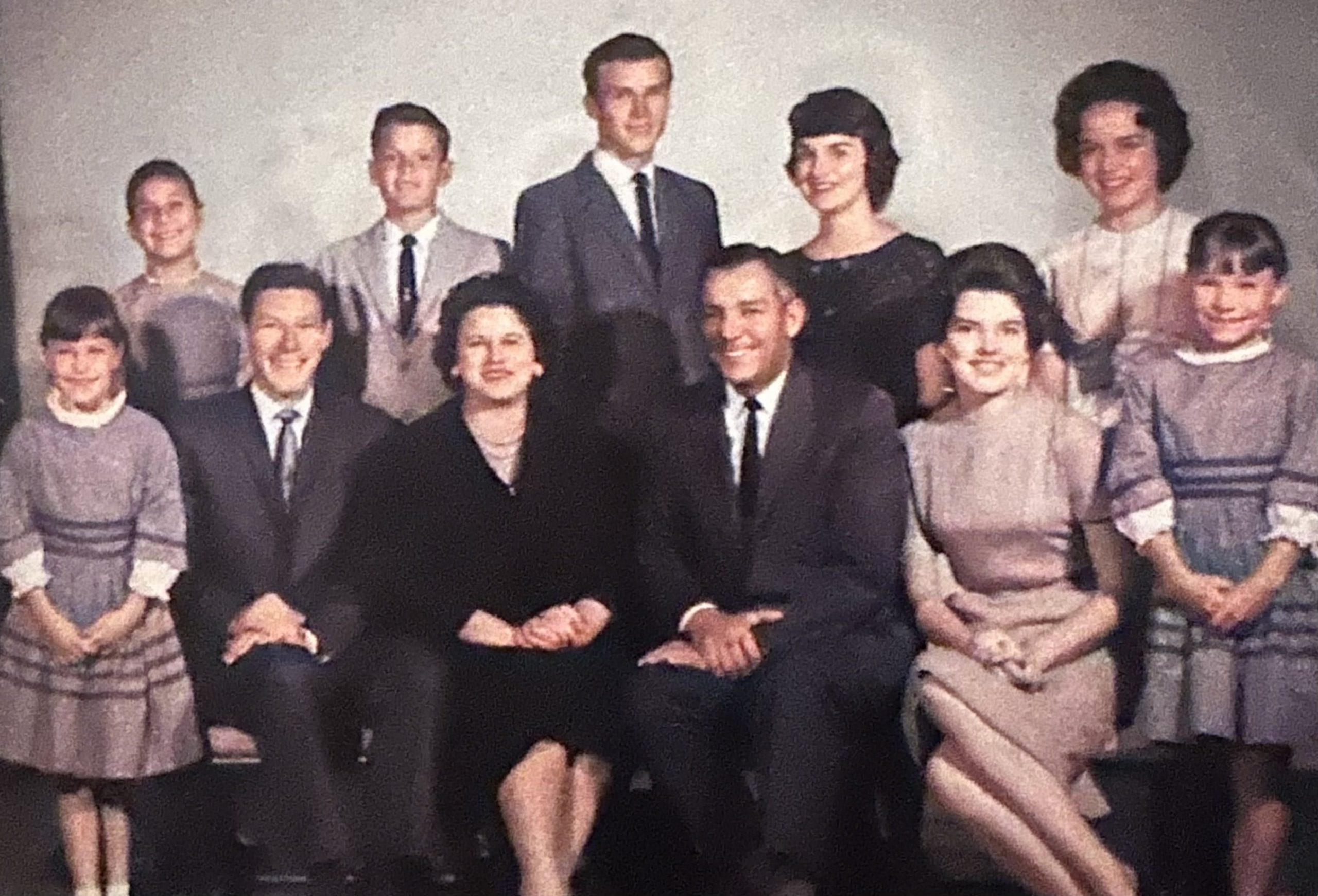
I don’t remember ever meeting my great-grandma Elsie, but I know her for her funny stories, her blunt nature, and her gift of playing the piano by ear.
As a woman of faith, I believe God has given us our families to help us learn how to carry each other through life. We carry each other’s stories, passions, beliefs, languages, and legacies, passing on each family value like a precious heirloom. These unique family values help us create our individual identities, societal contributions, and an influence that extends beyond this mortal life. They help us grow individually and as a family. In giving us the gift of families, God helps us learn how to become like Him. We learn how to carry each other because of how He carries us.
One of these “precious heirlooms” or family values that my family has passed on for generations is our love for music. Music is how we carry each other through life. We’re not especially musically gifted, but we love learning new instruments, dancing to music in the kitchen, and singing hymns at church on Sundays. Music has a way of helping us understand each other better. It brings us closer together.
I want to share this “heirloom,” my family’s love for music, and how the women in my family have passed it down through each generation.
Growing up, I was an especially difficult child for my mom to parent. We are so different. While she always has the exact words to describe her emotions, I, unfortunately, was never blessed with this skill. So I went with the next best thing. With all of the yelling and stubbornness only a young Elle could achieve, my mom was left with very little resources. But she had God.
Ever a woman of faith, my mom chose to ask for help in prayer.
“I don’t know how to make Elle listen to me, I don’t know how to teach her,” I picture my mom saying while kneeling by her bed.
“Can you play the piano for me?” An unexpected answer.
I imagine my mom turning pages in her scriptures, as if looking for a different answer. “I don’t know how.”
“Just try.”
My mom turned on her old iPod. And finally, I was quiet. I remember how the endless waves of emotions inside me stopped to listen to the music. The iPod sat on the counter; I leaned in close as the music rose, listening to its story, to its crescendo — and then it fell. The music, like rushing water, flowed in and out of my mind, telling stories with emotions hidden in every note. I was amazed to see that the emotions themselves weren’t necessarily good or bad. They were just there. And they were beautiful. Because my mom listened to an unexpected answer to a prayer, I learned the beauty in listening to emotions. I didn’t have the words to express them yet, but she showed me that feeling them could be beautiful.
Those differences, that distance — the yelling, the stubbornness, the gap in our relationship — God brought us together with a simple tool. Our language. Our music. Our family.
I imagine we are together, carrying each other because of how God carries us.
Seeing how having music in our home softened my mood and made me more receptive to her, my mom pushed me from listening to creating music for myself. And all at once, instead of the music showing me the beauty in feeling emotions, it showed me the beauty in expressing them.
I remember Sunday mornings in our home because of the music. Yes, those mornings before church were sometimes crazy, and we were sometimes late, but there was always peaceful music playing right in the middle of it all. Usually it’d be me playing on the piano. I’d flip through our family’s hymn book to remind myself of the words, and forgetting the notes, I’d play.
Loud, busy, rushed. My family moved all around me, borrowing shoes, looking for ties.
My left hand took the song in strides, notes rolling over each other, rushing the steady melody. But the melody kept going, holding space for the busyness with its familiar song.
I’ve never met my great-grandma Elsie. At least, I don’t remember her. But I know her for her music, the way she played by ear. With each note, I imagined her hands playing with me, joining in the craziness, joining in the quietness. The steady sound of a familiar song.
My mom walked by, her heels clicking down the hall. She stopped when she heard the music and smiled. “I love it when you play.”
I looked around, not seeing the search for the missing church shoe or the sibling still sleeping on the couch, but my mom’s smile. Her words and that question she seemed to ask: “Can you play the piano for me?”
It was beautiful to see the quietness filling our home, even when folded in with the sounds of preparation. Again, she showed me the beauty in expressing emotions. She always has the exact words to describe how she feels, something I’ve never known how to do. But fulfilling her role as a mother, she passed on her gift, showing me how with a few simple words. I love it when you play.
I imagine we are together — the generations before us — carrying each other because of how God carries us.
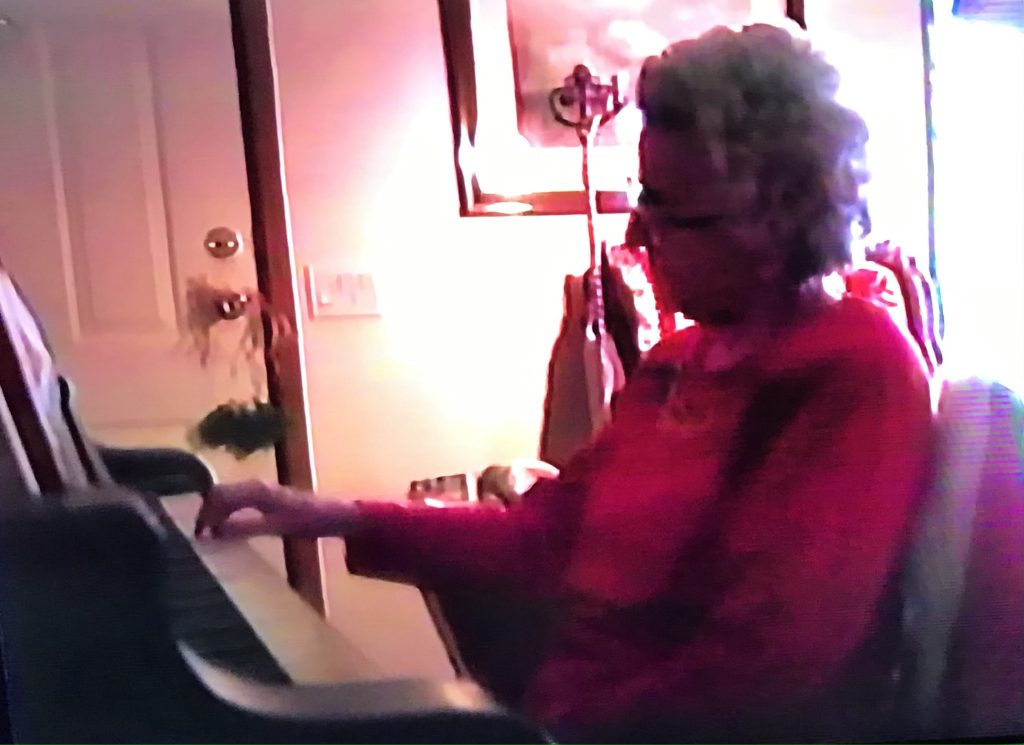 Photo credit: Donna Schaub
As a new mom, I spent many sleepless nights trying to rock my baby to sleep. I fed him, changed him, swaddled him in blankets, walked up and down the stairs, even made a special bed for him where I could lay next to him on the floor. My arms hurt from holding him, my eyes ached to close. But still, he cried, refusing to fall asleep.
After several nights of this, my mom suggested music. “Can you play the piano?” I picture her saying.
As I held a screaming baby, all alone in that dark bedroom, I imagined an old piano, passed down from my great great grandmother to her daughter Elsie. I could almost hear the music pouring out from that old piano. From a piano on a busy Sunday morning. From an old iPod shuffle. From the pages of scriptures where my mom heard an answer. I smiled, imagining the music. Imagining them. I pressed play on my phone, and piano music filled the darkness in our bedroom. The crying stopped. The little baby in my arms was quiet.
As mothers, we carry our children. Not for nine months, not for a lifetime, but through the eternities. The values we pass on through our children can strengthen generations. The way we carry our family matters because families are forever.
I imagine we are together — the generations before us, the generations beyond us — carrying each other because of how God carries us.
Lead photo credit: Donna Schaub
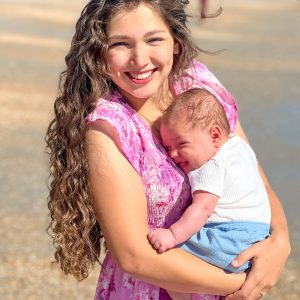
After living all across the US, Elle Flake is now loving life by the beach in Florida. She loves playing chess with her husband, Jared, and spends her days taking care of her two little boys at home. She enjoys reading, writing, and long talks on the phone with family. As an oil painter, she looks forward to someday teaching her kids to paint, but for now is loving the simple - and usually mess free -- drawing sessions with crayons at the kitchen table. Creating is her greatest passion and ranges from scribbled drawings of school buses, handwritten novels, and pots and pots of her favorite recipe -- red pepper soup. With all of these fun pastimes, she finds the most joy in creating a happy home for her family.
View Author PageStay Inspired
Join Our Newsletter Journey
Dive deeper into the world of Big Ocean Women. By subscribing to our newsletter, you'll receive a monthly dose of empowering stories, insightful articles, and the latest news from our global sisterhood. Don't miss out on the wave of inspiration – subscribe now and be part of our ever-growing community.