
In the Bible, the Lord tells us to “love thy neighbor as thyself” (Matthew 22:39). I believe that the phrasing of this commandment shows that our Savior expects us to love ourselves. In theory, this is an easy thing to do, but in practice I have found the opposite to be true. I am my harshest critic, I hold myself to unrealistic standards, and I am often the slowest to forgive myself for my mistakes.
Does it show humility to hold ourselves accountable for mistakes? Can’t holding high standards help us reach loftier goals? Yes! These can be beneficial things! But what if we take self-criticism to an extent that we show ourselves no respect?
One of my favorite authors, Brenè Brown, has dedicated years of study to the topic of guilt vs shame. In her book, “The Gifts of Imperfection,” she says,
“What’s the difference between shame and guilt? The majority of shame researchers and clinicians agree that the difference between shame and guilt is best understood as the differences between “I am bad” and “I did something bad.” Guilt = I did something bad. Shame = I am bad.”
I love this type of framing! When we view ourselves as “bad,” it has a definite negative impact. But viewing actions as “bad” can help us to maintain respect for ourselves.
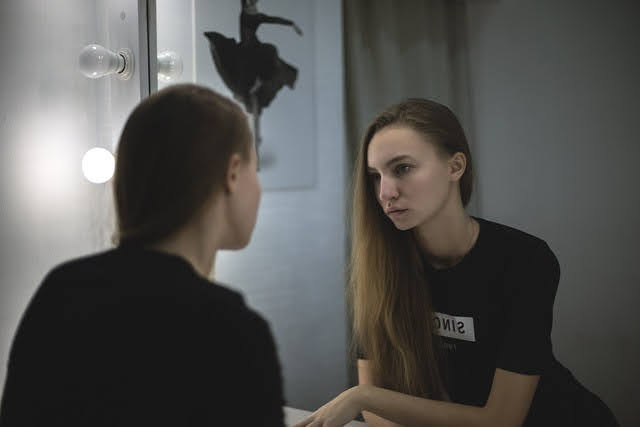 Image by StockSnap from Pixaby
In recent years, I have worked on a technique with my therapist called Internal Family Systems. My therapist has me picture a younger version of myself and talk to her. It’s a bit hard to explain briefly, but essentially it is as if this younger version of myself was holding onto unresolved pain, and that pain will occasionally surface in my life. When I have these mental conversations, I find myself being more understanding and compassionate toward my younger self. I can more easily see the difference between doing or experiencing a bad thing and “being bad.” I have compassion for my younger self, who is just doing her best in life, and have learned to show more compassion to my current self in daily life.
Similarly, many of us find it easy to forgive and show grace to a friend. We value our relationships over minor disputes or mistakes. Why, then, is it so hard to show ourselves the same courtesy? As an example, I had a conversation with a friend not long ago about her mental health. She admitted that her recent weight gain had impacted her mental health negatively and that she felt very self-conscious about it. I was taken aback because, despite seeing her regularly, I had never even noticed the weight gain! The number on a scale meant absolutely nothing to our friendship and held no indication of her worth as a person. It was a humbling experience for me to realize that I often fail to show myself the same compassion and regularly revert to self-criticism.
I think this month’s tenet is phrased beautifully: “We are each unique and innately worthy of respect.” I particularly love the word “innately” as it is used here. It implies that we do not need to achieve anything to earn this respect – each and every one of us has the right to be respected, not just by others but by ourselves as well. May we strive to respect ourselves as we continue to respect others.
Lead Image by Gerd Altmann from Pixaby

Katrina Hubbard lives with her husband and three kids in Utah. She earned a degree in Social Work from Brigham Young University. Though she is now a stay-at-home mom, she has previously worked in various schools and universities doing administrative work and loved every minute. Most of her time now consists of chasing (or being chased by) her little ones, but when she finds downtime she spends it crafting (especially crocheting), playing various games, jigsaw puzzles, and finding excuses to travel to Disneyland. Katrina loves being close to her family and enjoys gathering with them and her friends as often as possible.
View Author PageStay Inspired
Join Our Newsletter Journey
Dive deeper into the world of Big Ocean Women. By subscribing to our newsletter, you'll receive a monthly dose of empowering stories, insightful articles, and the latest news from our global sisterhood. Don't miss out on the wave of inspiration – subscribe now and be part of our ever-growing community.