
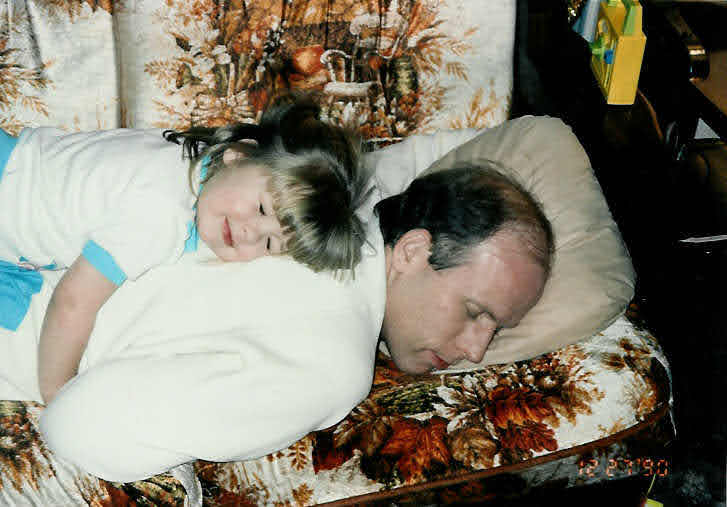
Lead photo credit: Kathleen Stimpson
“Honour thy father and thy mother: that thy days may be long upon the land which the Lord thy God giveth thee.” – Exodus 20:12
I have a confession. I have read a LOT of YA Historical Romance novels; more than I care to admit. Many of them are written with a Christian audience in mind and surprisingly have led to some interesting insights of the scriptures they discuss. One novel, “Love on the Range” by Mary Connealy, talks about the scripture Exodus 20:12, “Honour thy father and thy mother: that thy days may be long upon the land which the Lord thy God giveth thee.” In this novel, most of Connealy’s characters have absent or abusive fathers; fathers whom they do not wish to emulate. The characters ask each other how to honor a father who is himself dishonorable, and share the following responses*:
-“How do I honor a man who never cared about me? Never gave me any time or love or kindness. Was never in any real way a father to me. …I think I honor him by not being like him. By praying for him. By talking to him if he gives me a chance. …I can treat him like Jesus treated those in prison, those who were lame or sick or hungry.”
-“In this way she could truly honor [her father]. By expecting honor of him. …She softened her voice, wishing she could reach him. She doubted it was possible but honor demanded she try. ‘Pa, God calls me to honor you. But the only way to do that is nearly the same word, honesty. I have to tell you honestly that you need to humble yourself before God. I need a father who is worthy of honor.’”
-“I think I’ve figured out what God meant when he said honor your father and mother. …I think God calls us to honor them. But He’s given us the Ten Commandments all at the same time. …God, well, He wants honor. He wants a soul turned to Him and a life lived faithfully and honorably. I will pray about this, and I will continue to show honor to my father, but only as an example to him. I will live with honor myself.”
-“We honor our fathers by being a light in the world. By believing in what’s good. By being better than we might have grown up to be.”
I am blessed with an honorable father. He has been an example of faith, love, trustworthiness, and honesty in my life. I have always found it easy to honor him by emulating him. I am proud to be associated with him and humbled when others comment on any similarities we share. I honor my father by using his example as a guide in my life.

It is easy to recognize, however, that my situation is not a universal one. While many have loving fathers that are easy to honor, many others share the opposite experience. My mother shared with me her experience of growing up with an abusive father. She had to work hard to overcome the physical, mental, and spiritual challenges. When I asked what her thoughts were regarding honoring a father like him, she shared that part of her journey was attempting to understand his life. She reached out to members of his crew from his time in the Air Force “I felt like [my father’s crewmember] summed it up perfectly when he said something to the effect that Dad wasn’t very personable, but he was a good pilot and he brought them all home safely.” She was able to acknowledge that there were some noble acts in his life, even if she didn’t witness them herself. She continued by saying, “I appreciated that he never made me feel like there was anything I couldn’t do because I was a girl, which for the time period I believe was a little unusual. Women were breaking out of traditional roles but it was still rather new. I didn’t end up choosing one of those fields I think he wanted me to (accounting or computer science), but I appreciated that he thought I could.”
Similarly, one of our other writers for Big Ocean Women, Alma Olaveson, shares her experience with her own father:
For those of us who carry a strained, painful, or even absent relationship with our fathers, the commandment “Honor thy father” comes down to a single, courageous choice: to take personal responsibility for our healing.
It means choosing to cleanse and clear the layers of pain, dysfunction, and trauma that have been passed down to us—wounds not born of our own making, but inherited through generations. These were wounds carried by our fathers, and by their fathers before them.
To embark on this path of healing is not easy. It requires us to roll up our sleeves and face the mess, to walk through the fire of grief, rage, and sorrow. It’s lonely. It’s gritty. It can break us open. But it is also the path of the hero. It is a sacred labor.
And in doing this work—this soul excavation—we give a profound gift. We set ourselves free. We liberate those who came before us, our fathers included, and we create space for our children, and their children, to live unburdened.
Whether your father was present or absent, kind or cruel, deeply flawed or simply lost—his choices were his. Our power lies in what we choose now. And I choose to heal. I choose to do the heavy lifting of these inherited wounds—not because he earned it, but because my healing honors life itself.
This, I believe, is the truest way to Honor Thy Father: to break the chain. To let the pain stop here. To let love begin again.
And I do this not alone, but in relationship with the One who heals all—Jesus Christ. Through His Atonement, I am made whole. Through His grace, the past is redeemed. Through His love, the generations are set free.

Through all these examples, I have come to understand that honoring your father, while seemingly simple on the surface, is not a uniform action. It will look different for every person here on earth, depending on their own circumstances and paternal experiences. One thing we all share, though, is a loving father in Heaven. This, too, can be a difficult relationship for those who have been given painful trials in life, but if our goal is to honor our Heavenly Father, we are fulfilling that commandment.
This Father’s Day, as we celebrate the positive paternal examples in our lives, may we honor them by carrying on positive legacies to our families and by leading a life of honor ourselves.
*Excerpts taken from “Love on the Range,” by Mary Connealy. ©2021 by Mary Connealy. Published by Bethany House Publishers.

Katrina Hubbard lives with her husband and three kids in Utah. She earned a degree in Social Work from Brigham Young University. Though she is now a stay-at-home mom, she has previously worked in various schools and universities doing administrative work and loved every minute. Most of her time now consists of chasing (or being chased by) her little ones, but when she finds downtime she spends it crafting (especially crocheting), playing various games, jigsaw puzzles, and finding excuses to travel to Disneyland. Katrina loves being close to her family and enjoys gathering with them and her friends as often as possible.
View Author PageStay Inspired
Join Our Newsletter Journey
Dive deeper into the world of Big Ocean Women. By subscribing to our newsletter, you'll receive a monthly dose of empowering stories, insightful articles, and the latest news from our global sisterhood. Don't miss out on the wave of inspiration – subscribe now and be part of our ever-growing community.