

What is Real? An Ode to Human Frailty and Human Flaws in an Age of AI (English and Spanish)
Lead photo credit: Vadim Sadovski via Unsplash
It snowed this week in Yellowstone. A foot and a half of icy precipitation, falling over forests and mountain ridges and winding roads.
It is late June, and the temperature in Utah has reached into the triple digits, the air has been dry and hot and leaning into long days and short nights when the sun stays high in the sky late into the evening hours, and the weatherman predicted the trend to continue into July, into the heat of summer, into the prickle of sweat and the pink tint of skin and the exhaustion of spending too long in the sun and the sound of kids at the neighbor’s pool floating over the fence in my small backyard.
But it snowed this week in Yellowstone, and there are pictures online of flurries and gusts and gales of wind and even in Utah the temperature dipped into the forties, dropped to where I wondered if I shouldn’t cover my garden, if I shouldn’t drag out sheets and blankets and towels to cover the tomatoes and peppers and squash, to protect my plants which are only just now beginning to stretch and thrive under the steady warmth of the growing season.
It is something of a running joke, isn’t it? The quips and gags and puns about the dependability of weathermen, humor at the expense of those meteorological professionals who are charged with predicting the unpredictable, who are soundly taken to task when the temperature changes, when the models change, when it rains when we forget to walk out our doors with an umbrella, when the untamed wild lives up to its promise and defies every expectation.
I made a mistake this week. I’m sure you did too. Mistakes, after all, are very human, aren’t they? Unless it’s being made by a meteorologist. Then it’s a joke. A laugh. A punchline.
But it snowed this week in Yellowstone amid a forecast for unseasonable cold, and among the videos of stunned travelers suddenly walking in shorts and short sleeves through swiftly falling sleet and sudden snow and the pictures of mountain flowers limned in ice and buffalo stomping through deep drifts was the suggestion that we could have predicted the weather better, or perhaps avoided it altogether, if only we had used AI. It suddenly seems to be the answer to everything—Artificial Intelligence. I heard people saying that AI would have been up to the task, would have been foolproof, infallible, omniscient. Near perfect.
It’s something I hear a lot recently. From students who are sure that a computer can write papers relating their own experiences better than they can. From youth who tell me about asking AI how to talk to a boy, how to make friends, how to be less lonely. From professionals who are enthusiastic about expanding productivity, efficiency, and effectiveness.
I have a lot of questions about artificial intelligence. A lot of thoughts about why we turn to something so very artificial to deal with our very real problems and our very imperfect feelings. I wonder about why we trust something that is so unlike us, so far removed from our own experience, and our own goals for our lives. I have questions about the impact of AI on creativity and self sufficiency and the environment we live in and depend on. About the ethical and moral implications of something that has been trained on stolen art.
I have a lot of questions about AI, but first of all is this: is it too much to ask, that we value the privilege of making very human mistakes?
The fatal flaw of AI is that it is simply an amalgamation of human innovation—it is nothing new, nothing extraordinary. It is a search engine of thoughts that have already been thought and opinions that have already been expressed. It is a collection of pages out of order, parts and pieces of great thinkers that have been shuffled and reshuffled and spit out in answer to our carefully phrased queries. It is a sheet of paper with a message written in cut out and pasted letters from newspapers, magazines, pamphlets, and flyers, each letter rough edged and devoid of coherence.
It is an amazing machine.
But it is only a machine.
We, however, are so much more. More than simple lines of code or programming, we are nerves and vessels and cells and matter that combine to become the feel of a tight hug, the tender touch of a hand wiping away a tear as it falls down a smudged face, the tight grasp of one hand holding another, rough and warm and callused.
We are human, and isn’t it glorious? Isn’t it astounding? Isn’t it marvelous? The way we can move and serve and hold and feel and even fail?
It is the failure, really, that sets us apart.
A machine that fails is broken. A machine that fails is defective. A machine that fails needs repair or refurbishment or removal.
But when we fail? Well, that is all a part of being human, isn’t it? The labor? The striving and trying and trial?
When it comes to being human, we forget to ask ourselves, what is the value of struggle? What is the meaning in examining ideas and beliefs and opinions? What is the benefit of looking for the right word in the right space, of rejecting one after another after another when one doesn’t fit quite right, like a puzzle piece worn down by use and unable to slot perfectly into place? What is the value of human thought? Like the poet Mary Oliver once asked, what is it, after all, we are meant to be doing with our one wild and precious life?
I am who I am because of what I have done, what I have experienced, what I have made. I am who I am because of the people I love, the community I have become a part of. Because of the hopes I carry and the sorrows I have felt. Part of what makes me the person I am is the way I create, the way I think, the way I try—and the way I sometimes fail.
Isn’t that true of all of us?
A week ago I spent some time cooking food for 25 girls and leaders at a youth camp in the high Uinta mountains where the wind blew ceaselessly but it did not, thankfully, snow. It was a lovely break from the ordinary spent on a windswept mountain plain, a green grassed, blue skied, dry aired wilderness hours from my home, disconnected from the distractions of an ordinary life—no televisions, no cell phones, no computers. No wireless connection. No AI to answer questions before we have even begun to wonder at the answers.
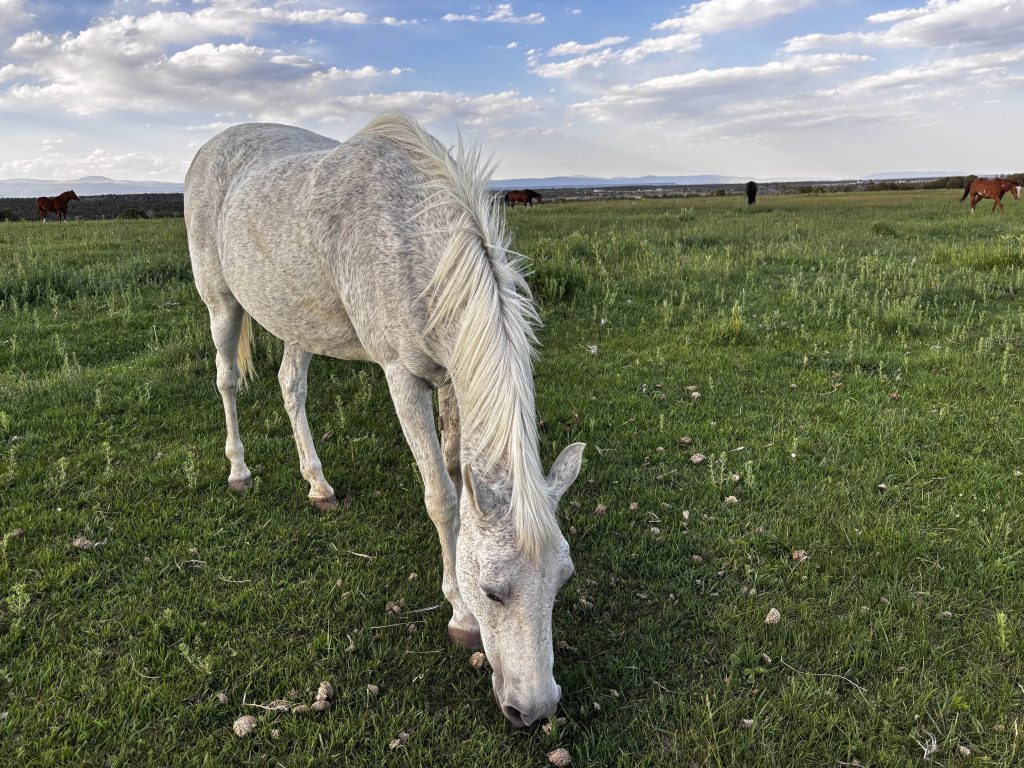
We ate, and we walked, and we rode horses, and we fancied ourselves brave heroes of great stories as we shot arrows into stuffed targets, and we swam, and we ate again, and on the longest day of the year we gathered just after sunset around a campfire, the yellow/white flames blown upwards by the wind, leaving a trail of gold-lit sparks that drifted into the dark purple black of the late twilight dusk.
Not every meal was perfect—although I am good at cooking and planning and portioning there were burnt edges around some of the foil dinners and others that were decidedly rare. I forgot to take into account how long it takes to boil water at high altitude. The casseroles took too long to bake. Everything took just a little more time, a little more heat, a little more patience.
It was wonderful.
That little bit of extra time to talk. To walk. To stare at the stars overhead and wonder at the stories they hold. To ask questions that we did not know the answers to, and propose outlandish solutions that made us giggle and snicker and laugh. To find another kind of connection—not one of wires and routers and Wi-Fi signals but memories and silly skits and the telling of tall tales. Even the burnt edges were wonderful, if just because they were memorable. We don’t tell stories, after all, about a perfect meal.
When I spend time in the wilderness I always find myself asking about how my life is being spent—what value I place on efficiency versus how I see process as a part of the whole. It is not the destination, after all. Not the neatly worded bullet point response that covers all possibilities in size 12 Times New Roman font. It is the experience. The event. The adventure.
You see, I have found that I can learn from a computer or from AI. If I want to learn to knit, I can give it a prompt and ask it to describe exactly how to loop the thread around my knitting needles to create one row after another after another of a simple seed stitch. I can access virtual instructors, and personalized tutorials, and patterns created by a machine trained to peruse large libraries of material at the speed of thought.
Or I can sit clustered with my sisters as I fumble my way through a pattern by trial and error. I can get the yarn tangled and snarled and knotted. I can grow frustrated as the ball rolls away and my niece runs after it laughing. I can remember the pair of booties my grandmother made for her children and for each of her grandchildren, and even a few of the great grandchildren, working tirelessly until her vision failed her and her hands grew too weak for her to hold the needles. I can search for similar patterns, I can learn to adjust for what I cannot find. I can pick up a ball of vintage yarn at a yard sale where I chat with the woman over a table piled high with unused craft supplies, talking about the projects we hope to someday find time to complete. I can connect. I can create. I can share the experience of learning, of failing, of anticipating success. I can look forward not only to a finished product I might be proud to claim, but a memory I will treasure, one that links generations of women who have always gathered together to make.
Anticipation is a wonderful thing, isn’t it? It is more than just the moments that make up our lives. It is the wanting. The waiting. The connection of simply being together.
The problem, ultimately, is not what part of our lives we are gifting to machines, although that is alarming in and of itself. No, the larger problem is what happens when we cease the struggle that is an essential part of the human experience. Without struggle, without failure, without the possibility of fallibility, there can be no growth, there can be no learning, there can be no real creativity. That gleaming gold spark of imaginative thought that lights the dark in flurries of wind blown embers comes not despite but because of the process of trying to walk into the unknown without a light to guide us.
Is the appeal of artificial intelligence that it eliminates the risk? That it gives the appearance of answers and end points without the terrifying unknown that is stepping into future thought?
I wonder what impact this will have on generations past our own who will find their lives and their experiences sanitized and made more perfect through machine learning, and machine interfacing, and machine guided efficiency and productivity and choice. In my experience life was never meant for perfection but for joy and astonishment and empathy and hope. My four children all in their early twenties, all pursuing their own interests and their own lives, and yet I find myself frequently remembering and mourning the moments when they were young, when they would hold me by the hand and pull me across the grass, their only goal to sit and pick dandelions which they would wind into wilting clusters that they thought were great beautiful bouquets, spending hours singing silly songs, and reading interesting books, and biking from one place to another—the park, the library, the swimming pool, with no goals other than to experience, to play, to learn. I worry that those experiences are being lost in screens and programs and carefully curated lessons by machines who do not understand what it is to be a human being. I regret leaving behind the days when I had the time and the excuse to simply slow down and listen to the world with its glorious soundtrack of wind and bugs and birds and the spinning of bike wheels on pavement and the laughter of children in the air.
The question of speed and efficiency is one that I find is essentially opposed to the human experience, which by definition is grounded in participation and practice and process—not a highly polished product devoid of soul. It is a question I am not alone in asking. In an interview with Hayao Miyazaki, the founder of Studio Ghibli, when he spoke about his reluctance to use AI in his animations, in his art, he said that technology, he felt, would always be second best when compared to the endless inventiveness of the human soul.
And isn’t that truth? Isn’t that wisdom? That we have within us something miraculous and creative and kind and resourceful and inspired. Something no machine can ever match or mimic or mirror. We need to hold tight to that truth—we must be builders of new spaces, new ideas, new thoughts, building them with our own two hands as we encourage others to learn and wonder and grow. This dependence on what is not real—it comes from wanting to take the easy way out. To avoid mistakes. To step away from uncertainty. It comes from a desire for ease.
I have found, however, that the most beautiful things grow where the soil was once rocky and hard. Where mistakes have been made. Where failure is a possibility. Where food might get burned and feelings might get hurt and patterns might be broken and yarn might be tangled and poets might settle for the almost right wrong word. Where snow falls unexpectedly, feet at a time, from a bright blue June sky over the mountain peaks even after the weatherman said it would be clear.
En Español:
Traducido por Jessica Yanez Barker
¿Qué es real? En defensa de la fragilidad y los errores humanos en la era de la inteligencia artificial
Nevó esta semana en Yellowstone. Casi medio metro de precipitación helada cayendo sobre bosques, crestas montañosas y caminos sinuosos.
Estamos a finales de junio, y la temperatura donde vivo en Utah ha alcanzado los 39 Celsius; el aire se ha sentido seco y caliente, inclinándose hacia días largos y noches cortas, cuando el sol permanece alto en el cielo hasta bien entrada la tarde, y el meteorólogo predijo que la tendencia continuaría en julio, hacía el calor del verano, hacía el cosquilleo del sudor, el tono rosado de la piel, el agotamiento tras pasar demasiado tiempo bajo el sol, y el sonido de los niños en la piscina de los vecinos flotando por encima de la cerca de mi pequeño patio trasero.
Pero nevó esta semana en Yellowstone, y hay fotos en línea de ventiscas y ráfagas de viento, y hasta aquí en Utah la temperatura bajó a los cuatro grados; descendió lo suficiente como para preguntarme si no debería cubrir mi jardín, si no debería sacar sábanas, mantas y toallas para proteger los tomates, pimientos y calabazas, para cuidar mis plantas que apenas están empezando a estirarse y prosperar con la calidez constante de la creciente temperatura.
Es casi una broma recurrente, ¿no es así? Los chistes, bromas y juegos de palabras sobre la fiabilidad de los meteorólogos, el humor a costa de esos profesionales de la meteorología encargados de predecir lo impredecible, a quienes se critica duramente cuando cambia la temperatura, cuando cambian los modelos por computadora, cuando llueve y olvidamos salir con paraguas, cuando lo indómito cumple su promesa y desafía toda expectativa.
Cometí un error esta semana. Estoy segura de que tú también. Los errores, después de todo, son muy humanos, ¿no? A menos que los cometa un meteorólogo. Entonces es una broma. Una risa. Un chiste.
Pero nevó esta semana en Yellowstone pese a un pronóstico de frío inusual y ligera precipitación, y entre los videos de turistas sorprendidos caminando con pantalones cortos y camisetas por senderos cubiertos de aguanieve y nieve repentina, y las imágenes de flores de montaña cubiertas de escarcha y bisontes atravesando la nieve profunda, apareció la insinuación insidiosa de que podríamos haber predicho mejor el clima, o incluso haberlo evitado, si tan solo hubiéramos usado inteligencia artificial. Si tan solo el elemento humano hubiera sido reemplazado por algo más confiable, más predecible. Más tecnológico. Parece ser la respuesta para todo en los últimos años: inteligencia artificial. Al revisar mi perfil, vi personas decir que la IA habría estado a la altura, que habría sido infalible, infalible, omnisciente. Casi perfecta.
Es algo que escucho mucho últimamente. De estudiantes que están seguros de que una computadora puede redactar mejor que ellos trabajos sobre sus propias experiencias. De jóvenes adultos que me cuentan que le preguntan a la IA cómo hablarle a un chico, cómo hacer amigos, cómo sentirse menos solos. De profesionales entusiasmados por aumentar su productividad, eficiencia y eficacia.
Tengo muchas preguntas sobre la inteligencia artificial. Muchas reflexiones sobre por qué recurrimos a algo tan artificial para lidiar con problemas tan reales y sentimientos tan imperfectos. Me pregunto por qué confiamos en algo que es tan distinto a nosotros, tan alejado de nuestra propia experiencia y de nuestras metas vitales. Tengo preguntas sobre el impacto de la IA en la creatividad, la autosuficiencia y el medio ambiente del que dependemos. Sobre las implicaciones éticas y morales de algo que ha sido entrenado con arte robado.
Tengo muchas preguntas sobre la IA, pero la primera es esta: ¿es mucho pedir que valoremos el privilegio de cometer errores profundamente humanos?
La falla fatal de la IA es que no es más que una amalgama de la innovación humana—no es nada nuevo, nada extraordinario.
Es un motor de búsqueda de pensamientos que ya han sido pensados y opiniones que ya han sido expresadas.
Es una colección de páginas desordenadas, partes y piezas de grandes pensadores barajadas y reordenadas, escupidas como respuesta a nuestras preguntas cuidadosamente formuladas.
Es una hoja de papel con un mensaje escrito con letras recortadas y pegadas de periódicos, revistas, panfletos y volantes, cada letra con bordes ásperos y carente de coherencia.
Es una máquina asombrosa.
Pero no es más que una máquina.
Nosotros, sin embargo, somos mucho más. Más que simples líneas de código o programación, somos nervios y vasos y células y materia que se combinan para convertirse en el abrazo apretado, el toque tierno de una mano que limpia una lágrima de un rostro manchado, el apretón firme de una mano sujetando otra, áspera y cálida y encallecida.
Somos humanos, ¿y no es eso glorioso? ¿No es asombroso? ¿No es maravilloso? Esa capacidad de movernos, de servir, de sostener, de sentir, e incluso de fallar.
Es el fracaso, en realidad, lo que nos distingue.
Una máquina que falla está rota. Una máquina que falla es defectuosa. Una máquina que falla necesita reparación, renovación o reemplazo.
¿Pero cuando fallamos nosotros? Bueno, eso forma parte de ser humanos, ¿no? ¿El trabajo? ¿El esfuerzo, la lucha, la prueba?
Cuando hablamos de lo humano, olvidamos preguntarnos: ¿cuál es el valor de la lucha? ¿Qué sentido tiene examinar ideales, creencias y opiniones? ¿Qué ganamos al buscar la palabra justa en el espacio preciso, al rechazar una tras otra cuando ninguna encaja del todo, como una pieza de rompecabezas desgastada por el uso que ya no entra bien en su lugar? ¿Cuál es el valor del pensamiento humano? Como preguntó la poeta Mary Oliver: ¿Qué es, después de todo, lo que se supone que debemos hacer con esta única vida salvaje y preciosa?
Soy quien soy por lo que he hecho, por lo que he vivido, por lo que he creado. Soy quien soy por las personas que amo, por la comunidad de la que formo parte. Por las esperanzas que cargo y las penas que he sentido. Parte de lo que me convierte en quien soy es la forma en que creo, en que pienso, en que intento—y en que, a veces, fracaso.
¿No es eso cierto para todos nosotros?
Hace una semana pasé un tiempo cocinando para 25 chicas y líderes en un campamento juvenil en las altas montañas Uinta, donde el viento soplaba sin cesar, aunque, por suerte, no nevó. Fue un descanso encantador de lo cotidiano, en una llanura montañosa azotada por el viento, con pastos verdes, cielos azules y aire seco, a horas de mi casa, desconectados de las distracciones de la vida diaria—sin televisores, sin teléfonos celulares, sin computadoras. Sin conexión inalámbrica. Sin IA que responda preguntas antes siquiera de que hayamos comenzado a maravillarnos por las respuestas.
Comimos, caminamos, montamos a caballo, nos imaginamos heroínas valientes de grandes historias mientras lanzábamos flechas a blancos acolchados, nadamos, volvimos a comer, y en el día más largo del año nos reunimos justo después del atardecer alrededor de una fogata. Las llamas amarillo-blancas se elevaban empujadas por el viento, dejando un rastro de chispas doradas que se desvanecían en la oscuridad púrpura y negra del crepúsculo tardío.
No todas las comidas salieron perfectas—aunque soy buena cocinando, planificando y calculando porciones, hubo bordes quemados en algunas cenas al estilo “paquete de aluminio”, y otras estaban claramente poco cocidas. Olvidé tener en cuenta cuánto tarda en hervir el agua a gran altitud. Los guisos tardaron demasiado en hornearse. Todo requirió un poco más de tiempo, un poco más de calor, un poco más de paciencia.
Fue maravilloso.
Ese pequeño tiempo extra para hablar. Para caminar. Para mirar las estrellas sobre nuestras cabezas y maravillarnos con las historias que guardan. Para hacer preguntas cuyas respuestas desconocíamos, y proponer soluciones descabelladas que nos hacían reír a carcajadas. Para encontrar otro tipo de conexión—no hecha de cables, enrutadores o señales wifi, sino de memorias, de juegos y de cuentos exagerados. Incluso los bordes quemados fueron maravillosos, si acaso porque eran memorables. Después de todo, no contamos historias sobre una comida perfecta.
Cuando paso tiempo en la naturaleza, siempre me encuentro preguntándome cómo estoy invirtiendo mi vida—qué valor le doy a la eficiencia frente a cómo veo el proceso como parte esencial del todo. No es el destino, al fin y al cabo. No es la respuesta perfectamente redactada con viñetas en letra Times New Roman tamaño 12 que cubre todas las posibilidades. Es la experiencia. El evento. La aventura.
Verás, he descubierto que puedo aprender de una computadora o de la inteligencia artificial. Si quiero aprender a tejer, puedo darle una indicación y pedirle que me describa exactamente cómo pasar el hilo por las agujas para formar una fila tras otra de un simple punto musgo. Puedo acceder a instructores virtuales, a tutoriales personalizados, a patrones creados por una máquina entrenada para revisar vastas bibliotecas de materiales a la velocidad del pensamiento.
O puedo sentarme con mis hermanas, apiñadas, mientras tropiezo con el patrón por prueba y error. Puedo enredar el estambre, hacer nudos y enojarme cuando la madeja rueda lejos y mi sobrina corre tras ella riendo. Puedo recordar los zapatitos que mi abuela tejió para sus hijos, para cada uno de sus nietos, y hasta para algunos bisnietos, trabajando sin descanso hasta que su vista le falló y sus manos ya no pudieron sostener las agujas. Puedo buscar patrones similares, puedo aprender a adaptar lo que no logro encontrar. Puedo tomar una bola de hilo antiguo en una venta de garaje y conversar con la mujer detrás de la mesa llena de materiales de manualidades sin usar, hablando de los proyectos que ambas esperamos algún día encontrar tiempo para terminar. Puedo conectar. Puedo crear. Puedo compartir la experiencia de aprender, de fallar, de anticipar el éxito. Puedo esperar no solo un producto final del cual sentirme orgullosa, sino un recuerdo que atesoraré, uno que une generaciones de mujeres que siempre se han reunido para crear.
La anticipación es algo maravilloso, ¿no crees?
Es más que solo los momentos que componen nuestras vidas. Es el anhelo. La espera. La conexión de simplemente estar juntos.
El problema, en última instancia, no es qué parte de nuestras vidas estamos entregando a las máquinas, aunque eso ya sea inquietante por sí solo. No, el problema mayor es qué ocurre cuando dejamos de luchar—cuando cesamos esa lucha que es parte esencial de la experiencia humana. Sin lucha, sin fracaso, sin la posibilidad de equivocarnos, no puede haber crecimiento, ni aprendizaje, ni verdadera creatividad. Esa chispa dorada del pensamiento imaginativo que ilumina la oscuridad como brasas arrastradas por el viento no nace a pesar del proceso, sino gracias al intento de caminar hacia lo desconocido sin una luz que nos guíe.
¿Será que el atractivo de la inteligencia artificial es que elimina el riesgo? ¿Que nos ofrece la apariencia de respuestas y finales sin el aterrador vacío de pensar en el futuro sin certezas?
Me pregunto qué impacto tendrá esto en las generaciones futuras,
aquellas que vivirán vidas y experiencias cada vez más higienizadas y perfeccionadas por el aprendizaje automático, la interacción con máquinas, la eficiencia y productividad y elección guiadas por algoritmos. En mi experiencia, la vida nunca estuvo destinada a la perfección, sino al gozo, al asombro, a la empatía y a la esperanza.
Mis cuatro hijos están todos en sus veintes, cada uno siguiendo sus propios intereses y su propia vida, y sin embargo me sorprendo frecuentemente recordando—y lamentando—los momentos en que eran pequeños, cuando me tomaban de la mano y me arrastraban por el césped con el único propósito de sentarse a recoger dientes de león que entrelazaban en ramilletes marchitos que creían eran magníficos y hermosos ramos, pasando horas cantando canciones tontas, leyendo libros fascinantes y pedaleando de un lugar a otro—al parque, la biblioteca, la piscina—sin más objetivo que experimentar, jugar, aprender.
Me preocupa que esas experiencias se estén perdiendo entre pantallas y programas y lecciones cuidadosamente curadas por máquinas que no entienden lo que significa ser humano. Me pesa haber dejado atrás aquellos días en los que tenía tanto el tiempo como la excusa para simplemente frenar y escuchar el mundo con su gloriosa banda sonora de viento, insectos, aves, el giro de las ruedas de bicicleta sobre el pavimento y la risa de los niños en el aire.
La cuestión de la velocidad y la eficiencia me parece, en esencia, contraria a la experiencia humana,
que por definición se basa en la participación, la práctica y el proceso—no en un producto pulido y sin alma. Es una pregunta que no solo yo me hago. En una entrevista con Hayao Miyazaki, fundador de Studio Ghibli, al hablar de su renuencia a usar IA en sus animaciones, en su arte, dijo que sentía que la tecnología siempre estaría en segundo lugar frente a la infinita inventiva del alma humana.
¿Y no es eso verdad? ¿No es eso sabiduría?
Que llevamos dentro algo milagroso, creativo, amable, ingenioso e inspirado. Algo que ninguna máquina podrá igualar, imitar o reflejar jamás. Tenemos que aferrarnos a esa verdad—debemos ser constructores de nuevos espacios, nuevas ideas, nuevos pensamientos, construyéndolos con nuestras propias manos mientras animamos a otros a aprender, a maravillarse, a crecer. Esta dependencia de lo que no es real proviene del deseo de tomar el camino fácil. De evitar errores. De alejarnos de la incertidumbre. Proviene del anhelo de comodidad.
Sin embargo, he descubierto que las cosas más hermosas crecen donde la tierra antes era dura y pedregosa.
Donde se han cometido errores. Donde el fracaso es una posibilidad. Donde se quema la comida, se hieren sentimientos, se rompen patrones, se enreda el estambre y los poetas se conforman con la palabra casi adecuada, aunque no perfecta.
Donde la nieve cae inesperadamente, en capas, desde un cielo de junio intensamente azul sobre las cumbres de las montañas, incluso después de que el meteorólogo dijera que estaría despejado.

Shelli is an advocacy writer and creative writing teacher. She loves to spend time with her husband (usually in the garden) and their four almost adult children. She also loves to sew (usually for the local community theater), to read, to write, and to drag her family outside to look at the sky. Shelli is passionate about poetry, Broadway show tunes, and telling stories -- of ourselves, our families, and our communities.
View Author PageStay Inspired
Join Our Newsletter Journey
Dive deeper into the world of Big Ocean Women. By subscribing to our newsletter, you'll receive a monthly dose of empowering stories, insightful articles, and the latest news from our global sisterhood. Don't miss out on the wave of inspiration – subscribe now and be part of our ever-growing community.