
Psalm for the Crooked Threads: A Song Sung of Patchwork Colors and the Beauty of Being Unique (English and Spanish)
Lead photo credit: Dinh Pham via Unsplash
“There is a vitality, a life force, an energy, a quickening that is translated through you into action, and because there is only one of you in all of time, this expression is unique. And if you block it, it will never exist through any other medium and it will be lost. The world will not have it.”
—Martha Graham
There was a room in my grandmother’s house where no one sat—no one walked over the neatly vacuumed rugs and left footprints in the nap, no one lit the lamps set carefully on well-dusted tables to let the light spill out the wide windows at night, no one tipped the cover of the music boxes, wound the stems to let music lilt softly through still air that seemed to be always waiting, always anticipating, always ready for visits, for company, for something that had not happened yet. And then one day we would visit to find the rugs had been rolled and moved into the hallway, the furniture pushed to the walls, the lamps set carefully on the floor, the music boxes and knick-knacks tucked carefully into shadowy corners—in their place a wide expanse of fabric had been spread tight, pinned carefully to a wooden frame, and around the edges laughter and conversation and pursed lips licking the ends of threads to pull through sharp needles, plates of tuna sandwiches set nearby and women of all ages gathered to stitch and sew their way across the room, each inch of fabric bound together as surely as they bound their lives as they spent minutes, hours, and days creating out of scraps of effort and banter and art.
When I married they made me a quilt, these woman whose faces I do not know, and cannot remember, a king-sized bedspread in tricot and batting and intricately created patterns etched into the surface one stitch at a time, and along one side there is a line of stitching that does not match the rest, a wobbly, wavering line where the others are linear and straight and sure, a line that starts and stops and breaks and knots, an imperfect moment that snags the attention and holds the eye. And when I ran my finger along it, as I felt the rough threads slipping through the smooth surface of the satiny fabric, my grandmother snipped the thread she was working on and nodded. “She was new,” she said, a pin in her mouth and a thread wrapped around her hand as she kept on quilting, explaining as she went, “It was her first time,” and “it took her a minute to figure it out … a few stitches to get into rhythm … a few conversations to get to know the others in the group.”
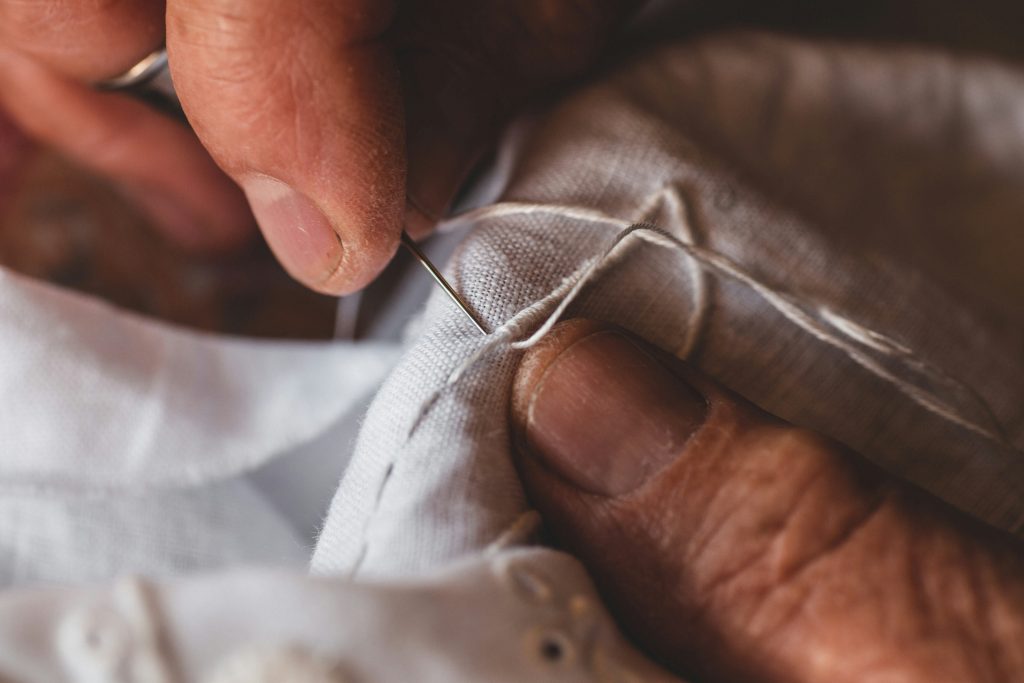
It has been 30 years since then and I have always liked that wobbly line of stitching, the one that looks a little different from the rest—some might call it a mistake or an aberration, but for me it is a testament to someone who did things their own way, who was trying something new, who went out of her way to learn a skill in order to join with the others to quilt a bedspread in support of someone she did not even know. There is something holy about that, I think, something of the divine. There is something holy about each of us and the stitches we make in each other’s lives.
It is a simple thing, to sew. Needle. Thread. Fabric. Time. I have always liked to quilt, to mend, to stitch pajamas for my kids for Christmas and hem their jeans to make shorts and sew costumes for their plays and outfits for their special days.
It is a simple thing, to pick a pattern and pull out yards and lengths and scraps of fabric and steal seconds, minutes, hours from our daily labor to make, to work, to create.
It is a simple thing—and there are so many different ways to do it. So many beautiful variations and interesting shapes and fascinating colors and compelling purposes and uses and ways to work the same materials, to create.
I find myself drawn, over and over to the quilts.
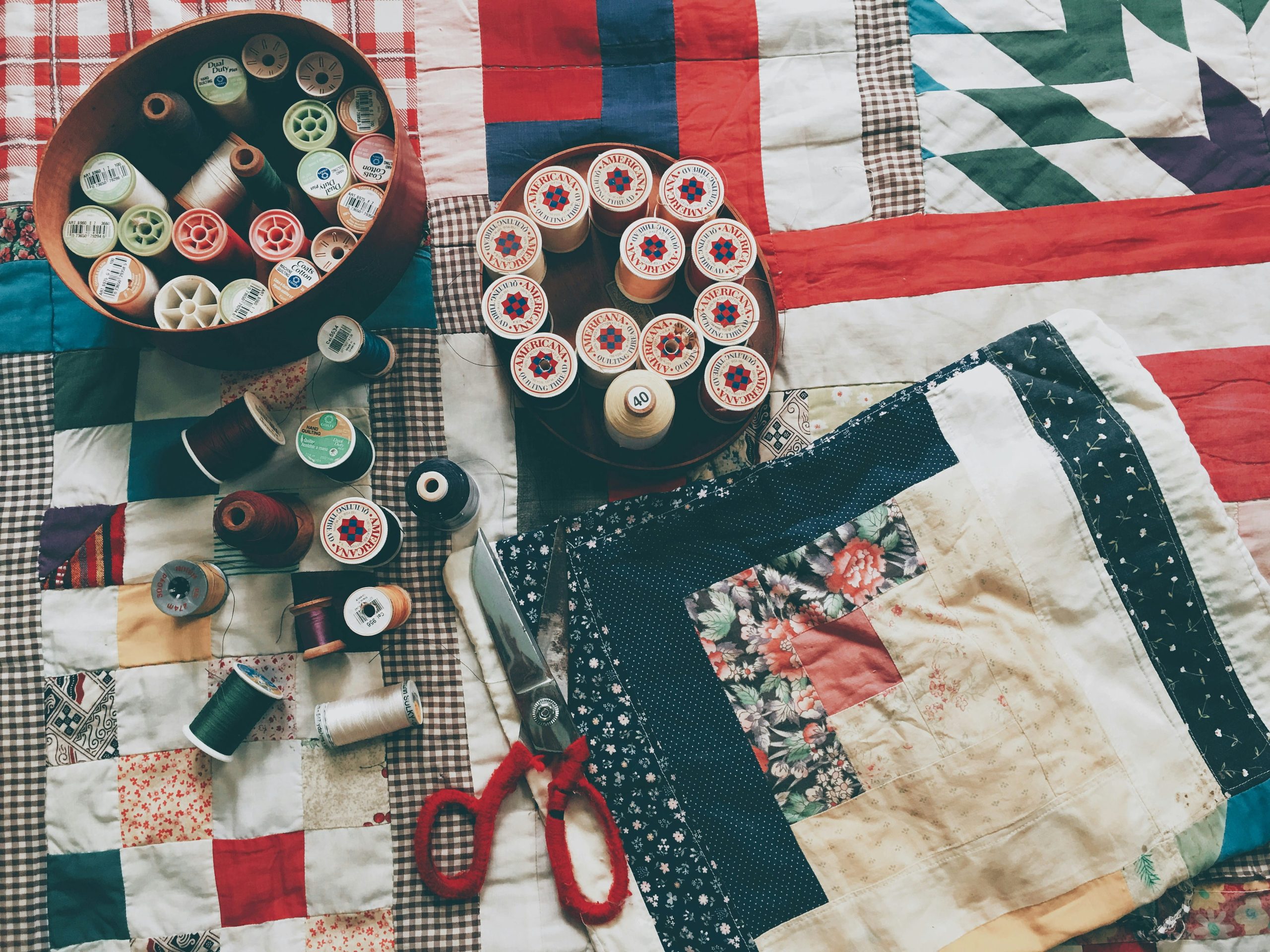
Quilts are made in every region around the world—some scrappy, some bright, some plain fabric covered over in elegant stitching, some narrative with stories and pictures and people collaged or embroidered into the surface, string quilts and embroidered quilts and floral quilts and block quilts and stars and chains and birds and beads and wool and linen and cotton and silk. I have been to quilt shows and county fairs and exhibitions where perfectly curated fabrics are used to display mastery, to create art. And they are beautiful, these blue-ribbon winners and perfectly produced products. But for me the beauty in quilting lies in the worn fabric. The uneven block. The broken thread and imperfect binding. It lies in the process of making, not the product that is made. I think it’s important to remember how quilts used to be made…not with store bought fabrics carefully curated to create a pleasing kaleidoscope of colors, but pieced together out of well worn garments no longer fit for wearing, now turned to do something new. A combination of scraps and cast-offs, each with their own strength. This one a beautiful blue, that one a strong cotton, another with a pleasing print. All unique. All important.
And as I was writing this essay I was thinking about the way we are each different from one another, and the way we are told being different is bad, and I have been thinking about loving one another, and the way we are told to fear what we do not understand, and I have been thinking about being unique and how we are afraid to really be ourselves, and I have been thinking that there is a lot we could learn by gathering around a wood frame in someone’s front room and sitting together over a large quilt and a long conversation with babies playing at our feet.
I was thinking about potential.
It is the place of parents, I suppose, to think of possibilities, especially as they watch their babies grow and wonder what kind of person they are going to turn out to be. Over the years, as I have watched my own children become adults, so many potential futures have run through my mind.
I have tried to support them, and to help them, and to encourage them.
I have wondered about those who do not have someone to support and help and encourage, for I know there are people who never have the chance, who never find their community, who never learn to accept the person they were born to be.
I mourn the loss of brilliant discoveries never uncovered, art never created, and words never spoken by those who were not given the option, the occasion, the opportunity to become what they should have been. What have we lost because of our limited views of the world, our inability to reach out and make sure every individual has a chance?
What have we lost because of our blindness to the worth of others?
What have we lost because we see the world in black and white instead of in every variation of incandescent, vibrant, brilliant hues?
What have we lost as we forget to come together and sew—crooked lines and all?
We’ve forgotten how to sit together, when silence is awkward and meeting people brings anxiety and we no longer turn to our neighbors in times of celebration and in times of grief.
We’ve forgotten how to accept help, especially if that help comes wrapped in wobbly stitches and uneven lines and knots that threaten to pull through the fabric.
We’ve forgotten what it is like to live in communion with other creatures, other people, other cultures that might add interest and color and shape and detail to the lives we think we need to live alone in our silent homes. And so we lose what we do not have the creativity to imagine. And suddenly there are missing pieces in a puzzle that will never be finished and whole. Missing numbers in an equation that can never be solved. Missing words in a conversation where we will never know what is gone in order to mourn it.
And in our isolation our lives become quieter, our rooms become darker, our quilts lose the vibrancy that makes them unique. Because the truth is, we need each person in this world. We need their point of view, their minds, their emotions, their experiences. We need their stories and their presence, and their inability to use a needle the right way.
We need the brightly colored threads and the plain fabrics and the secure seams and the warm battings and the work of the hands that bind us together one stitch at a time.
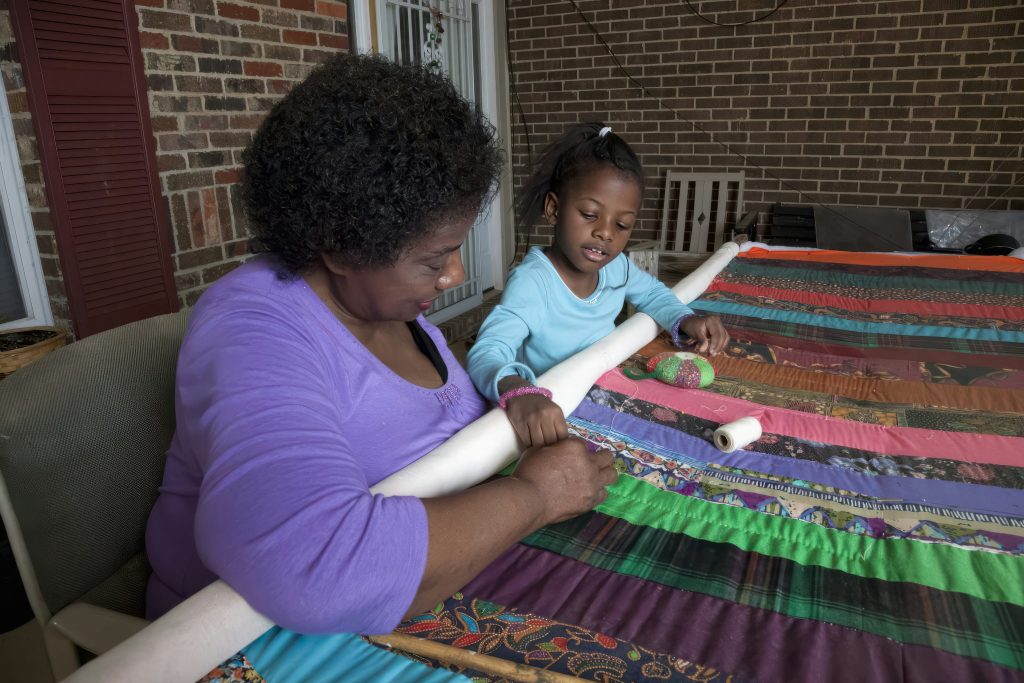
Every time I go to the thrift store lately I see old quilting frames, stacked in the corner like ghosts of the past—long lengths of lumber and cross-cut legs and soft felt pinned along rough edges to protect the fabrics that would be secured there, and I wonder what has happened to our communities, to our crafts, to the dusted, deserted spaces that are now sitting silent because we have forgotten to invite people in.
It is something we need to change. It is something we cannot lose.
Our front rooms have sat for too long empty—silent and still and perfectly prepared for something we are at a loss to really define, an event we have forgotten to plan.
It is time to roll up the rugs, push the furniture back against the walls, set the lamps safely on the ground, and invite our community in.
It is time to celebrate the delightful quirks and unique characteristics and individual idiosyncrasies that make us perfectly wonderful and beautifully odd.
It is time to sing praises to crooked stitches and mismatched colors and scrappy patterns all laid side by side in a river of color, a wandering wildness that celebrates art and creativity and togetherness and joy.
It is time to defy quiet order and neat neutrality in favor of splashes of vivid conversation and colorful chats and all the chaotic, mysterious, heartbreaking, pleasurable personal possibilities in friendship and fellowship and love as we wrap each other in a warmth that only comes from a patchwork of time, effort, devotion, difficulty, and the taste of tuna sandwiches being passed round on a fine China plate.
It is time to remember. Remember that we cannot respect ourselves without respecting others, we cannot create communities if we do not create new spaces, we cannot progress if we do not spend time together in tentative efforts to try something new—with wavering lines of stitching, knotted threads, and all.
“We did not ask for this room or this music. We were invited in. Therefore, because the dark surrounds us, let us turn our faces to the light. Let us endure hardship to be grateful for plenty. We have been given pain to be astounded by joy. We have been given life to deny death. We did not ask for this room or this music. But because we are here, let us dance.”
—Steven King
En Español:
Traducido por Jessica Yanez Barker
Salmo para los Hilos Torcidos: Un Canto de Colores en Retazos y la Belleza de Ser Únicos
“Hay una vitalidad, una fuerza de vida, una energía, un despertar que se traduce a través de ti en acción, y como solo hay una de ti en toda la historia del tiempo, esta expresión es única. Y si la bloqueas, nunca existirá a través de ningún otro medio y se perderá. El mundo no la tendrá.”
—Martha Graham
Había una habitación en la casa de mi abuela donde nadie se sentaba—nadie caminaba sobre las alfombras recién aspiradas dejando huellas en el pelo, nadie encendía las lámparas colocadas con cuidado sobre mesas bien desempolvadas para dejar que la luz se derramara por las amplias ventanas por la noche, nadie levantaba la tapa de las cajas de música, ni giraba sus llaves para dejar que la melodía flotara suavemente en un aire quieto que parecía estar siempre esperando, siempre anticipando, siempre listo para visitas, para compañía, para algo que aún no había ocurrido. Y luego, un día, al visitar, encontrábamos las alfombras enrolladas y movidas al pasillo, los muebles empujados hacia las paredes, las lámparas cuidadosamente colocadas en el suelo, las cajas de música y adornos guardados en rincones sombríos—y en su lugar, una amplia extensión de tela estirada con firmeza, cuidadosamente fijada a un marco de madera, y alrededor de los bordes risas y conversaciones y labios fruncidos humedeciendo el extremo de los hilos para pasarlos por agujas afiladas, platos de sándwiches de atún cerca, y mujeres de todas las edades reunidas para coser y bordar a lo largo de la habitación, cada pulgada de tela unida tan firmemente como unían sus vidas mientras pasaban minutos, horas y días creando a partir de retazos de esfuerzo, charla y arte.
Cuando me casé, me hicieron una colcha, estas mujeres cuyos rostros no conozco y no puedo recordar, una colcha tamaño king de tricot y relleno, con patrones intrincados grabados en la superficie puntada por puntada, y a lo largo de un lado hay una línea de costura que no coincide con el resto, una línea temblorosa, ondulante, donde las demás son rectas, firmes y seguras, una línea que empieza y se detiene y se rompe y se anuda, un momento imperfecto que atrapa la atención y sostiene la mirada. Y cuando pasé mi dedo por ella, sintiendo los hilos ásperos deslizarse por la superficie suave de la tela satinada, mi abuela cortó el hilo con el que trabajaba y asintió. “Era nueva”, dijo, con un alfiler en la boca y un hilo enrollado en la mano mientras seguía acolchando, explicando mientras avanzaba: “Era su primera vez”, y “le tomó un momento entenderlo… unas cuantas puntadas para entrar en ritmo… unas cuantas conversaciones para conocer a las demás del grupo”.
Han pasado 30 años desde entonces y siempre me ha gustado esa línea temblorosa de costura, la que se ve un poco diferente de las demás—algunos podrían llamarla un error o una aberración, pero para mí es un testimonio de alguien que hizo las cosas a su manera, que estaba intentando algo nuevo, que hizo un esfuerzo por aprender una habilidad para unirse a las demás y acolchar una colcha en apoyo de alguien a quien ni siquiera conocía. Hay algo sagrado en eso, creo, algo de lo divino. Hay algo sagrado en cada uno de nosotros y en las puntadas que hacemos en la vida de los demás.
Coser es algo sencillo. Aguja. Hilo. Tela. Tiempo. Siempre me ha gustado acolchar, remendar, coser pijamas para mis hijos en Navidad, cortar sus jeans para hacer shorts, y coser disfraces para sus obras y atuendos para sus días especiales.
Es algo sencillo, elegir un patrón y sacar metros y retazos de tela y robar segundos, minutos, horas de nuestro trabajo diario para hacer, para trabajar, para crear.
Es algo sencillo —y hay tantas maneras diferentes de hacerlo. Tantas variaciones hermosas, formas interesantes, colores fascinantes y propósitos y usos cautivadores, tantas maneras de trabajar los mismos materiales para crear.
Me encuentro atraída, una y otra vez, hacia las colchas.
Las colchas se hacen en todas las regiones del mundo: algunas improvisadas, otras brillantes, algunas de telas simples cubiertas con elegantes puntadas, otras narrativas con historias e imágenes y personas ensambladas o bordadas en la superficie; colchas de tiras, colchas bordadas, colchas florales, colchas de bloques, de estrellas, de cadenas, de pájaros, de cuentas, de lana, de lino, de algodón y de seda. He ido a exposiciones de colchas, ferias del condado y exhibiciones donde telas perfectamente seleccionadas se usan para mostrar maestría, para crear arte. Y son hermosas, estas ganadoras de cintas azules y productos perfectamente elaborados. Pero para mí, la belleza del acolchado está en la tela gastada. El bloque desigual. El hilo roto y el remate imperfecto. Está en el proceso de hacer, no en el producto terminado. Creo que es importante recordar cómo se hacían antes las colchas… no con telas compradas en tiendas, cuidadosamente seleccionadas para crear un caleidoscopio agradable de colores, sino ensambladas a partir de prendas muy usadas, ya no aptas para vestir, ahora transformadas en algo nuevo. Una combinación de retazos y descartes, cada uno con su propia fortaleza. Este, un azul hermoso; aquel, un algodón resistente; otro, con un estampado encantador. Todos únicos. Todos importantes.
Y mientras escribía este ensayo pensaba en la manera en que cada uno de nosotros es diferente, y en cómo se nos dice que ser diferente es malo; pensaba en amarnos unos a otros, y en cómo se nos dice que temamos lo que no entendemos; pensaba en ser únicos y en cómo tememos realmente ser nosotros mismos; y pensaba que hay mucho que podríamos aprender reuniéndonos alrededor de un marco de madera en la sala de alguien, sentándonos juntas sobre una gran colcha y una larga conversación, con bebés jugando a nuestros pies.
Pensaba en el potencial.
Supongo que es propio de los padres pensar en posibilidades, especialmente mientras observan a sus bebés crecer y se preguntan qué tipo de persona llegarán a ser. A lo largo de los años, mientras veía a mis propios hijos convertirse en adultos, tantos futuros posibles han pasado por mi mente.
He tratado de apoyarlos, ayudarlos y animarlos.
He pensado en aquellos que no tienen a alguien que los apoye, ayude y anime, porque sé que hay personas que nunca tienen la oportunidad, que nunca encuentran su comunidad, que nunca aprenden a aceptar a la persona que nacieron para ser.
Lamento la pérdida de descubrimientos brillantes que nunca se revelaron, arte que nunca se creó y palabras que nunca se pronunciaron por aquellos que no tuvieron la opción, la ocasión o la oportunidad de convertirse en lo que debieron haber sido. ¿Qué hemos perdido debido a nuestras visiones limitadas del mundo, a nuestra incapacidad de extender la mano y asegurarnos de que cada individuo tenga una oportunidad?
¿Qué hemos perdido por nuestra ceguera ante el valor de los demás?
¿Qué hemos perdido por ver el mundo en blanco y negro en lugar de en todas las variaciones de tonos incandescentes, vibrantes y brillantes?
¿Qué hemos perdido al olvidar reunirnos y coser—líneas torcidas y todo?
Hemos olvidado cómo sentarnos juntos, cuando el silencio se vuelve incómodo y conocer gente provoca ansiedad, y ya no acudimos a nuestros vecinos en tiempos de celebración ni en tiempos de duelo.
Hemos olvidado cómo aceptar ayuda, especialmente cuando esa ayuda viene envuelta en puntadas temblorosas y líneas desiguales y nudos que amenazan con atravesar la tela.
Hemos olvidado lo que es vivir en comunión con otras criaturas, otras personas, otras culturas que podrían añadir interés y color y forma y detalle a las vidas que creemos que debemos vivir solas en nuestros hogares silenciosos. Y así perdemos lo que no tenemos la creatividad para imaginar. Y de repente faltan piezas en un rompecabezas que nunca podrá completarse. Faltan números en una ecuación que nunca podrá resolverse. Faltan palabras en una conversación donde nunca sabremos qué se ha perdido para poder lamentarlo.
Y en nuestra soledad nuestras vidas se vuelven más silenciosas, nuestras habitaciones más oscuras, nuestras colchas pierden la vitalidad que las hace únicas. Porque la verdad es que necesitamos a cada persona en este mundo. Necesitamos su punto de vista, sus mentes, sus emociones, sus experiencias. Necesitamos sus historias y su presencia, y su incapacidad para usar una aguja de la manera “correcta”.
Necesitamos los hilos de colores brillantes y las telas sencillas y las costuras firmes y los cálidos rellenos y el trabajo de las manos que nos unen, puntada a puntada.
Cada vez que voy últimamente a la tienda de segunda mano veo viejos bastidores de acolchar, apilados en una esquina como fantasmas del pasado—largas piezas de madera, patas cruzadas, y fieltro suave clavado a lo largo de los bordes ásperos para proteger las telas que allí se asegurarían—y me pregunto qué ha pasado con nuestras comunidades, con nuestras artesanías, con los espacios desempolvados y desiertos que ahora permanecen en silencio porque hemos olvidado invitar a la gente a entrar.
Es algo que necesitamos cambiar. Es algo que no podemos perder.
Nuestras salas han permanecido demasiado tiempo vacías—silenciosas e inmóviles y perfectamente preparadas para algo que no sabemos realmente definir, un acontecimiento que hemos olvidado planear.
Es hora de enrollar las alfombras, empujar los muebles contra las paredes, colocar las lámparas con cuidado en el suelo e invitar a nuestra comunidad a entrar.
Es hora de celebrar las encantadoras rarezas y características únicas y las idiosincrasias individuales que nos hacen perfectamente maravillosos y bellamente peculiares.
Es hora de cantar alabanzas a las puntadas torcidas y los colores que no combinan y los patrones improvisados, todos colocados uno al lado del otro en un río de color, una libertad errante que celebra el arte, la creatividad, la unión y la alegría.
Es hora de desafiar el orden silencioso y la neutralidad pulcra en favor de estallidos de conversación vívida y charlas llenas de color y todas las posibilidades personales caóticas, misteriosas, desgarradoras y placenteras que existen en la amistad, la convivencia y el amor, mientras nos envolvemos unos a otros en un calor que solo puede venir de un mosaico de tiempo, esfuerzo, devoción, dificultad y el sabor de sándwiches de atún pasados en un plato de porcelana fina.
Es hora de recordar. Recordar que no podemos respetarnos a nosotros mismos sin respetar a los demás, que no podemos crear comunidades si no creamos nuevos espacios, que no podemos progresar si no pasamos tiempo juntos en esfuerzos tentativos por intentar algo nuevo—con líneas de puntadas temblorosas, hilos anudados y todo.
“No pedimos esta habitación ni esta música. Fuimos invitados a entrar. Por lo tanto, porque la oscuridad nos rodea, volvamos nuestros rostros hacia la luz. Soportemos las dificultades para estar agradecidos por la abundancia. Se nos ha dado dolor para asombrarnos con la alegría. Se nos ha dado vida para negar la muerte. No pedimos esta habitación ni esta música. Pero porque estamos aquí, bailemos.”
—Stephen King

Shelli is an advocacy writer and creative writing teacher. She loves to spend time with her husband (usually in the garden) and their four almost adult children. She also loves to sew (usually for the local community theater), to read, to write, and to drag her family outside to look at the sky. Shelli is passionate about poetry, Broadway show tunes, and telling stories -- of ourselves, our families, and our communities.
View Author PageStay Inspired
Join Our Newsletter Journey
Dive deeper into the world of Big Ocean Women. By subscribing to our newsletter, you'll receive a monthly dose of empowering stories, insightful articles, and the latest news from our global sisterhood. Don't miss out on the wave of inspiration – subscribe now and be part of our ever-growing community.