
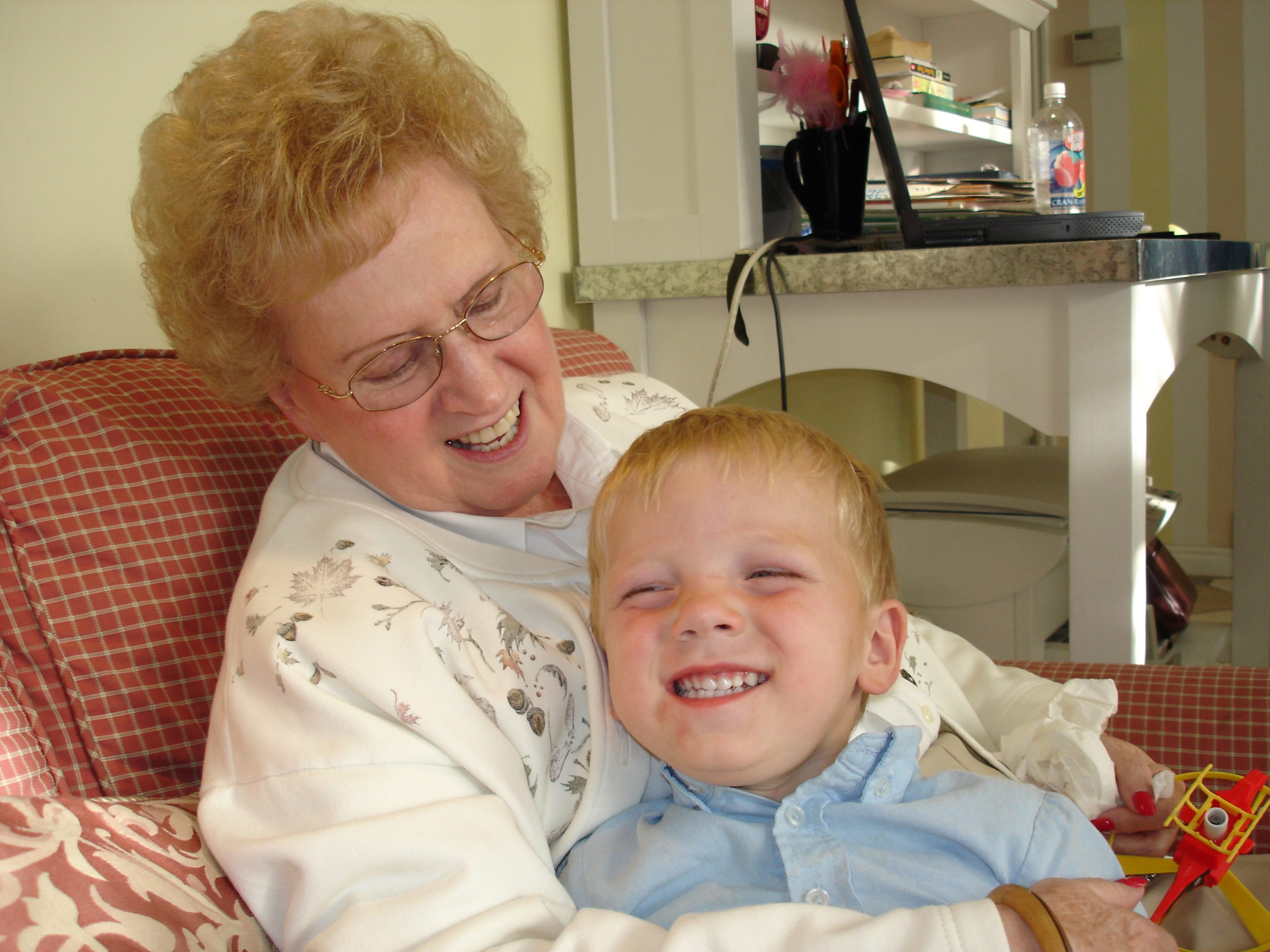
On Devotions, Dancing, and Deviled Eggs (English and Spanish)
When I think of my mother-in-law, I always think of deviled eggs. You know deviled eggs. You boil an egg. Cut it in two. Remove the yolk. Make a filling with that same yolk and put it back in the egg, a perfected picture of what it once was, now made even more appealing, and more delicious, more enticing, with even more effort. But why this association with my mother-in-law?
Let me explain.
Growing up, my family’s approach to a deviled egg was one of scarcity. There was a time and a place for plain eggs and a time and a place for fancy eggs, and deviled eggs were the fanciest of eggs, and they were hard to make, and they took too much time, and they took too many eggs, and they disappeared too quickly, with too many small hands reaching eagerly for the platter filled with boiled eggs carefully sliced in half leaving perfect white ovals topped with creamy yellow centers eaten in only one bite, or perhaps two, and so quickly consumed, so deftly devoured, but very rarely relished or revered or even really savored—they were brief and fleeting and hard to make and so they seldom appeared in our reliable rotation of dishes.
By contrast, my mother-in-law believed in abundance.
An abundance of time spent making meals or carefully lettering hand-written cards in a deliberate and delicate cursive hand. An abundance of calling and offering to pick up the kids to go to the park or to go to the pool or to go to the zoo. An abundance of meals and telephone calls and invitations and nights spent in slow conversation and quick laughter. And somehow, always, an abundance of eggs.
Those deviled eggs would show up at special events—holidays or birthday parties or baby showers—and sometimes more ordinary occasions—Sunday dinner and summer barbeques, and picnics, almost always at the picnics—a delicious side dish, usually unexpected, unasked for, but always welcome.
They were lovely.
Pale yolks whipped with mayonnaise and salt and pepper and a dash of paprika, stirred into a smooth fluffy filling studded with crunchy bits of bacon if she was feeling extravagant (and she seemed to always feel extravagant, for in her eyes life was meant for fun games and interesting travel and delicious food and there is nothing more delicious than the pairing of bacon and eggs), the mixture piped into the void left in the wobbly white, and then every finished creation carefully laid side by side in special dishes with grooves meant to cradle each egg, hold it safe and secure, ready for transport and waiting for hungry hands to pluck them up and savor them in the shade of a tree or sitting on a park bench or snagged off of a buffet table set with pastel tablecloths and matching napkins and tiny salt and pepper shakers in the shape of rabbits or top hats or vegetables, because if there was one thing my mother-in-law loved it was a well set table with whimsical dishware.
The deviled eggs became, as food often is, a sign of her attention. Her care. Her love. And her willingness to put in extra effort to make something that everyone loved to eat because it would make us smile.
She was like that, my mother-in-law. She always made the people around her smile.
When I think of my mother-in-law I think of See’s chocolates and beach vacations and game nights playing dominoes or hand and foot or Skip-Bo or gin rummy, and I think of sweaters collected for every occasion—Halloween and Christmas and Easter and the Fourth of July—even when it was too hot for sweaters, and I think of carefully planned menus and nights spent gathered in our family room talking and laughing and even, once, dancing, and it is this picture I see in my mind when I think of my mother-in-law, her silver hair gently curled into a soft style she would go to the salon to have done every week, and her matching set of tailored pants and a button up shirt, and her well tended nails (red, of course), as she swayed with her grandson, who, even at 11, was taller than she was, smiling as they danced together around the room to a song she remembered from her youth.
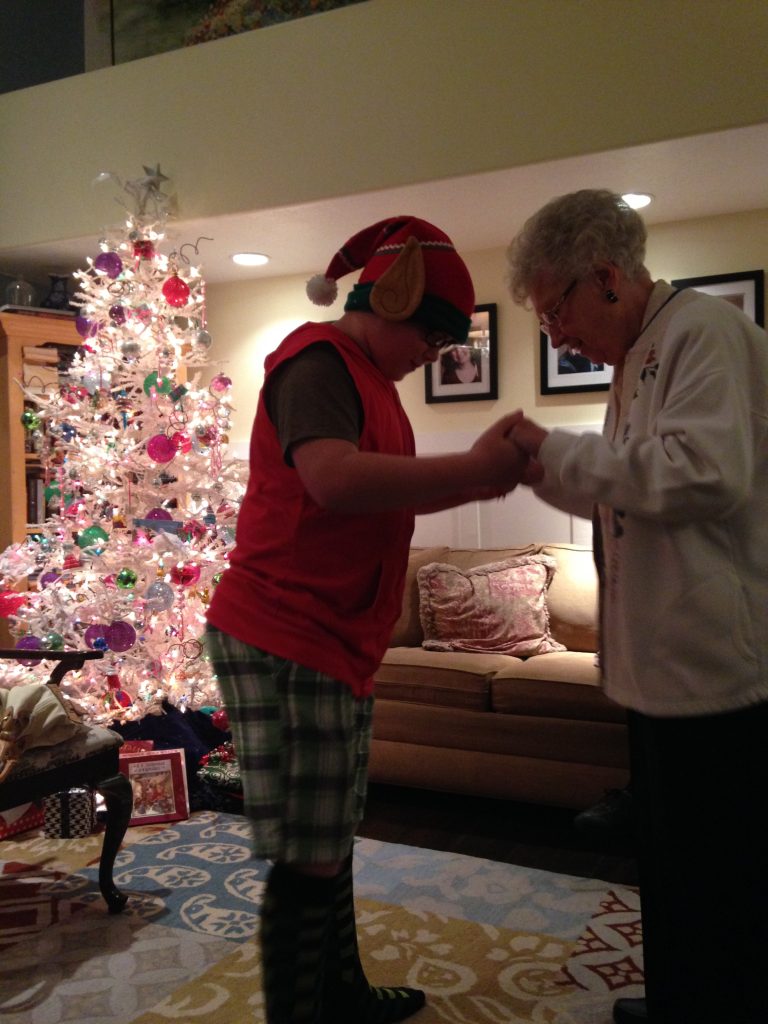
To remember all this is devotion. To remember all this is love.
The stories we tell, the memories we share, are a connector, a prayer, a meditation.
A sacrament.
Without them…well, what are we if we forget where we come from? If we push our histories aside? Disconnect from the generations of those who moved through the world and left histories in their footprints, legends in their wake.
Last winter my daughter bought a Christmas sweater at a thrift shop, a deep blue with fluffy green pine trees stretching across the front and tiny lights knit into the border in green and yellow and red and white. “It reminded me of grandma,” she said, when she pulled it out of the bag with a smile, the same smile I remember from when my mother-in-law smiled.
So yes, we remember each other in the stories we tell. Is that a miracle? I think perhaps it is.
It seems to me we are born into a sacred community—an extended family of parents and siblings and aunts and uncles and neighbors and friends, and it seems to me that so much of modern society is aimed at a deliberate effort to clip the cords that tie us together, to sever the connection. To erase the stories, to convince us we don’t have the time, to starve our systems, to watch them wither and die like a plant that has been denied water, the leaves wilting from the stems because the roots have gone dry.
To distract us.
To divide us.
To disconnect us from the people and the stories and the memories that would ground us, familiar anchors of tradition and memory and love.
I don’t believe we were ever meant to exist in isolation. No, I believe we are meant to weave our lives together, in a tapestry, a sort of intergenerational connectedness that helps us remember that we are not alone.
We do this through experiences. Through memories.
And through stories.
It is the stories that tell us that we are more than one individual, stumbling our solitary way through life. Stories that remind us we have a history and a heritage and a whole cast of characters in our family tree that can be map or counsel or guide or warning.
A strength. A nourishing.
When I think of my mother-in-law, I think of her sitting on a bench at Disneyland, a smile on her face as her grandchildren scrambled from one ride to another. I remember her telling us not to worry if she had to wait while we stood in line. “As long as my children are happy, then I’m happy. As long as my grandchildren are having fun, then I am having fun,” she said.
When I think of my mother-in-law I think about how charmed she was to spend time with her grandchildren, and how my parenting changed as a result, as I tried to see the day to day frustrations of parenting through her grandmother’s sense of delighted enthusiasm. As I learned to see my children through the eyes of a grandparent’s love.
I learned a few things, when I really began to look. I learned that it is always useful to have children and grandparents around. Children speak truth, in the stumbling questions and half-understood jokes endlessly repeated to a soundtrack of their grandparent’s laughter, laughter that persists even if they have told the joke a dozen times or more. Children collect wonder in the shape of their wide eyes and their delight at the sight of something new or strange or riveting—or at their grandparents stories of the old days or the old clothes or the old lessons they once learned when they were small.
Children let us reach back into our own childhoods and remember what it used to be like, to experience the world with joy, and grandparents reassure us that we can keep those memories close, no matter how long it has been.They both allow us to speak the words our hearts want to hear but that sound so terribly cliched to our tired adult ears.
Children teach us that above all else, we need to be attentive. We need to listen for the muffled cry that comes at a scraped knee or a dented bumper or a broken heart. After all, it is our job to watch as our children move through the world in fits and starts, first with the awkwardness of bodies that are not tall enough to reach the treats placed on the highest shelf, to the stumbling gangliness of a teenager who can reach the shelf but might trip on their own feet as they walk away, to the smooth grace of new adults moving through the world with an assurance that they no longer need the shelf in their parents home.
And grandparents teach us to be present. Not merely around, not simply there, in the same room while life happens around us in a chaotic passing of noise and bodies and events you take no interest in. But actively involved. To set aside the wandering of our minds, or our need for distraction, to pay attention to our bodies need for affection, for experience, for gathering the details of our family and holding them close—for noticing the slow way we lean into one another when we sit on the couch in the evening talking about our day, for feeling the particular strangeness of dirty dishes that seem less like a chore when the meal was filled with lingering laughter and good gossip, for seeing the brightness of the sun falling just so over the face of an almost adult child who has stayed up too late and fallen asleep on the couch in the gold evening light, for feeling the light lift of a grin at a shared joke, for remembering the way your son dances through the room with his grandmother when the perfect song comes on as we are making a meal together in the warmth of the kitchen at night.
Be attentive. Be present.
These are lessons we know. In our bones and in our muscles and in our inner hearts and in our thoughts. Lessons learned and then taught as we spend time in our homes making memories with our families, the young and the old, as we preserve our own stories in turn.
After all, we yearn for storytelling—we long to know the places we came from, the lands that were wandered, the obstacles faced, the people who loved us, and the way they shaped the individuals we have become. This longing for the stories of our families—it is etched in every carefully carved picture on an ancient cave wall, meticulously painted in shades of red and black and ochre and brown.
It is written in the front pages of old, dusty family bibles with the names and birthdates of every child born in the family, kept in perfectly precise cursive curls and loops, in black ink that has faded with the passage of time.
It is in the celebrations of old birthday cards carefully tucked into the back of a drawer, edges bent and softened with time.
Sometimes all you need are those remnants of a grandparent or parent who was once in your corner.
Sometimes all you need is a good story of times that once were.
After all, how would our lives change if we truly remembered and told the stories of who we were? How much stronger would we be if we knew the strength that came from our parents and grandparents and great grandparents and great great grandparents? How would we change the course of our lives if we knew that there was courage and vision and great bravery and marvelous abundant recipes in our bloodline?
How much love would we feel if we celebrated the sweaters and letters and dinners and dances and yes, even the deviled eggs?
Because, you see, it was never just about the deviled eggs.
En Español:
Traducido por Jessica Yanez Barker
Sobre Devociones, Bailes y Huevos Rellenos
Cuando pienso en mi suegra, siempre pienso en los huevos rellenos. Ya sabes, los huevos rellenos. Hierves un huevo. Lo cortas en dos. Retiras la yema. Haces un relleno con esa misma yema y la vuelves a poner en el huevo, una imagen perfeccionada de lo que alguna vez fue, ahora hecha aún más atractiva, más deliciosa, más tentadora, con aún más esfuerzo. Pero ¿por qué esta asociación con mi suegra?
Déjame explicar.
Al crecer, el enfoque de mi familia hacia los huevos rellenos era uno de escasez. Había un tiempo y un lugar para los huevos simples y un tiempo y un lugar para los huevos elegantes, y los huevos rellenos eran los más elegantes de todos, y eran difíciles de hacer, y tomaban demasiado tiempo, y requerían demasiados huevos, y desaparecían demasiado rápido, con demasiadas manos pequeñas alcanzando con entusiasmo la bandeja llena de huevos cocidos cuidadosamente cortados por la mitad, dejando óvalos blancos perfectos coronados con centros amarillos cremosos que se comían en un solo bocado, o quizá dos, y consumidos tan rápido, tan hábilmente devorados, pero muy rara vez apreciados o venerados o siquiera realmente saboreados—eran breves y fugaces y difíciles de hacer, y por eso rara vez aparecían en nuestra rotación confiable de platillos.
En contraste, mi suegra creía en la abundancia.
Una abundancia de tiempo dedicado a preparar comidas o a escribir tarjetas a mano con una caligrafía deliberada y delicada. Una abundancia de llamadas ofreciendo recoger a los niños para llevarlos al parque, o a la piscina, o al zoológico. Una abundancia de comidas y llamadas telefónicas e invitaciones y noches pasadas en conversaciones lentas y risas rápidas. Y de alguna manera, siempre, una abundancia de huevos.
Esos huevos rellenos aparecían en eventos especiales—festividades, fiestas de cumpleaños o baby showers—y a veces en ocasiones más ordinarias—cenas de domingo y barbacoas de verano, y picnics, casi siempre en los picnics—un acompañamiento delicioso, generalmente inesperado, no solicitado, pero siempre bienvenido.
Eran encantadores.
Yemas pálidas batidas con mayonesa y sal y pimienta y una pizca de pimentón, mezcladas en un relleno suave y esponjoso salpicado de trocitos crujientes de tocino si ella se sentía extravagante (y parecía sentirse extravagante siempre, porque en sus ojos la vida estaba hecha para juegos divertidos y viajes interesantes y comida deliciosa, y no hay nada más delicioso que la combinación de tocino y huevos), la mezcla colocada con manga pastelera en el hueco dejado en la temblorosa clara, y luego cada creación terminada cuidadosamente acomodada una al lado de la otra en platos especiales con hendiduras destinadas a acunar cada huevo, mantenerlo seguro y listo para transportar, esperando manos hambrientas que los tomaran y los saborearan bajo la sombra de un árbol o sentados en una banca del parque o tomados de una mesa de buffet cubierta con manteles de colores pastel y servilletas a juego y pequeños saleros y pimenteros con forma de conejos o sombreros de copa o verduras, porque si había algo que mi suegra amaba era una mesa bien puesta con vajilla llena de fantasía.
Los huevos rellenos se convirtieron, como la comida suele ser, en un signo de su atención. Su cuidado. Su amor. Y su disposición a poner esfuerzo extra para hacer algo que todos amábamos comer porque nos haría sonreír.
Ella era así, mi suegra. Siempre hacía sonreír a quienes la rodeaban.
Cuando pienso en mi suegra, pienso en chocolates See’s y vacaciones en la playa y noches de juegos jugando dominó o hand and foot o Skip-Bo o gin rummy, y pienso en suéteres coleccionados para cada ocasión—Halloween y Navidad y Pascua y el Cuatro de Julio—aun cuando hacía demasiado calor para suéteres, y pienso en menús cuidadosamente planeados y noches reunidos en nuestra sala familiar hablando y riendo e incluso, una vez, bailando, y es esta imagen la que veo en mi mente cuando pienso en mi suegra: su cabello plateado suavemente rizado en un estilo delicado que iba al salón a arreglar cada semana, su conjunto de pantalones entallados y camisa abotonada, y sus uñas bien cuidadas (rojas, por supuesto), mientras se balanceaba con su nieto, quien, incluso a los 11 años, era más alto que ella, sonriendo mientras bailaban juntos por la habitación al ritmo de una canción que ella recordaba de su juventud.
Recordar todo esto es devoción. Recordar todo esto es amor.
Las historias que contamos, los recuerdos que compartimos, son un conector, una oración, una meditación.
Un sacramento.
Sin ellos… bueno, ¿qué somos si olvidamos de dónde venimos? Si dejamos nuestras historias a un lado. Si nos desconectamos de las generaciones de quienes caminaron por el mundo y dejaron historias en sus huellas, leyendas en su estela.
El invierno pasado mi hija compró un suéter navideño en una tienda de segunda mano, un azul profundo con pinos esponjosos tejidos al frente y pequeñas luces en verde, amarillo, rojo y blanco alrededor del borde. “Me recordó a la abuela”, dijo cuando lo sacó de la bolsa con una sonrisa, la misma sonrisa que recuerdo de cuando mi suegra sonreía.
Así que sí, nos recordamos unos a otros en las historias que contamos. ¿Es eso un milagro? Creo que quizá lo sea.
Me parece que nacemos en una comunidad sagrada—una familia extendida de padres y hermanos y tías y tíos y vecinos y amigos—y me parece que gran parte de la sociedad moderna está dirigida a un esfuerzo deliberado por cortar los lazos que nos unen, por romper la conexión. Por borrar las historias, convencernos de que no tenemos tiempo, debilitar nuestros sistemas, verlos marchitarse y morir como una planta a la que se le ha negado el agua, las hojas marchitándose desde los tallos porque las raíces se han secado.
Para distraernos.
Para dividirnos.
Para desconectarnos de las personas y las historias y los recuerdos que podrían arraigarnos, anclas familiares de tradición, memoria y amor.
No creo que jamás se haya pretendido que existiéramos en aislamiento. No, creo que estamos destinados a entretejer nuestras vidas, en un tapiz, una especie de conexión intergeneracional que nos ayuda a recordar que no estamos solos.
Hacemos esto a través de experiencias.
A través de recuerdos.
Y a través de historias.
Son las historias las que nos dicen que somos más que un individuo, tropezando en nuestro camino solitario por la vida. Historias que nos recuerdan que tenemos una historia y una herencia y todo un elenco de personajes en nuestro árbol familiar que pueden ser mapa, consejo, guía o advertencia.
Una fortaleza. Un alimento.
Cuando pienso en mi suegra, pienso en ella sentada en una banca en Disneyland, una sonrisa en su rostro mientras sus nietos corrían de un juego a otro. Recuerdo que nos decía que no nos preocupáramos si tenía que esperar mientras hacíamos fila. “Mientras mis hijos estén felices, yo estoy feliz. Mientras mis nietos se estén divirtiendo, yo me estoy divirtiendo”, decía.
Cuando pienso en mi suegra, pienso en lo encantada que estaba de pasar tiempo con sus nietos, y en cómo mi manera de criar cambió como resultado, al intentar ver las frustraciones cotidianas de la crianza a través de su sentido de entusiasmo alegre de abuela. Al aprender a ver a mis hijos a través de los ojos del amor de una abuela.
Aprendí algunas cosas cuando realmente comencé a observar. Aprendí que siempre es útil tener niños y abuelos cerca. Los niños dicen la verdad, en las preguntas torpes y los chistes medio entendidos repetidos sin fin al ritmo de las risas de sus abuelos, risas que persisten incluso si han contado el chiste una docena de veces o más. Los niños coleccionan maravillas en la forma de sus ojos abiertos y su deleite ante la vista de algo nuevo o extraño o fascinante—o ante las historias de sus abuelos sobre los viejos tiempos, la ropa de antes o las lecciones antiguas que aprendieron cuando eran pequeños.
Los niños nos permiten volver a nuestra propia infancia y recordar cómo solía ser, experimentar el mundo con alegría, y los abuelos nos aseguran que podemos mantener esos recuerdos cerca, sin importar cuánto tiempo haya pasado. Ambos nos permiten pronunciar las palabras que nuestros corazones desean escuchar pero que suenan terriblemente trilladas para nuestros cansados oídos adultos.
Los niños nos enseñan que, por encima de todo, necesitamos ser atentos. Necesitamos escuchar el llanto ahogado que surge de una rodilla raspada, un golpe en el parachoques o un corazón roto. Después de todo, es nuestro trabajo observar cómo nuestros hijos se mueven por el mundo a trompicones, primero con la torpeza de cuerpos que no son lo suficientemente altos para alcanzar los dulces colocados en el estante más alto, luego con la torpe desgarbadez de un adolescente que sí puede alcanzar el estante pero que podría tropezar con sus propios pies al alejarse, y finalmente con la suave gracia de los nuevos adultos que se mueven por el mundo con la seguridad de que ya no necesitan el estante en la casa de sus padres.
Y los abuelos nos enseñan a estar presentes. No simplemente alrededor, no simplemente allí, en la misma habitación mientras la vida sucede a nuestro alrededor en un caos de ruido, cuerpos y eventos que no nos interesan. Sino involucrados activamente. A dejar de lado el vagar de nuestra mente o nuestra necesidad de distracción, a prestar atención a la necesidad de nuestros cuerpos de afecto, de experiencia, de reunir los detalles de nuestra familia y guardarlos cerca—para notar la manera lenta en que nos inclinamos unos hacia otros cuando nos sentamos en el sofá por la noche hablando de nuestro día, para sentir la extraña familiaridad de los platos sucios que parecen menos una tarea cuando la comida estuvo llena de risas prolongadas y buenos chismes, para ver el brillo del sol cayendo justo sobre el rostro de un hijo casi adulto que se quedó despierto demasiado tarde y se quedó dormido en el sofá bajo la luz dorada del atardecer, para sentir la ligera elevación de una sonrisa compartida en un chiste, para recordar la manera en que tu hijo baila por la habitación con su abuela cuando suena la canción perfecta mientras preparamos una comida juntos en la calidez de la cocina por la noche.
Sé atento. Sé presente.
Estas son lecciones que conocemos. En nuestros huesos y en nuestros músculos y en nuestros corazones internos y en nuestros pensamientos. Lecciones aprendidas y luego enseñadas mientras pasamos tiempo en nuestros hogares creando recuerdos con nuestras familias, los jóvenes y los mayores, mientras preservamos nuestras propias historias a su vez.
Después de todo, anhelamos las historias—deseamos conocer los lugares de donde venimos, las tierras que se recorrieron, los obstáculos enfrentados, las personas que nos amaron y la manera en que moldearon a los individuos que hemos llegado a ser. Este anhelo por las historias de nuestras familias—está grabado en cada imagen cuidadosamente tallada en una antigua pared de cueva, meticulosamente pintada en tonos de rojo y negro y ocre y marrón.
Está escrito en las primeras páginas de viejas y polvorientas biblias familiares con los nombres y fechas de nacimiento de cada niño nacido en la familia, conservados en rizos y bucles de cursiva perfectamente precisa, en tinta negra que se ha desvanecido con el paso del tiempo.
Está en las celebraciones de viejas tarjetas de cumpleaños cuidadosamente guardadas en el fondo de un cajón, con los bordes doblados y suavizados por el tiempo.
A veces, todo lo que necesitas son esos remanentes de un abuelo o un padre que alguna vez estuvo de tu lado.
A veces, todo lo que necesitas es una buena historia de tiempos que alguna vez fueron.
Después de todo, ¿cómo cambiarían nuestras vidas si realmente recordáramos y contáramos las historias de quiénes fuimos? ¿Qué tan fuertes seríamos si conociéramos la fuerza que proviene de nuestros padres, abuelos, bisabuelos y tatarabuelos? ¿Cómo cambiaríamos el curso de nuestras vidas si supiéramos que en nuestra sangre hay coraje, visión, una gran valentía y maravillosas y abundantes recetas?
¿Cuánto amor sentiríamos si celebráramos los suéteres, las cartas, las cenas, los bailes y sí, hasta los huevos endiablados?
Porque, verás, nunca se trató solo de los huevos rellenos.

Shelli is an advocacy writer and creative writing teacher. She loves to spend time with her husband (usually in the garden) and their four almost adult children. She also loves to sew (usually for the local community theater), to read, to write, and to drag her family outside to look at the sky. Shelli is passionate about poetry, Broadway show tunes, and telling stories -- of ourselves, our families, and our communities.
View Author PageStay Inspired
Join Our Newsletter Journey
Dive deeper into the world of Big Ocean Women. By subscribing to our newsletter, you'll receive a monthly dose of empowering stories, insightful articles, and the latest news from our global sisterhood. Don't miss out on the wave of inspiration – subscribe now and be part of our ever-growing community.