
On Chickens and Penguins and Pets and Pocket Watches—A Contemplation of Tenderness (English and Spanish)
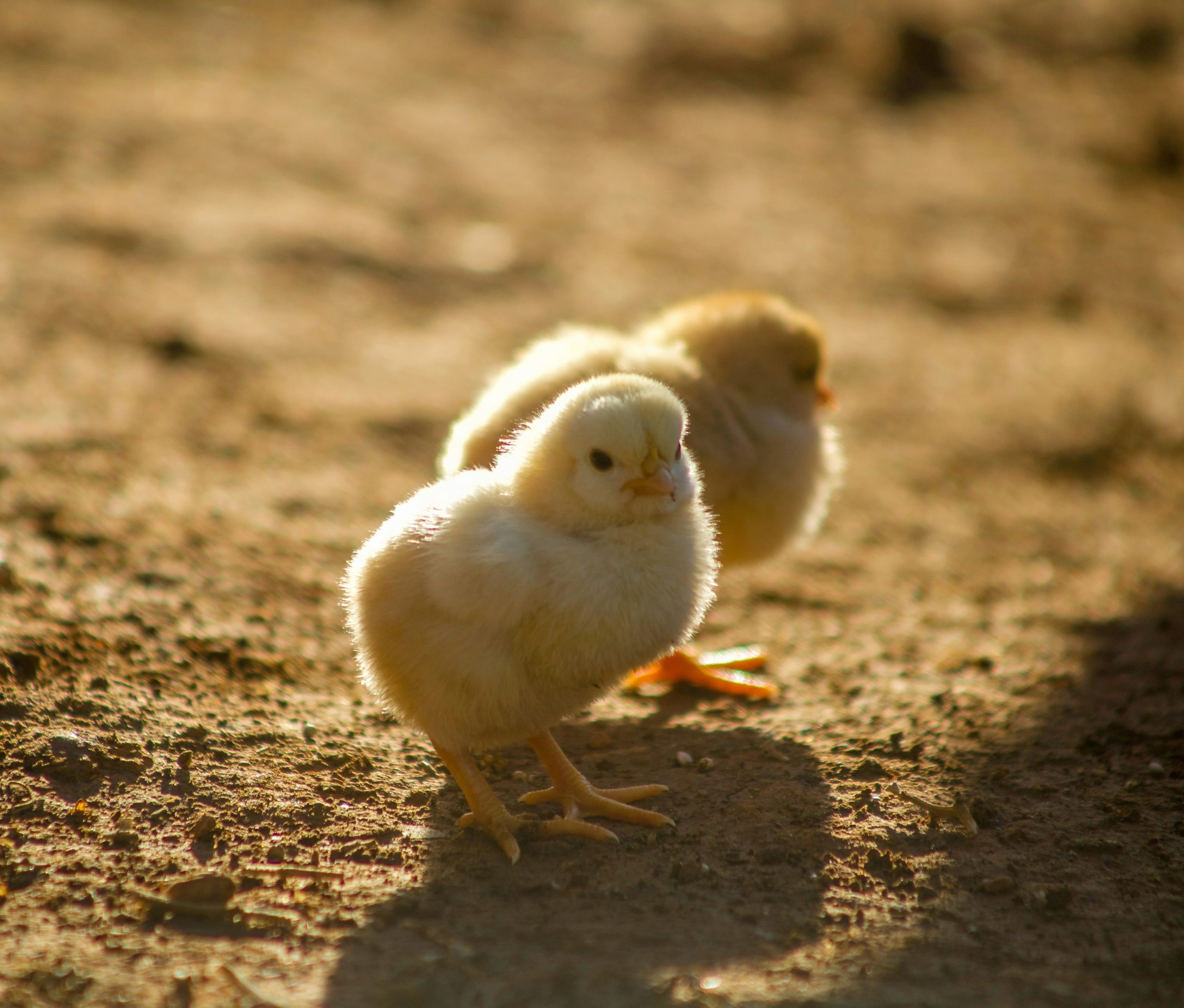
Before leaving for my last day of classes this week, I stepped outside my back door to feed a clutch of newly hatched chicks, to check their water, to ensure that the heat lamp that mimicked the warmth of their mother hovering nearby was lowered enough, was warm enough, would provide a glowing shelter from the cold breezes trying to creep around corners and under fences and into the small and vulnerable spaces where remnants of warmth sustain life.
It is a ritual by now, the annual raising of the chicks, not to be confused with raising a barn, but remarkably similar to raising children, a sustained effort at keeping new and living creatures dry and warm and fed long enough for them to survive on their own. It feels small—a succession of tiny actions taken over a span of days, weeks, months and in some cases years.
The first time we got chickens my daughter refused to hold them. She was eight or nine, or maybe even ten—young still, but stubborn and opinionated, and they looked too foreign in her eyes, too leggy, and too reminiscent of something ancient and prehistoric, maybe, with their beady eyes and sharp talons and eagerly pecking beaks. They lived in an old, abandoned fish tank we had purchased for a gecko once, before realizing that we would have to feed it small live and wriggling things, a task that neither my husband nor I were up to performing, and so it sat empty until we filled it with shavings and feeders and a water container called a brooder bottle and a little cluster of yellow feathered chicks.
We have had many chickens since then. Orpingtons and Australorps. Sussexes and Marans and Americaunas, also called Easter Eggers. Most of them were chosen for their feather patterns or egg colors or sometimes the musical way their name rolls off the tongue. One thing I am always struck by, and this time is no exception, is how they immediately form a bond, a hierarchy—a pecking order, if you will. A feathered flock. A clucking community. I marvel at the way they cluster together at the first sign of danger, and at the way they huddle together for warmth.
That same daughter and I were watching a program on TV the other day, a nature documentary about penguins that started off informational and quickly became rife with emotional pitfalls as we watched a young penguin chick, tiny, much smaller than the others, as it struggled to keep up with its peers. We agonized over the way the undersized chick slid down the ice, stumbling and getting stuck. We cheered when it made it through a particularly ferocious storm. My daughter wept when it was left behind on a long march across a barren icy landscape, alone in the cold. (OK, I shed a few tears as well, feeling silly in the warmth of my comfortable house as I watched the perilous adventures of a penguin chick trekking over an icy tundra).
And in the end, when he finally made it through the obstacle course of frozen rivers and icy cliffs and sudden, dangerous drops to the sea far below, we watched the tender moment he was able to huddle up with his penguin friends, shoulders touching, necks craning in welcome and greeting and, I want to think, relief, as they sheltered together, their backs to the cold.
There is a great deal to say for tenderness. I find myself wanting to understand it better.
I am considering a study of the way we brush a strand of hair off the forehead of a young and sweaty child after a rousing game of tag in which you allow yourself to be caught, mostly because you are no longer as fast as you were when you were that same fearsome age, but also because the running away is never as fun as the standing still, as the joy and triumph of a small child who tangles their fingers in yours to pull you to a stop with a shriek of laughter and a “gotcha!” as your gasps for breath return to normal speed.
I am thinking about an analysis of the way we hold hands, fingers meshing in different directions, awkward tangles that swing between our bodies as we walk, a different kind of hold for each person in our lives, a cradling, a clasping, a grasping. A clutch or a grip or a latch.
I am contemplating a reflection on the way we sit next to one another, thighs touching, elbows bumping, dogs at our feet as we watch the sun set over the top edge of the fence in the backyard, partially blocked by the house on the next street over, but still beautiful, the way nature frequently is, even when something a little like life gets in the way.
Tenderness is a shelter. A huddle of friendly shoulders that shield you from the cold.
Tenderness has no expiration. No sell-by date. No boundaries. But I think we forget what it looks like. I think we forget how it feels.
My grandmother is turning 100 this month. She is feisty and fiery and no nonsense, and when she visits she will tell you exactly how to mop your floor, no not with that silly stick, that won’t work at all, to get it clean you have to get down on your hands and knees to reach into all the corners, to scrub in all the forgotten places. I think sometimes about how much of life she has seen. I think of how much she has done. I think of time passing, and how only last week it seems I was the child playing with chicks in her backyard, rambling through a cherry orchard, pulling my parents down the canal to see the horses across the field.
In the world of Japanese aesthetics, there is an ideal called “mono no aware.” It is an interesting contrast, a tension between the idea that on one hand we feel sadness at the end of something, or at the passing of time, and we also feel a tender gratitude and joy for the experience. A gentle understanding of impermanence, an appreciation for beauty, and an empathy towards all things. When my grandmother sold her home, I helped her move, and in the moving I was given an old pocket watch with a casual “it doesn’t work, just take it, maybe you can fix it.” I took it home and shined it up. Washed the glass face. Pried open the back. Looked at the tiny springs and wheels and cogs.
And then I wound it.
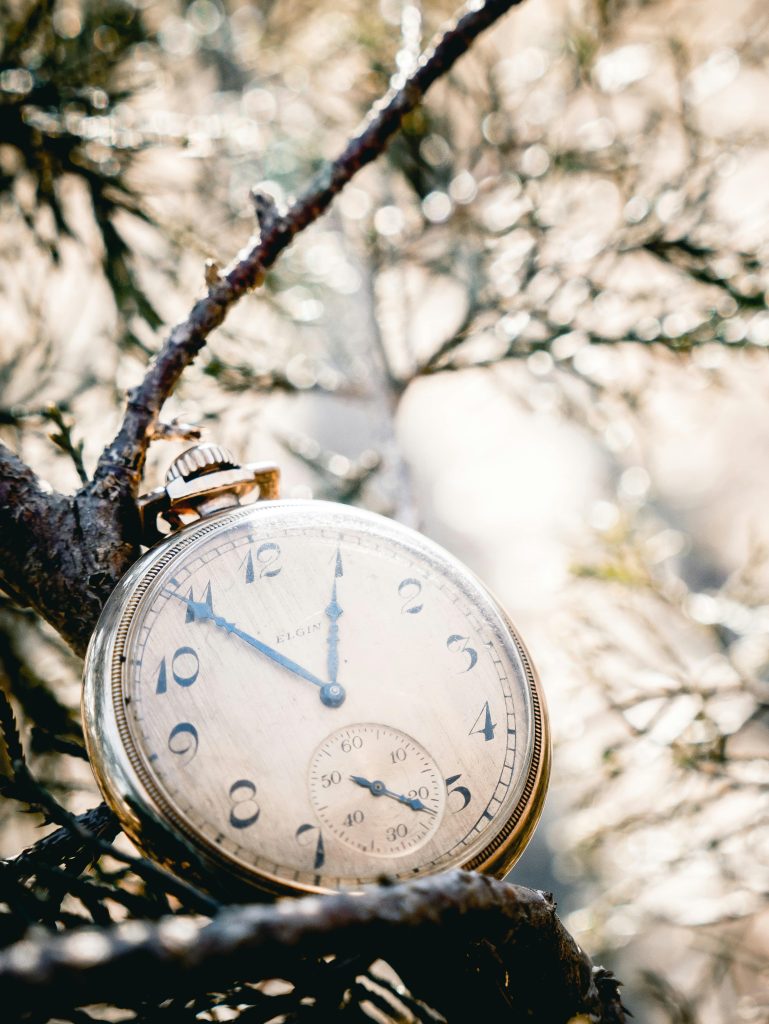 Photo credit: Kevin Andre via Unsplash
Within moments it was keeping time with a gentle “tick, tick, tick” that I could hear when I held it up to my ear.
Perhaps we are too eager to write things off as broken. Perhaps we forget to take the time to wonder at how something works. Perhaps we overlook opportunities to practice care and caretaking and tenderness.
And perhaps we forget that part of the beauty of our lives is found in its passing. In the humanness of growing older. In creaking joints and graying hair and families that grow larger and more complicated over years. In winding a worn down watch to keep the time.
There is another phrase I heard recently, a buzzword, a commentary, a mixed up word designed to catch and hold attention: Joyscaping.
I don’t know how the speaker was using it, and I could not find the person who said it, but the word itself has stayed with me. Joyscaping. As my husband is fond of saying to my children, words have meanings, and this is one I adore. This idea of deliberately crafting a landscape that is capable of supporting and creating happiness, hope, and tenderness.
Joy.
But this requires a mental change. A shift in perspectives. This idea that in a world where it seems we have no power, we can shape a new vision of what it means to live our lives.
Rebecca Solnit said that it is in the neglected spaces that radical power lies—not the courtrooms or boardrooms or parliaments or government buildings, but on the edges of those spaces—in the places where ordinary people gather and argue and discuss, in classrooms and living rooms and town squares and even, sometimes, in the heart.
What, after all, is more radical than an idea that begins at home? What is more ignored than the power of human connections and communities and the sense that in the very ordinary actions of your life, you become a part of something much larger and more meaningful than you can presently see? One chick in a larger flock, one hand on a watch that continues to keep time.
I have come to the belief that changing the world starts not with great declarations and violent actions, not with the things we see in news reports and headlines and panic-fueled moments of terror, but with small moments of presence, patience, and peace. I think change looks a great deal more like my four children and my husband and me gathered around our kitchen table, or my sisters laughing at a joke no one else understands, or walking down the street to talk to my neighbors, than it does corrupt leaders battling in the public square.
I’ve decided change cannot be achieved through coercion but arrives gently, in conversation. Not through conflict but through kindness, comfort, and care.
Change happens when we stay up late talking and laughing far past that indeterminate hour of the night when things stop making sense and start being funny for no reason at all, and sometimes it happens when we get up before work to make sure small animals are fed and watered and thriving. Change is in walking the dogs and feeding the chickens and gathering together for all the mundane happenings of our lives—it is in long, rambling talks and lazy afternoons spending time just enjoying space with one another. Changing the world starts with moments of tender care shown to family, to strangers, to animals, to trees. To everything that requires our strength and protection and defense.
Do I have any idea of what I really mean, when I tell stories of chickens and penguins and pets and pocket watches?
It is a question I ask, as I write.
What is it I am trying to say?
Today, I think I know. It is, after all, why I try to keep close watch on the world as it moves around me. It is why I observe, why I pay attention to the small and fragile and broken things. It is why I practice mindfulness. It is why I write.
Today, what I want to say is this: To be human is to embrace frailty and gentleness and devotion and yes, tiny tender moments.
Moments like watching four small chicks scratch through pine shavings in search of a bit of food underneath, and ruffle their feathers in the sun, and cluster together in a tight huddle for the length of the cool spring night, side by side, stronger together than they are apart.
Moments like sitting on the back porch with my dogs pressed close to my side, and smelling the fresh cut grass and the soft scent of loam and deep, dark, growing things as my husband prepares the garden for the coming season of new planting and new growth.
It is in learning to be a carrier for joy.
It is in embracing nurture and nature and learning to sow the slow seeds of hope.
It is in tenderness. It is in life.
Lead photo credit: Karim Manjra via Unsplash
Spanish translation by Jessica Yanez Barker:
Sobre Pollos, Pingüinos, Mascotas y Relojes de Bolsillo: Una Contemplación de la Ternura
Antes de salir en mi último día de clases esta semana, caminé por la puerta trasera para alimentar a un grupo de polluelos recién nacidos. Quería revisar su agua y asegurarme de que la lámpara que imita el calor de su madre estuviera lo suficientemente baja y que estuviera lo suficientemente cálida, proporcionando un refugio brillante contra el frío que intentaban colarse por las esquinas, debajo de las cercas y dentro de los espacios pequeños y vulnerables.
Ya es un ritual la crianza anual de los pollitos, que no debe confundirse con la construcción de un granero, pero es notablemente similar a la crianza de niños: un esfuerzo constante por mantener a las nuevas criaturas vivas, secas, cálidas y alimentadas el tiempo suficiente para que sobrevivan por sí solas. Parece insignificante, una sucesión de pequeñas acciones realizadas a lo largo de días, semanas, meses y, en algunos casos, años.
La primera vez que tuvimos gallinas, mi hija se negó a sostenerlas. Tenía ocho o nueve años o quizás ya tenía diez; aún era pequeña, pero era necia y testaruda. Las gallinas le parecían demasiado extrañas, de piernas muy largas, y quizá demasiado parecidas a algo antiguo y prehistórico con sus ojos pequeños y brillantes, sus garras afiladas y sus picos ávidos. Vivían en una pecera vieja y abandonada que habíamos comprado una vez para una salamandra antes de darnos cuenta de que tendríamos que alimentarla con pequeños bichos vivos y retorciéndose, una tarea que ni mi esposo ni yo estábamos dispuestos a hacer; así que permaneció vacía hasta que la llenamos de virutas, comederos, un recipiente de agua y un pequeño grupo de pollitos de plumas amarillas.
Desde entonces hemos tenido muchas gallinas. Orpingtons y Australorps. Sussex, Marans y Americanas, también conocidas por poner huevos de pascua. La mayoría las elegíamos por el diseño de sus plumas, el color de sus huevos o a veces por la manera en que suena su nombre. Algo que siempre me sorprende y esta vez no es la excepción, es cómo enseguida forman un vínculo, una jerarquía por así decirlo. Una bandada emplumada, una comunidad que cloquea. Me maravilla cómo se agrupan a la primera señal de peligro y cómo se acurrucan para darse calor.
Esa misma hija y yo estábamos viendo un programa en la televisión el otro día, un documental sobre la naturaleza y los pingüinos. Al principio era informativo y rápidamente se llenó de nostalgia mientras observábamos a un bebé pingüino, diminuto, mucho más pequeño que los demás, luchar por seguir el ritmo de sus compañeros. Nos dolió la forma en que el polluelo, aún más pequeño, se deslizaba por el hielo, tropezando y atascándose. Celebramos cuando logró superar una tormenta particularmente feroz. Mi hija lloró cuando lo dejaron atrás en una larga caminata por un paisaje helado y árido, solo en el frío. (Bueno, yo también derramé algunas lágrimas, sintiéndome ridícula en la calidez de mi cómoda casa mientras observaba las peligrosas aventuras de un bebé pingüino caminando por una tundra helada).
Y al final, cuando por fin logró atravesar la carrera de obstáculos entre ríos congelados, acantilados y caídas repentinas y peligrosas cerca del mar, observamos el tierno momento en el que pudo acurrucarse con sus amigos pingüinos, sus hombros estaban tocándose, sus cuellos estaban estirados en señal de bienvenida y saludo (y quiero pensar que también de alivio) mientras se refugiaban juntos para escaparse del frío.
Hay mucho que decir sobre la ternura. De hecho, me encuentro deseando comprenderla mejor. Estoy considerando estudiar cómo apartamos un mechón de pelo de la frente de un niño pequeño y sudoroso después de un emocionante juego en el que te dejas atrapar, principalmente porque ya no eres tan rápido como cuando tenías esa misma edad, pero también porque huir nunca es tan divertido como quedarse quieto, como la alegría y el triunfo de un niño pequeño que enreda sus dedos con los tuyos para detenerte con una carcajada y un “¡te atrapé!” mientras recuperas tu aliento.
Estoy pensando en un análisis de la forma en que nos tomamos de las manos, los dedos entrelazándose en diferentes direcciones, enredos incómodos que se balancean entre nuestras manos mientras caminamos, un tipo diferente de agarre para cada persona en nuestras vidas.
Estoy contemplando una reflexión sobre la forma en que nos sentamos uno junto al otro, los muslos tocándose, los codos chocando, los perros acostados en nuestros pies mientras miramos la puesta de sol en el patio trasero, parcialmente bloqueado por la casa en la calle de al lado, pero aún hermoso, como suele ser la naturaleza.
La ternura es un refugio. Un abrazo de amigos que te protege del frío. La ternura no tiene fecha de caducidad y no tiene límites. Pero creo que olvidamos cómo se ve, creo que olvidamos cómo se siente.
Mi abuela cumple 100 años este mes. Es una mujer vivaz, apasionada y directa, y cuando viene de visita te dice exactamente cómo limpiar el suelo: “No, no con ese palo tonto, eso no sirve para nada; para dejarlo limpio hay que ponerse a gatas para llegar a todos los rincones, para limpiar todos los rincones olvidados.” A veces pienso en todo lo que ha visto en la vida. Pienso en todo lo que ha hecho y pienso en el paso del tiempo y en cómo pareciera que tan solo la semana pasada yo aún era la niña que jugaba con los pollitos en su jardín, paseando por un huerto de cerezos, llevando a mis padres por el canal para ver los caballos al otro lado del campo.
En el mundo de la estética japonesa, existe un ideal llamado “Mono no oware.” Se trata de un contraste interesante, una tensión entre la idea de que por un lado sentimos tristeza al final de algo, (o por el paso del tiempo) y por otro sentimos una tierna gratitud y alegría por la experiencia. Una comprensión amable del constante cambio, un aprecio por la belleza y la empatía hacia todas las cosas. Cuando mi abuela vendió su casa la ayudé con la mudanza y durante la misma me regalaron un viejo reloj de bolsillo con un informal “no funciona, llévatelo, quizá puedas arreglarlo.” Lo llevé a casa y le saqué brillo. Lavé el vidrio, abrí la tapa, miré los diminutos resortes, ruedas y engranajes y luego le di cuerda. En cuestión de momentos marcaba el ritmo con un suave tic-tac que podía oír cuando lo sostenía cerca de mi oído.
Foto: Kevin Andre, UnsplashQuizás nos apresuramos demasiado a dar por sentado que todo está roto. Quizás olvidamos tomarnos el tiempo para reflexionar sobre cómo funciona algo. Quizás pasamos por alto oportunidades para practicar el cuidado, la atención y la ternura. Y quizá olvidamos que parte de la belleza de nuestras vidas reside en su paso, en la humanidad de envejecer. En el crujido de las articulaciones, el cabello canoso y las familias que se hacen más grandes y complejas con los años. En darle cuerda a un reloj desgastado para que marque la hora.
Hay otra frase que escuché recientemente, una palabra de moda, un comentario, una mezcla de palabras diseñada para captar y mantener la atención: “Paisajismo alegre.” No sé exactamente a que se refería y no pude encontrar a la persona que lo dijo, pero la frase en sí se me quedó grabada: “Paisajismo alegre.” A mi esposo le gusta decirle a mis hijos que las palabras tienen significados y estas palabras tienen uno que adoro. Esta idea de crear deliberadamente un paisaje capaz de sustentar y crear felicidad, esperanza y ternura. Gozo.
Pero requiere un cambio de mentalidad, un cambio de perspectiva. Esta idea de que en un mundo donde parece que no tenemos control, podemos forjar una nueva visión de lo que significa vivir nuestras vidas.
Rebecca Solnit afirmó que es en los espacios desatendidos donde reside el poder radical —no en los tribunales, las salas de juntas, los parlamentos ni los edificios gubernamentales, sino en los márgenes de esos espacios—, en los lugares donde la gente común se reúne, discute y debate, en las aulas, las salas de estar, las plazas e incluso a veces en el corazón.
Después de todo, ¿qué es más radical que una idea que nace en casa? ¿Qué es más ignorado que el poder de las conexiones humanas y las comunidades, y la sensación de que en las acciones más cotidianas de la vida uno se convierte en parte de algo mucho más grande y significativo de lo que ahora puede ver? Un polluelo en una bandada más grande, una manecilla en un reloj que sigue marcando el tiempo.
He llegado a la conclusión de que cambiar el mundo no empieza con grandes declaraciones y actos violentos, ni con lo que vemos en las noticias, los titulares y los momentos de terror alimentados por el pánico, sino con pequeños momentos de presencia, paciencia y paz. Creo que el cambio se parece mucho más a mis cuatro hijos, mi esposo y yo reunidos alrededor de la mesa de la cocina, o a mis hermanas riéndose de un chiste que nadie más entiende, o caminando por la calle para hablar con mis vecinos, que a líderes corruptos luchando en la plaza pública.
He decidido que el cambio no se logra mediante la coerción, sino con suavidad mediante la conversación. No mediante el conflicto, sino mediante la amabilidad, el consuelo y el cariño.
El cambio ocurre cuando nos quedamos hablando y riendo hasta muy tarde, mucho después de esa hora indeterminada de la noche en que las cosas pierden sentido y empiezan a ser graciosas sin motivo alguno. Y a veces ocurre cuando nos levantamos antes del trabajo para asegurarnos de que los animales pequeños coman, beban y estén bien. El cambio está en pasear a los perros, alimentar a las gallinas y reunirnos para las cosas cotidianas de la vida; está en las largas y divagantes charlas y las tardes tranquilas disfrutando del espacio los unos de los otros. Cambiar el mundo empieza con momentos de cariño con la familia, con los desconocidos, con los animales, con los árboles y con todo lo que requiere nuestra fuerza, protección y defensa.
¿Tengo idea de lo que realmente quiero decir cuando cuento historias de pollos y pingüinos y mascotas y relojes de bolsillo? Es una pregunta que me hago mientras escribo. ¿Qué intento decir?
Hoy creo que lo sé. Al fin y al cabo, es por eso por lo que observo atentamente el mundo que me rodea. Es por eso que observo, por eso presto atención a las cosas pequeñas, frágiles y rotas. Es por eso que practico la atención plena. Es por eso que escribo.
Hoy, lo que quiero decir es esto: ser humano es aceptar la fragilidad, la dulzura, la devoción y sí, los pequeños momentos de ternura. Momentos como ver a cuatro pequeños polluelos escarbar entre las virutas de pino en busca de un poco de comida, y erizar sus plumas al sol, y agruparse en un apretado grupo durante una fresca noche de primavera, uno al lado del otro, más fuertes juntos que separados.
Momentos como sentarme en el marco de la puerta con mis perros pegados a mí, oliendo la hierba recién cortada y el suave aroma a tierra y a plantas mientras mi esposo prepara el jardín para la próxima temporada de nuevas plantaciones y nuevos brotes. Está en aprender a ser portador de alegría. Está en acoger la crianza y la naturaleza, y aprender a sembrar las lentas semillas de la esperanza. Está en la ternura. Está en la vida.

Shelli is an advocacy writer and creative writing teacher. She loves to spend time with her husband (usually in the garden) and their four almost adult children. She also loves to sew (usually for the local community theater), to read, to write, and to drag her family outside to look at the sky. Shelli is passionate about poetry, Broadway show tunes, and telling stories -- of ourselves, our families, and our communities.
View Author PageStay Inspired
Join Our Newsletter Journey
Dive deeper into the world of Big Ocean Women. By subscribing to our newsletter, you'll receive a monthly dose of empowering stories, insightful articles, and the latest news from our global sisterhood. Don't miss out on the wave of inspiration – subscribe now and be part of our ever-growing community.