
On Knowing the Unknowable—Meditations on the Sea at Sunset
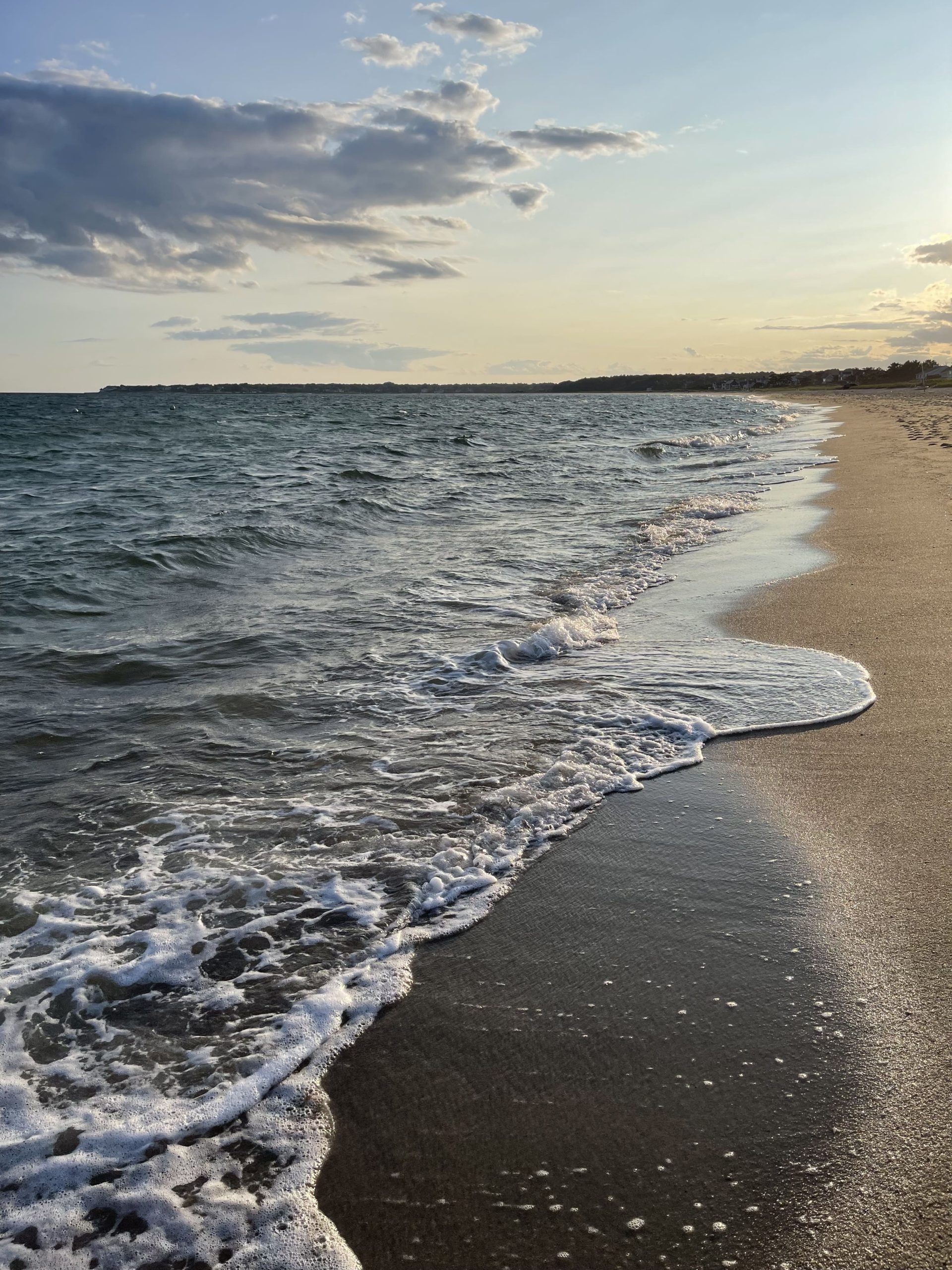
I have been thinking, this summer, about the sea. It is a far cry from the baked dry desert heat of my mountain home, a heat that withers even the most drought hardy plant by midseason, and for years, for decades really, it has been tradition for my family to pack up and make some kind of pilgrimage to the milder climate of the coast. This summer, for a briefer time than usual, my husband and I managed to find a single day to walk along a sunny beach as the sun sank low in the summer sky.
The sound of the sea is what draws me in first—a slippery sort of shushing, a sinking, sliding, spinning sort of assonance that sifts shoreward and slinks through my toes and around my calves and over my fingers as I lean close enough to touch the surface, and then it suddenly shifts the sand under my feet and slams against the shore just when my back is turned. I never intend to get wet on a simple stroll along the beach. I never intend to find myself damp and shivering on the shore, sand on my legs and salt in my hair. But it seems inevitable, really. I was never one to stay away from the deep.
The ocean is never the same. Not really. There is always something new to see—something to pick up and turn over in your hands, something to marvel at and something to explore. A bit of blue sea glass polished smooth by the waves, an odd bit of shell in all the colors of the sky at the exact moment before twilight when everything is all blue and gold and bright pink, a waterlogged shard of driftwood, worn and rounded until it feels soft as silk in your hands. And yet for all its variety, the ocean is reassuringly constant—a place to return to time after time after time, a comforting corner of the world that reminds me of clambering over black cliffs when I was eight and dipping my toes in tidepools when I was ten and sending kites crashing to the shore when I was twelve. It is a pool of possibilities that I have explored as a child, as a teen, and as a young adult, that I remember visiting when I was newly married, when I was newly a mother, and then, much later, when my husband and I packed up our worn minivan and four too-tall teens and far too many bags and a cooler full of snacks as we trekked from our landlocked Utah home to the cold shores of Oregon to walk the rocky beaches twisting under towering redwoods, or to bike along paths next to the cool waters of Washington, or when we shuffled over hot California sands that scorched our skin to watch the sun sink through the sky until it kissed the water’s edge.
The sea speaks to me in many ways, not all of them physical. I find myself fascinated by the way so many stories start with a sea voyage or a quest which requires fording rivers and streams, by the way authors and poets use the ebb and flow of the waves to create cadence and character, to narrate movement and action. I am enthralled with the way readers find themselves stranded in the middle of the ocean on a ship with no wind and no waves, becalmed. That is before even mentioning the stories of the sacred and the divine. So much of spirituality is borne of water—of seas parted and floods survived, of waters calmed and of small and fragile woven baskets in which the hopes of nations are set afloat.
There are so many metaphors you can write about the sea. So many interesting uses of language and sound to create sudden squalls and storms and tempests. There are so many ways that the language we use to describe the endless depths of the ocean echoes the ways we have been taught to look at and appreciate the power of nature and the nature of power.
But what I love the most about the sea is how very little we actually know about it. How few miles of shoreline have been explored, how shallow our little dives compared to the vast unseen deep. Some statistics estimate that we have only explored around five percent of the ocean.
Five percent.
It seems a very small number for something so vast. And I can’t help wondering. What might be out there, in that great, unexplored expanse? What might we find if we ventured further offshore, if we could find a way to explore the entire span of water that covers so much of our earth? This is another thing I love about the sea. On land we follow paths and roads and highways, we traverse bridges and walk sidewalks and we rarely venture off the ways that have been set, that have been paved and prepared. On the water, we are free to choose the direction we will go—it is a crossroads where every direction presents a new possibility.
This same fascination with unknown possibilities is part of what draws me to education. It is what interests me about research and inquiry and investigation. It is this passion for knowing the unknown that sent me back to school when my four children were in junior high and high school, that led me to grad school and an MFA. It is this same impulse that hooks my attention and points me towards scholarship and study and satisfying my own rampant curiosity about the world.
The problem, I have found, is in what is available to study. It is in the way we teach and the knowledge we privilege. We think that somewhere in those books we read and those classes we take we can find the solution to every problem which might confront us, forgetting in doing so that our education is limited to what is offered and never looking for the gaps, never seeking out the deep currents and uncharted tides. We stay comfortably in the shallows, discounting the knowledge of experience as we ignore our own past—the wisdom of our elders, the stories of their journeys, along with the stories of women and the stories of children and the stories of bodies that do not look like ours. We forget the knowledge to be found if we spend time in the world instead of studying the world, and overlook the way classrooms wall us off from the truths the wild has to teach.
It is a problem of scale. An issue of understanding the places where something is missing—voices we have forgotten to listen for, and faces we were never taught to see. It is also the structure of the world that tells us that the voices of cannon—mostly male, mostly white, mostly economically-privileged—are the only voices worth studying. It is a problem of assuming we have been taught all the answers we need by others seen as wise. It is in our learned impulse to recite the ending of stories that have only just begun to be told. And lately I find that I am looking for the gaps, the voids, and the silences. I have found myself drawn to the dark of the deep waters that we have never taken the time to explore.
I’ve always wanted to learn to sail.
There is something about the way a sailboat cuts through the water, the white foam curling away from the bow, the mast rising high overhead, the lines pulling the sails tight against the push and pull of the wind. There is something about the skill that goes into it, about the physicality of a rolling deck underfoot as you tack or jibe, about that movement mixed with education that allows a sailor to be able to predict the outcome of the wind. There is something about the contrast of experience and study, practice and perception. Something about using, in such a solid and concrete way, the knowledge we work so hard to attain.
The sea is not always peaceful. At times it is violent. At times it is furious, chaotic, and wild. At times the waves roll over beaches and roads and homes and hamlets where businesses and communities reside, carving new boundaries, marking new water lines, taking new territory.
The sea is never still, and I find I envy the relentless sound of the surf, especially in a world where people are made speechless, where the voices of many are ignored—stifled, stilled, and suppressed.
This is what I often think is missing, when we talk about knowledge, when we think about education. The work. The words. The waves. The wisdom of something greater than we are individually, each of our voices a grain of sand that together form a rocky or sandy or salty expanse of beach, our experiences together creating a spiritual underpinning that guides us and teaches us, and helps us to set sail for undiscovered lands.
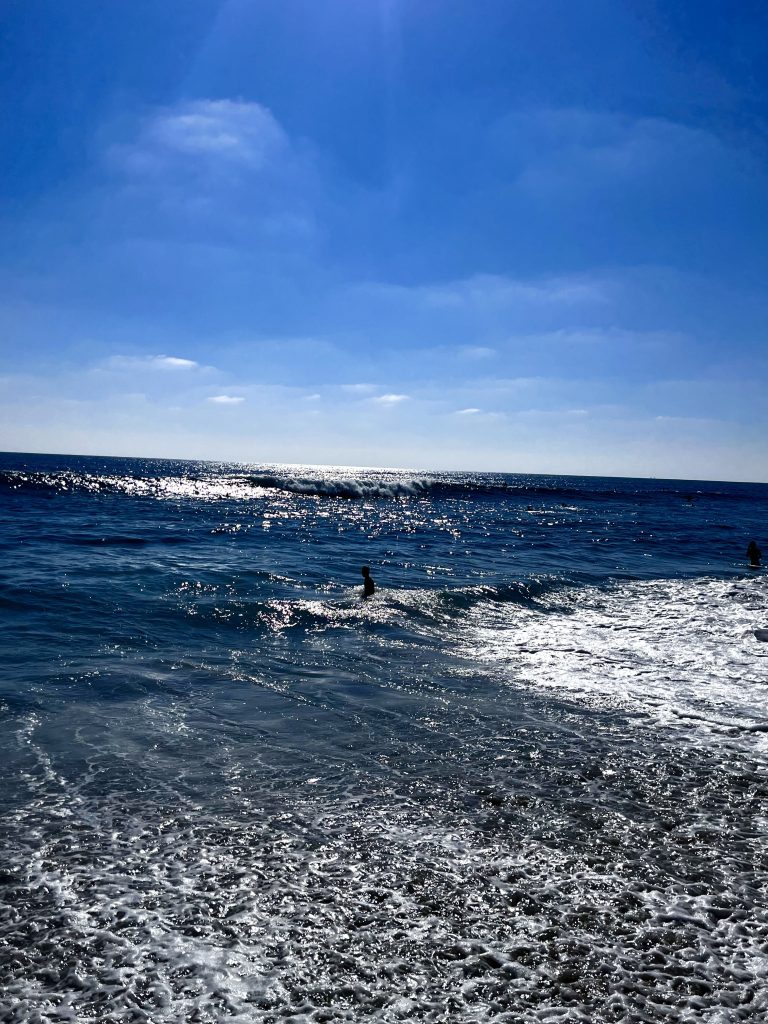
When I look at the ocean I don’t see simply the glint of sun on water, the great floating expanses of seaweed that wash ashore, or the people who are swimming, sunbathing, or surfing in the waves. No, when I look at the ocean I see something magical, something amazing, something that reminds me of discovery and delight and all the hidden depths in myself I have never explored, layers I might mine if I exercise wonder, if I let myself wander new and exotic shores. If only I allow myself to see the beauty that already exists in the flight of sea birds and the scuttle of crabs and the slow roll of the tide. For too long we have treated knowledge as something settled and something solid, instead of the curious exploration that I know it to be. For too long we have hesitated to lean over the side to dangle our hands in the spray, we have allowed ourselves to be steered away from dangerous waters. For too long we have hesitated before rocking the boat others built and have taught us to row.
And for too long we have privileged others’ stories over our own—our own experiences, and our own explorations, expeditions, and attempts.
My husband and I stood together at the place where the land met the sea, shoes in hand and pants rolled up and watched the water. We watched a family of four at one end of the beach lay out blankets and buckets and a picnic lunch. We watched young seagulls, feathers dark and downy as they learned to skim the surface of the waves. We watched a man at the other end, close to an outcropping of rock that hemmed in our small crescent of sand as he fished, casting his line over and over again. We watched surfers circle and swim to meet the swells until one would catch the crest just right and skiff the very surface looking like dolphins, like birds, riding in a weightless flight that sailed in to the shore.
We enjoyed the weather and we watched the water and we walked just close enough to get a little wet. We stayed until our clothes and our hair and my glasses were filmed in a thin layer of salt, and our skin was crusted in clinging bits of sand. We soaked in the sight of the sinking sun over the horizon before we dried our feet, and brushed off our legs and rolled down our pant legs.
We lingered longer than we meant to. We always do.

Shelli is an advocacy writer and creative writing teacher. She loves to spend time with her husband (usually in the garden) and their four almost adult children. She also loves to sew (usually for the local community theater), to read, to write, and to drag her family outside to look at the sky. Shelli is passionate about poetry, Broadway show tunes, and telling stories -- of ourselves, our families, and our communities.
View Author PageStay Inspired
Join Our Newsletter Journey
Dive deeper into the world of Big Ocean Women. By subscribing to our newsletter, you'll receive a monthly dose of empowering stories, insightful articles, and the latest news from our global sisterhood. Don't miss out on the wave of inspiration – subscribe now and be part of our ever-growing community.