
The Expansiveness of Pockets and the Understandable Mystery of the Things we Choose to Carry—
Lead photo credit: Anne Nygard via Unsplash
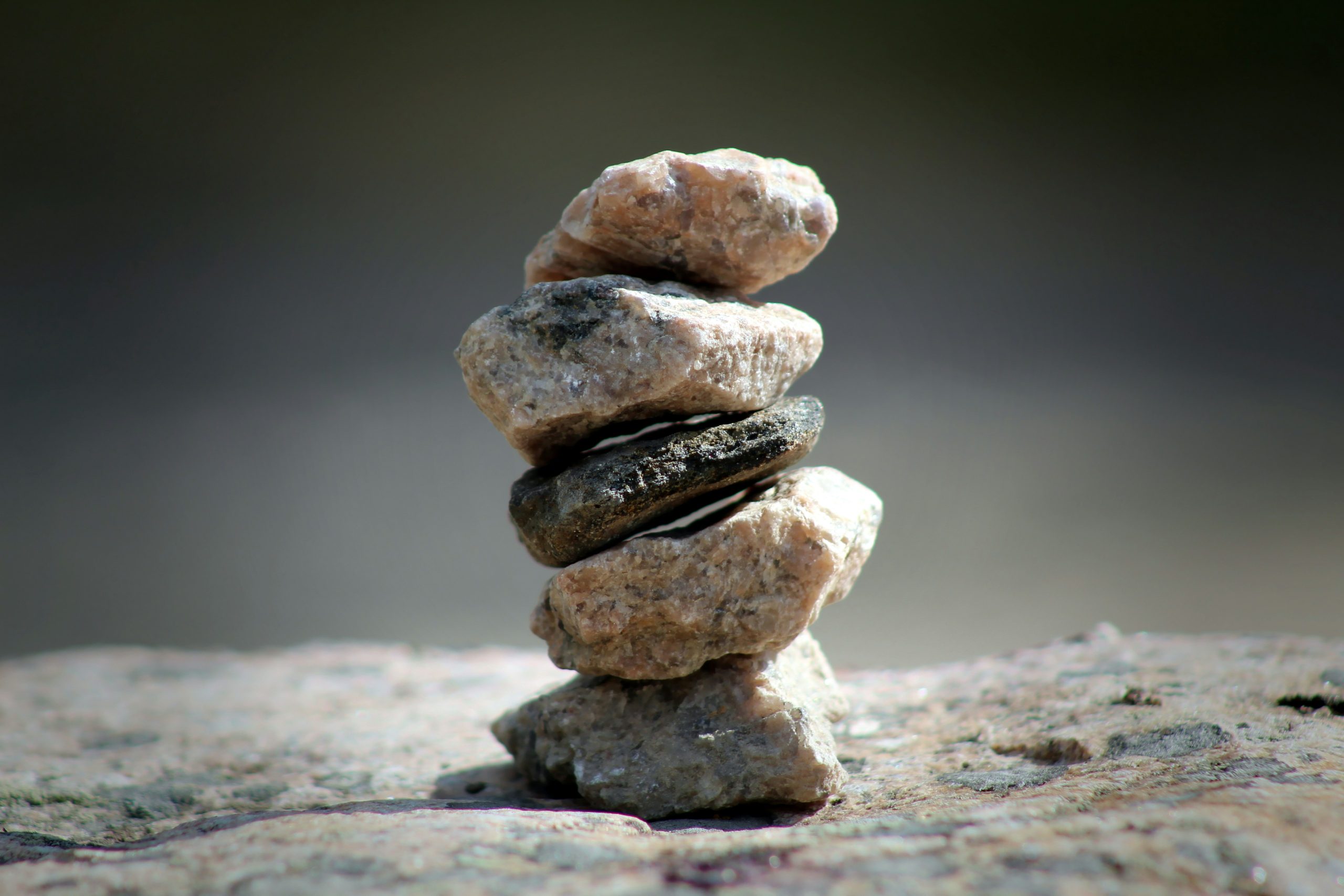
There is a stone on my kitchen windowsill—milky white and strangely light and run through with veins of red and rust and brown, a stone I plucked from the ground on a walk down a rocky hillside in a scrub-dotted landscape washed pale by sun and the heat and the endless stretch of cloudless sky above, a stone I picked up and put in my pocket, rubbing my fingers over the smooth surface again and again and again as I walked. It made its way to my bag and then my kitchen and then the windowsill where it catches the light, and the dust, and the damp of resting in a place so near the sink, so near the window, so near my daily notice.
There is an acorn in my silverware drawer, half smooth, glossy, chocolate brown and half rough, tawny tan, the cap just barely hanging on to the oval nut, several seasons old and beginning to crack at the edge, an acorn I picked up off the path near my car where I park on campus, fallen from once stately oaks that have since been cut down, an acorn used to decorate my Thanksgiving table on the last holiday before my mother-in-law passed, and then saved in a bag in a drawer, for why, after all, would I throw away a perfectly good acorn, and I am delighted by the shape of it, the texture of it, the weight of it in my hand.
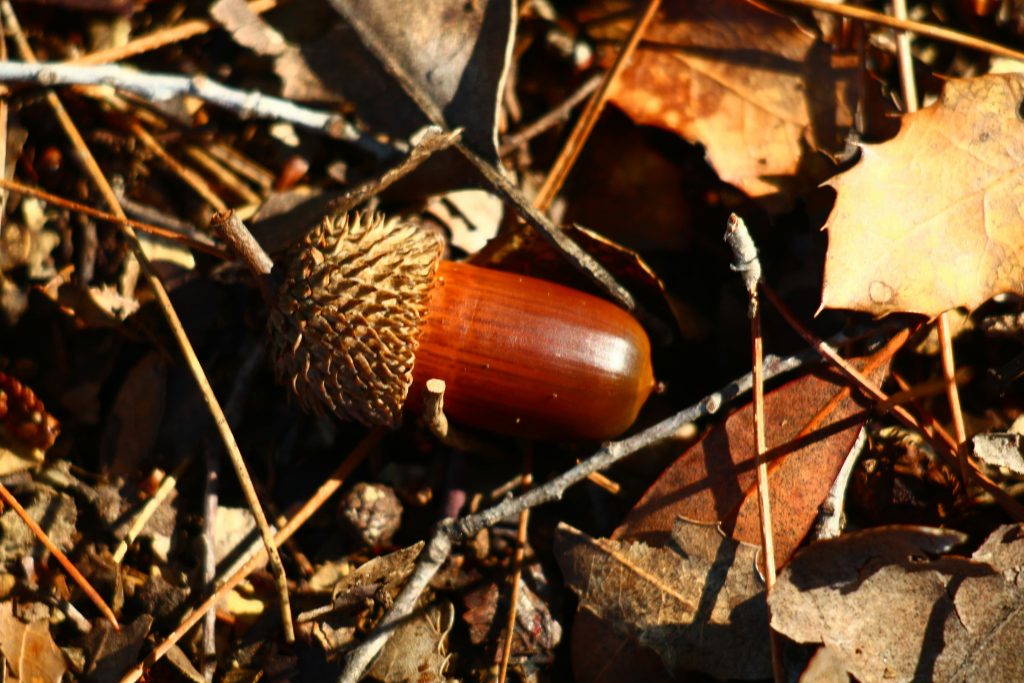 Photo credit: Seval Torun via Unsplash
There is a piece of petrified wood in my entryway, resting in the left corner of the top drawer of a small white washed chest of drawers alongside a length of string, a pack of gum, and a pair of broken sunglasses, a chunk of veined and ridged rock with rings across the center that I picked up on a hike through narrow redrock slot canyons with a stream running down the center, a sinuous slash of blue-green in a landscape of all oranges and rusts and scarlets and tangerine and apricot hues where I found this hunk of wood millions of years and gallons of water in the making, and it is a small thing, easily overlooked, yet when I pick it up and turn it over in my hands I find myself filled full of wonder and fascination and awe.
I am, much to my husband’s dismay, kind of a collector. Sort of a magpie. A part-time saver of interesting artifacts and strangely-shaped sticks and delightful stories sculpted out of scraps and castoffs, and ideas made of paper and fabric and rock.
I believe the things we carry, the things we pick up and wonder at and keep close, are a symbol—a metaphor, if you will—for what we value. The beliefs we cherish. The truths we hold dear.
My propensity for collecting shouldn’t be surprising, really. All objects contain stories and I am inclined to storytelling. To fantastic flights of figurative language. To symbolism.
To faith.
And I don’t think the objects themselves are fortunetellers, or seer stones or omens. We are not shaped by the objects we choose to form an attachment to—no. We are reflected in them. The choice of what to pick up and run through our hands asks us to examine questions about ourselves. What is it you value about the world? What is it you treasure? Do you love color or texture or pattern? Or something that is harder to define, something more intrinsic. An inspiration. An impression.
A feeling.
In Ancient Greece and Celtic Ireland and Pre-Colombian America people gathered stones to help them focus—to direct and calm their thoughts. To help them reach their true center.
Palm stones, they called them. Or thumb stones. Or worry stones. By any name they were a form of meditation and a space of spiritual practice. A way to collect contemplations and pay attention to ignored interior spaces. The use of worry stones represents a gathering—of things and thoughts and feelings. And if you have never tried it, I suggest you do. But do not buy a stone—don’t fall for the consumerism or the materialism of spending money on something that should be more meaningful than an online order delivered in two day shipping to your front door. No, go out and pick one up yourself.
So how do you go about choosing a worry stone? First you must prepare. You must wear something with pockets. Wide, long pockets, not those decorative ones with barely space for your fingers in the cold. Large pockets are essential, for they are practical and reliable and able to carry whatever we place within them—rocks and sticks and bits of string. A penny picked off the side of the road. A twist tie and a hair tie and a lace to tie our shoes. A scrap of paper with a few lines of verse. A wish. A belief.
Next you need to leave your house. Adventure is out there, the saying goes. Not in here. Not in the safe confines of our homes and our familiar rooms where we are not tested, where we face no trials.
Out in the world. The wilderness. The wild. (Or at least the sidewalks of your neighborhood filled with bikes and children and dogs and the laughter of strangers and the faces of friends).
And finally, we must learn to embrace our choice of stone.
Each of us chooses to carry different things. Each of us picks up different tokens of our adventures and trophies of our experiences and relics of our love and our living.
Each of us feels called to a different shade of blue, a different shape of rock, a different grain of wood in the objects we select, in the items we place carefully in our pockets, in the articles we hold close to our hearts—something unique to who we are and who we wish to become. We must learn to listen—we must teach ourselves to obey the words that come not from without but from within. The words spoken from deep inside our solid bones.
We must learn to trust our choices—no one else can choose for us. For we have each come from distinct and distinctive homes and families and communities—we have each encountered unique events and experiences and actions that shaped us as firmly as the slope of my nose is shaped by my foremothers, those stubborn women with strong features and plain aprons over sturdy clothes with flat feet and dirt beneath their nails.
We must learn to tell our own stories.
I think we can learn a lot from our stories. From history. From people like those ancient peoples who made it a habit to keep a stone in their hand or their medicine bag or their pocket. I think we can learn to counter the current pressures that teach us to disregard our own instincts—to ignore our own appreciation for beauty and truth and love.
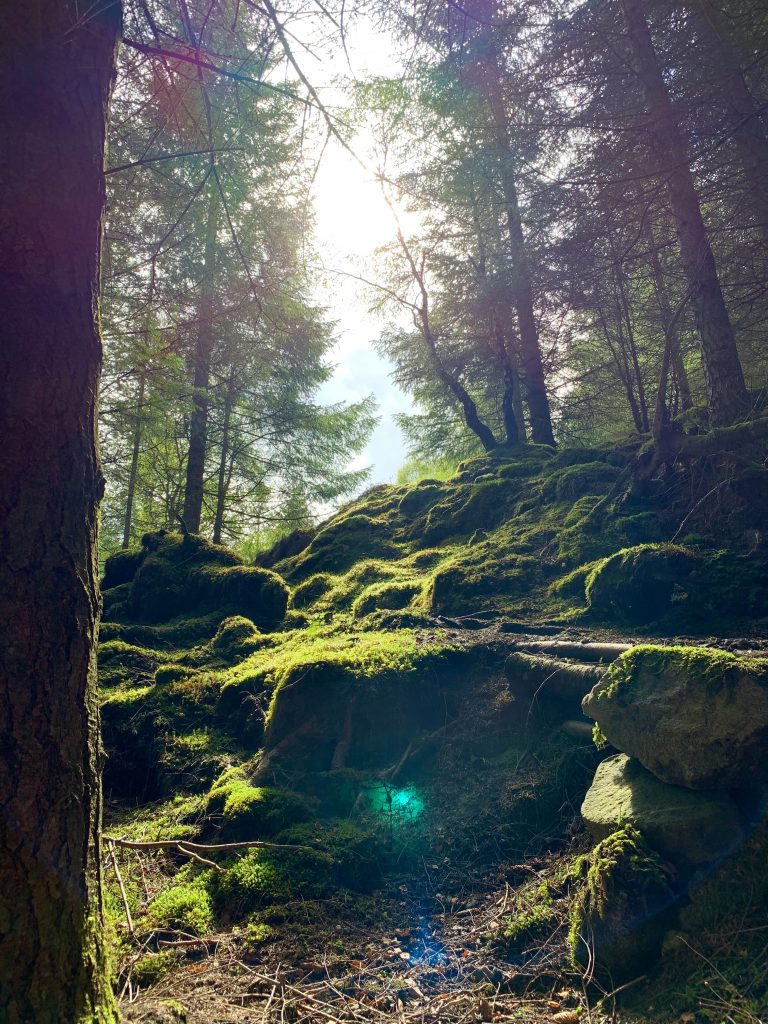 Photo via Unsplash
For instance, here is one story. There is found, in most cultures, on almost every continent, a myth—or perhaps it is more like an explanation—a tale of magic to account for any unexplained lights that flicker over marshes and swamps and empty fields. They call it the will-o’-wisp. Fairy fire. Ghost lights.
They say that on dark, moonless nights a supernatural green light appears to the wanderer, the traveler, the seeker—to the lost. The light dances and moves, skitters over the landscape, entices the viewer to follow—to stray off their path and, often, to find a new direction and a new fate.
Science tells us that the phenomena of fairy lights in the dark are possibly the result of bioluminescence, or a combination of decaying elements like methane or phosphine, or static electricity running through the rocks and the soil, or vaporized water breaching the surface of the earth through vents or volcanic tubes, or the natural interaction of fungus or insects or tectonic strain—or perhaps moonlight reflecting off the white tail feathers of a barn owl in flight.
Stories tell us they are tricksters or guides or elemental spirits, fairies or witches or the souls of the dead. Be careful, they say. Be alert. Look there, at the edge of the woods. The fires are beckoning, and you mustn’t be caught unawares.
But I have always wanted to see it—I have always wanted to wander out to meet the places where strange things occur in the night. More than that, I have always wondered about the foundations beneath the myth—the tale that if you meet your fate out wandering it was made to happen by a chance interaction with a supernatural element instead of simply the whispering of your own heart or the language of your own spirit.
I wonder if stories like this teach us that the choices we make are out of our control. That chance is what controls the events of our lives. That fate cannot be chosen.
I like to believe that it is more than chance that beckons us towards interesting paths—more than folklore tales of unexplained lights and fantastic fairies.
I like to think it is the things we choose—the worry stones and petrified wood. The acorns and bits of string. The wisdom of previous generations and the knowledge of our own. The gathering of sticks and driftwood, and pebbles, and bits and pieces of the places we travel through.
I like to imagine that as we hold on to them as talismans and as markers of the experiences that created the person we are, we can remember the strength that we have and the compassion that we were born with.
There is a picture in my mind as I have been writing, one I saw a decade or more ago, an old black and white print of dour-faced women and black-suited men, lined up during a celebration at the turn of the 20th century, in the very early years of photography, gathered in their finest wools and taffetas and petticoats for a group picture—a recognition of time passing and a celebration of close communities. Two of my ancestors were present for the photo, and I remember scanning their faces, examining those features that have been gone so long, searching for familiarity, for recognition, for belonging and kinship and closeness.
I like to think I find it in the choices I make every day—in the way I search for meaning. In the way I choose to live my life. In the objects I pick up, dust off, hold to the light, and place in my pockets. In the possibilities I create for myself by the tales that I tell.
After all, the things we do begin with the stories we hold dear—the narratives we embrace. The voices we repeat and the lights we choose to follow and the items we choose to carry. And isn’t that a mystery, and a miracle, wrapped up in one pocket shaped package that allows for the possibility of holding anything at all?
I believe it is.

Shelli is an advocacy writer and creative writing teacher. She loves to spend time with her husband (usually in the garden) and their four almost adult children. She also loves to sew (usually for the local community theater), to read, to write, and to drag her family outside to look at the sky. Shelli is passionate about poetry, Broadway show tunes, and telling stories -- of ourselves, our families, and our communities.
View Author PageStay Inspired
Join Our Newsletter Journey
Dive deeper into the world of Big Ocean Women. By subscribing to our newsletter, you'll receive a monthly dose of empowering stories, insightful articles, and the latest news from our global sisterhood. Don't miss out on the wave of inspiration – subscribe now and be part of our ever-growing community.