
“Food, in the end, in our own tradition, is something holy. It’s not about nutrients and calories. It’s about sharing. It’s about honesty. It’s about identity.”
-Louise Fresco
“If more of us valued food and cheer and song over hoarded gold, the world would be a merrier place.” -The Hobbit
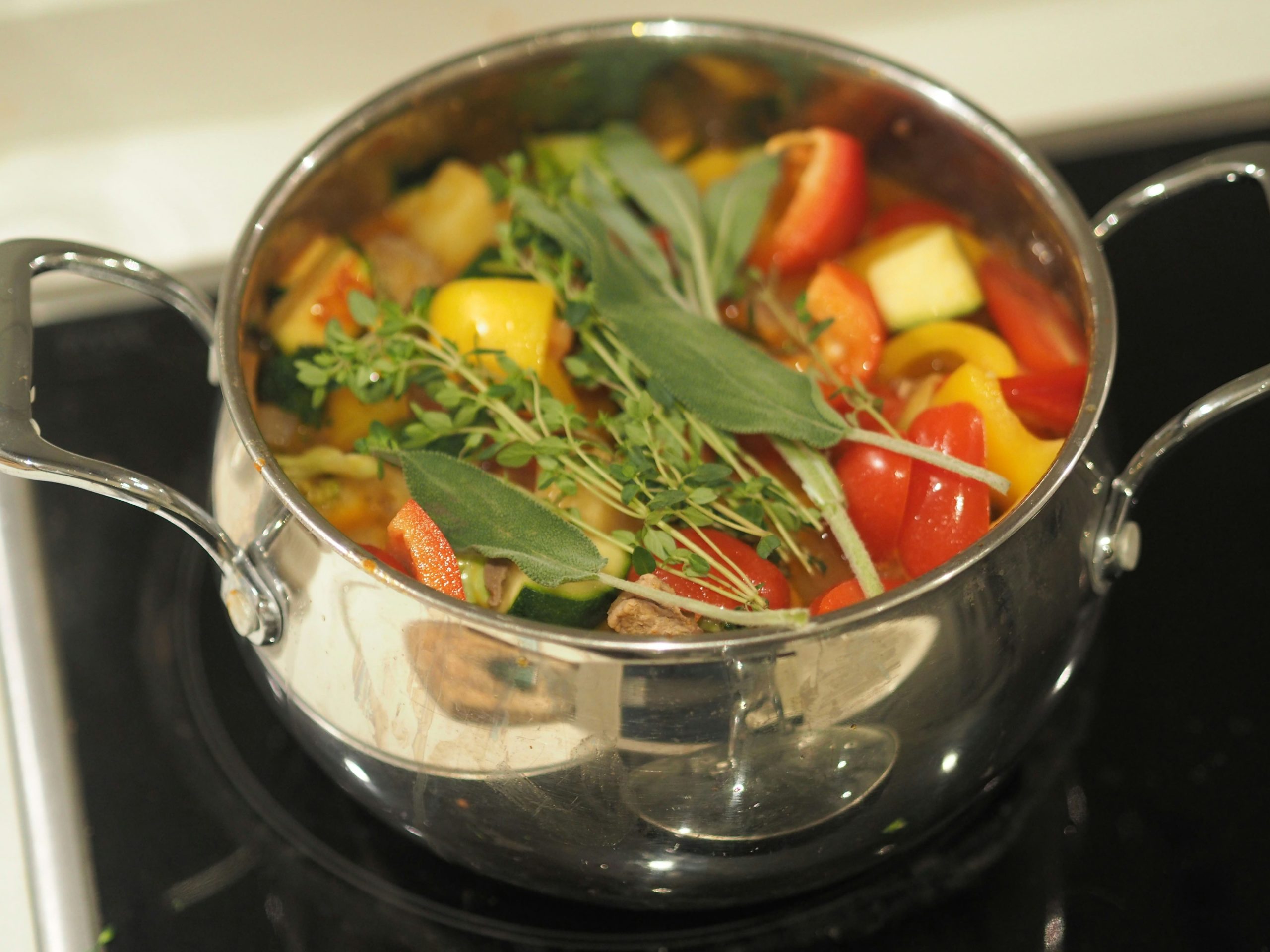
I made soup for dinner yesterday, a nice chicken noodle, with celery and carrots and potatoes and ginger and garlic and onion—the onion is important in a chicken soup, as is the salt and pepper, you can use other herbs and spices, but salt and pepper are the bare minimum, they are the spark that lets the flavor really shine—and noodles, almost any shape is acceptable, but I like something hardy, something that will stand up to a bit of heat, will stay whole through being boiled and cooled and reheated and eaten lukewarm later for a snack, and if I have time I will make my own, which is a long and arduous process, one where you mix egg and flour and more salt, and knead and roll and cut and cook, but if I am short on time a rotini will do nicely, or a bowtie, but not a penne, for the penne will just soak up all the broth until you are left with an indescribable chicken dish of bloated pasta and soggy vegetables instead of a nice brothy soup, which is what I made for dinner yesterday to chase off the chill of days that are growing short as winter comes creeping in around the doors and windows to be chased out by light and laughter and the warmth of a good, hearty soup.
My youngest son complained. As far as complaints went, it was mild. Gentle even. A ‘why do we eat soup all winter, and salad all summer?’ sort of grumbling as he filled his bowl to the brim and took a couple of biscuits with butter and began to eat the food I had made. I brushed it off, but the thing is, he is not wrong. The instant the seasons turn my mind turns with it, from summer fare like fruit and salads and grilled meat to heartier dishes—casseroles and stews and roasts and soups in every variety it is possible to make.
Despite any complaints my children have, I find great joy in soup. There is something so down to earth about it. A richness that says nourish and sustain in all capital letters. A magical quality that allows me to invite any number of people to the meal—after all, you only need to add a little water to the pot to stretch the ingredients to fit the table as friends and family gather together to eat. It is something we long for, even if we don’t realize it. We need to be fed. To be fueled and fortified and filled—but also nurtured and nourished together as a protection against the harshness of the weather, and the cold of body and soul.
There is an old folktale about soup, one that talks about a traveler who wanders into a town hungry and cold and with nothing to eat. The traveler convinces an old woman to help him cook a delicious dish from his home known as ‘stone soup,’ made from boiling an ordinary stone in a large pot. “But it would be better with some cabbage,” he says, and a neighbor offers a few wilted leaves. “But it would be better with some potatoes,” and the old woman throws in a few extras from the cellar. “It is delicious, but it would be better with some meat, or some salt, or some herbs…” he says over and over again and tricks the villagers into coming together to cook a delicious stew. In the end, the stone is thrown away, but the idea remains, as it does for most legends and myths and tall tales. We make more delicious soup when we each throw in what we can. We live more creative lives when we do it together.
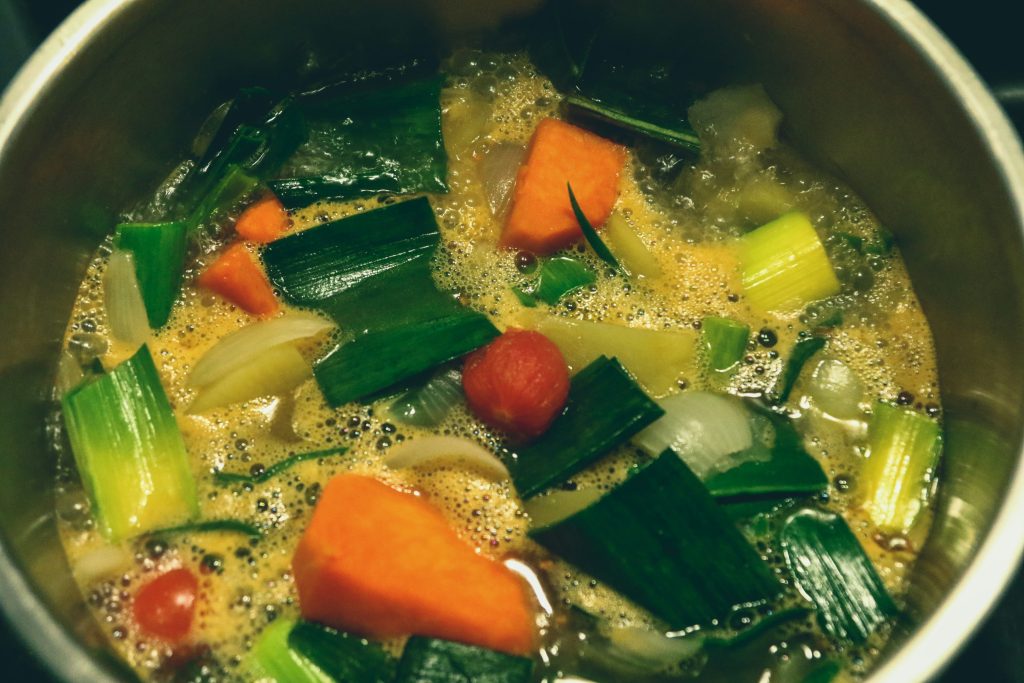
Soup is flexible. It is versatile. It can be so many different things made with so many different ingredients and different spices and different amounts of heat. Taco soup and potato soup and minestrone soup and tortilla soup and ham and bean soup and beef and barley soup and cauliflower cheese soup and dumpling soup and meatball soup and vegetable soup and pumpkin soup—it can be anything you want it to be, all you have to do is play—and I find it fun to explore. I take great satisfaction in paging through old, worn cookbooks with stains on the pages, and new ones with glossy pictures and finished foods served up on designer dishes. I love to look for interesting ways to make something new out of the same old ingredients, and often end up recording the process in illegible notes scrawled on torn sheets of paper or the backs of used envelopes so that I can remember what worked and what didn’t in hopes that I might be able to recreate the successes—and avoid the failures.
I love to create something we have never eaten before. After all, who is the arbiter of real recipes? The master of the cookbook, the gatekeeper at the pantry door? Who decides what meal is worth recording and remembering and preserving in the aftermath of a kitchen full of dirty dishes and vegetable peelings and slow conversations and fragments of songs and cast off bits of onions and beans and noodles and rice in whatever combination you manage to invent with the creativity you have learned to exercise in this one perfect way?
I have a friend who always asks me for my recipes. When I shrug and tell her I don’t really have recipes, she asks me how to make it, to which I want to reply. With love. With heart. With a spoon at the ready to taste as you stir in a little salt, a pinch of sugar, a handful of spices to keep things interesting, and some cream to make it rich.
Soup resists recipes. It is made of an always-changing list of things that come from the garden or that have been living at the back of the fridge or that have found their way into the grocery bags because they look interesting or intriguing or strange. Soup can take ingredients that might be a little past their peak—a little wilted, a little old, a little crinkled or shriveled or dried—and make of them something delicious and thick and warm. Maybe that is why I like soup so much. In the end it doesn’t matter what condition the vegetables were in—they can be worn down and wrinkled at the edges, much like the way I feel at the end of the day, but it does not matter. You chop and slice and stew and stir and add plenty of onion and a whole handful of garlic and some crumbled up herbs and some water and time and then you let it cook while you do something else. Read. Write. Vacuum the living room floor. Talk to an old friend. This is, to me, one of the most magical parts of soup. The ability to rest.
What else in our lives demands that you leave it alone? What else seems so uniquely designed for slow days, for thinking, for meditation? What other meal requires that you turn off the incessant barrage of noise that comes from the world at large in favor of a type of concentrated attention that releases us from anxiety and concern and stress? What else directs our gaze towards a down to earth economy of care that focuses on the small things that really are quite large? A deep pot. A warm stove. A long afternoon. Friends and family at the table. Hot steam gathering on the inside of cold windows. What other meal reminds us of the miracle and magic of time well spent?
There is no secret to a good soup. There is only comfort. Creativity. Care. But maybe that is the secret, after all. There is so little in the world that requires real devotion, but soup is one of those things. And at the end of the day you have a whole pot full of something warm and tasty and filling—something ready to share with whoever comes wandering in your front door.

Shelli is an advocacy writer and creative writing teacher. She loves to spend time with her husband (usually in the garden) and their four almost adult children. She also loves to sew (usually for the local community theater), to read, to write, and to drag her family outside to look at the sky. Shelli is passionate about poetry, Broadway show tunes, and telling stories -- of ourselves, our families, and our communities.
View Author PageStay Inspired
Join Our Newsletter Journey
Dive deeper into the world of Big Ocean Women. By subscribing to our newsletter, you'll receive a monthly dose of empowering stories, insightful articles, and the latest news from our global sisterhood. Don't miss out on the wave of inspiration – subscribe now and be part of our ever-growing community.